


Advertisement|Remove ads.
Fed May Hike Rates Next As Oil Shock Clouds Inflation Outlook Amid Iran War, Says Wharton's Jeremy Siegel


- The economist added that the inflation outlook is being complicated by a renewed pickup in money growth.
- Siegel noted that while the latest CPI report came in slightly better than expected on core inflation, shelter costs continue to show signs of easing.
- However, he said that investors should be cautious about drawing too much reassurance from a single favorable reading, especially one recorded before the full impact of the energy shock has been felt.
Advertisement|Remove ads.
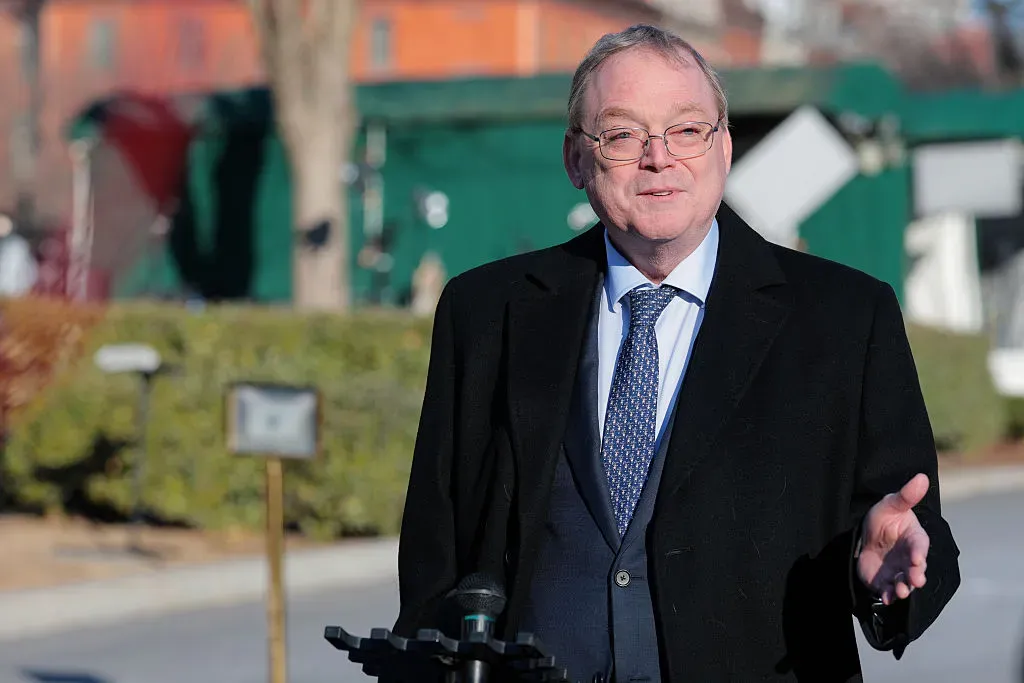
Jeremy Siegel, professor emeritus of finance at the University of Pennsylvania’s Wharton School of Business, on Tuesday warned that the Federal Reserve could hike rates next instead of easing the monetary policy.
“There is risk that the next move in rates could be up rather than down. I am not calling for a hike as the base case, but the odds are no longer negligible,” he said.
Siegel added that the markets have moved from expecting an eventual easing a month ago, with the policy debate now being more difficult in the backdrop of high crude oil prices due to the Iran war.
Advertisement|Remove ads.
According to data from the CME FedWatch tool, the odds of a rate cut have fallen to 0.5% now from 5.8% a month ago. The odds of a 25 bps rate hike have edged up to 0.5% now from nil a month ago.
The Federal Open Market Committee (FOMC) is slated to meet on April 29 and 30.
The Combination That Fed Does Not Want To See
The economist added that the inflation outlook is being complicated by a renewed pickup in money growth.
Advertisement|Remove ads.
Siegel noted that while the latest CPI report came in slightly better than expected on core inflation, shelter costs continue to show signs of easing. However, he said that investors should be cautious about drawing too much reassurance from a single favorable reading, especially one recorded before the full impact of the energy shock has been felt.
The economist highlighted that the bigger issue now is that rising oil, diesel, and fertilizer costs are likely to feed into freight, shipping, airfares, and a wide range of goods prices over the next two to three months.
Siegel added that the breakdown in talks between the U.S. and Israel this week only reinforces that concern.
Advertisement|Remove ads.
In the first inflation print since the beginning of the Iran war, the Consumer Price Index (CPI) rose 0.9% in March on a seasonally-adjusted basis, after rising 0.3% in February.
Soaring energy costs drove the rise in headline inflation, with the energy index rising 10.9% in March. The gasoline index surged 21.2% during the month, contributing to a three-quarter increase in the headline prices, the BLS report stated.
Economy At An Awkward Mix
The economist noted that while the U.S. economy, as well as the markets, have been resilient, the economy is currently at an awkward mix of circumstances.
Advertisement|Remove ads.
He stated that while the U.S. economy is strong enough not to require a quick easing in the monetary policy, it is vulnerable enough to feel the oil price shock.
“There are still good underlying forces in this market, and if we get a favorable resolution on the energy front, stocks can move to new highs,” he added.
For the time being, Siegel expects a sell-off in U.S. equities due to the collapse of talks between the United States and Iran. Investors will also keep an eye on the Fed’s monetary policy direction amid the oil shock and its impact on inflation.
Advertisement|Remove ads.
Crude Oil Prices Hover Near $100 A Barrel
Crude oil prices have soared since the beginning of the Iran war, with WTI and Brent crude futures surging nearly 43% and 36%, respectively.
On Tuesday, U.S. West Texas Intermediate (WTI) crude futures maturing in May were down 3%, hovering around $96 a barrel. Brent crude futures expiring in June fell about 1% to hover around $99 a barrel.
Meanwhile, U.S. equities gained in Tuesday’s pre-market trade. At the time of writing, the SPDR S&P 500 ETF (SPY), which tracks the S&P 500 index, was up 0.2%; the Invesco QQQ Trust ETF (QQQ) gained 0.41%; and the SPDR Dow Jones Industrial Average ETF Trust (DIA) edged up by 0.04%. Retail sentiment on Stocktwits regarding the S&P 500 ETF was in the ‘bearish’ territory.
Advertisement|Remove ads.
For updates and corrections, email newsroom[at]stocktwits[dot]com.
Comments posted here will also appear on symbol pages.

Latest News
/filters:format(webp)https://news.stocktwits-cdn.com/Getty_Images_2252212060_jpg_132910f66d.webp)
/filters:format(webp)https://news.stocktwits-cdn.com/Harshita_3cfe02022c.jpg) Harshita Tyagi·38m ago
Harshita Tyagi·38m ago/filters:format(webp)https://news.stocktwits-cdn.com/large_Tom_Lee_c6db3cdfe4.webp)
/filters:format(webp)https://news.stocktwits-cdn.com/Prabhjote_DP_67623a9828.jpg) Prabhjote Gill·43m ago
Prabhjote Gill·43m ago/filters:format(webp)https://news.stocktwits-cdn.com/gettyimages_2169566257_594x594_183e2c9f35.jpg)
/filters:format(webp)https://news.stocktwits-cdn.com/Heera_1_1c30cb0170.PNG) Heera Hari·1h ago
Heera Hari·1h ago/filters:format(webp)https://news.stocktwits-cdn.com/large_michael_saylor_OG_4_jpg_292dd07afc.webp) Prabhjote Gill·2h ago
Prabhjote Gill·2h ago/filters:format(webp)https://news.stocktwits-cdn.com/Getty_Images_526218674_jpg_7b7468812b.webp) Heera Hari·3h ago
Heera Hari·3h ago/filters:format(webp)https://st-everywhere-cms-prod.s3.us-east-1.amazonaws.com/large_accenture_logo_resized2_jpg_128c5add71.webp) Harshita Tyagi·3h ago
Harshita Tyagi·3h ago