


Advertisement|Remove ads.
Google To Send AI Chips Into Orbit Next Week Aboard SpaceX Rocket, Eyes Data Center In Space
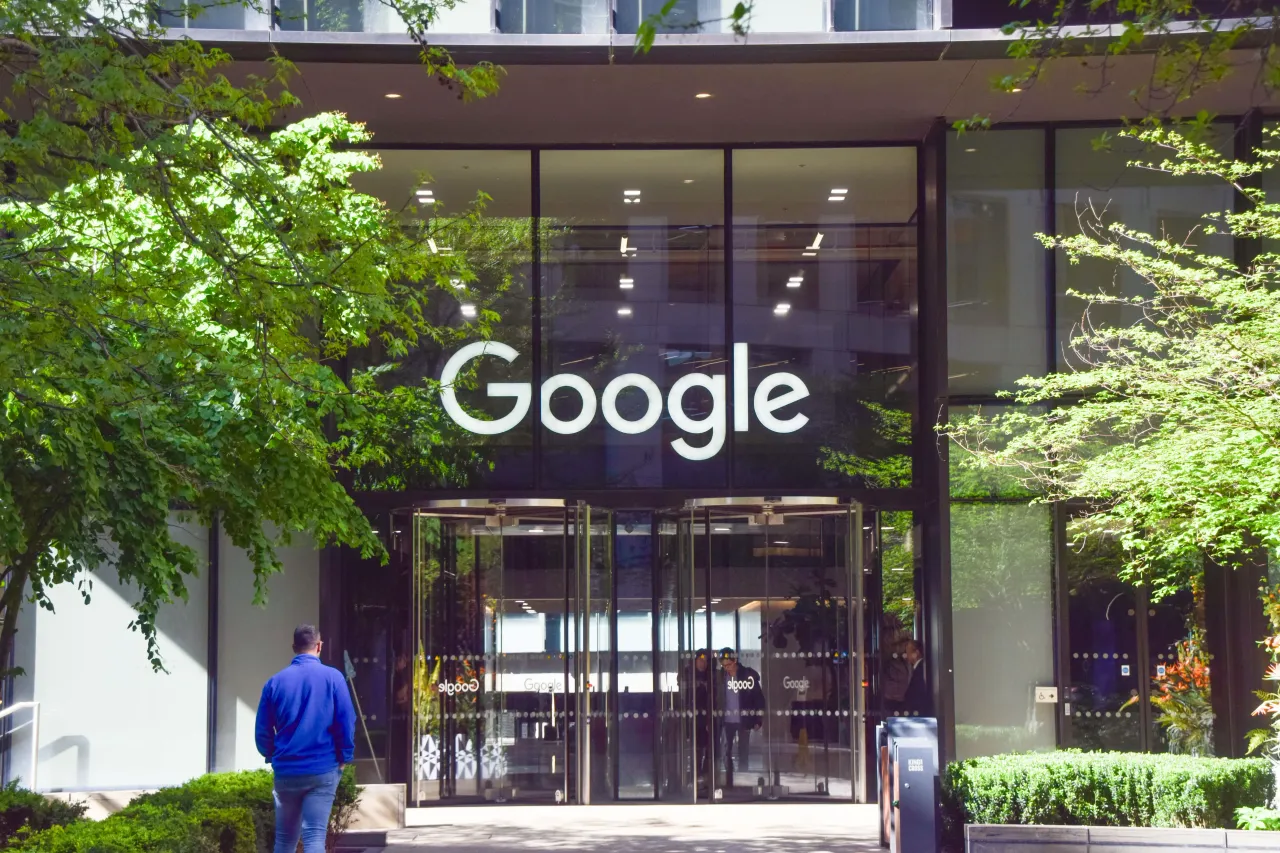


- Google said it plans to launch a prototype satellite next week to test its Tensor Processing Units in orbit.
- The mission is part of Project Suncatcher, Google’s long-term research effort exploring space-based AI computing.
- The tech giant said the test will examine how TPUs handle radiation, thermal extremes and the physical stresses of spaceflight.
Advertisement|Remove ads.
Alphabet (GOOG, GOOGL) subsidiary Google announced on Thursday that its planning to send its AI chips into orbit next week, taking the first major step in Project Suncatcher, a research effort exploring whether space could eventually support large scale machine learning infrastructure.
The prototype satellite will launch on SpaceX’s (SPCX) upcoming Transporter-18 rideshare mission in partnership with Planet on October 1. The mission’s aim is to test how Google’s Tensor Processing Units (TPUs) perform under the radiation, thermal conditions and physical stresses of space.
GOOGL stock traded flat in midday trade on Thursday, while SPCX stock dipped around 1% amid broader market weakness. On Stocktwits, retail sentiment around Alphabet trended in ‘bullish’ territory over the past day, while sentiment around SpaceX remained in the ‘bearish’ zone.
Advertisement|Remove ads.
Google’s Space AI Bet
Google’s Project Suncatcher, announced last year, explores the possibility of linking large constellations of satellites equipped with AI processors. According to the company’s thesis, satellites in low Earth orbit could have access to nearly continuous sunlight and potentially generate up to eight times more solar power than comparable systems on Earth.
The company’s longer-term vision is to connect satellites and distribute AI workloads across an orbital computing network.
Google has already subjected its Trillium TPUs to simulated launch vibrations and proton-beam radiation testing. The company said the chips survived radiation levels greater than those expected during a five-year space mission.
Advertisement|Remove ads.
Cooling Is A Major Challenge
Google noted in its blog post that operating AI chips in space creates a different set of engineering problems. It pointed out that TPUs generate substantial heat, but conventional cooling systems rely on airflow that does not exist in a vacuum.
The company said it was testing heat pipes and radiators designed to move heat away from the chips and will use the upcoming mission to gather real-world data on the system.
The company also plans to test satellite-to-satellite laser communications in 2027, when two satellites are expected to launch. Those links would be critical for connecting future orbital computing systems and moving AI workloads between satellites.
Advertisement|Remove ads.
A Growing Orbital AI Race
Google is entering a field that includes SpaceX and Blue Origin, which are exploring large orbital data-center constellations, as well as startups such as Starcloud, Axiom Space, Kepler Communications, Orbital and Sophia Space.
“Space-based AI is obviously the only way to scale,” SpaceX CEO Elon Musk said earlier this year, ahead of the SpaceX-xAI merger.
Starcloud has already launched an NVIDIA H100 GPU into orbit, while Axiom and Kepler are testing orbital storage and computing systems. Most efforts remain experimental, but there is growing interest in using space-based solar power, radiative cooling and optical links to support future AI infrastructure.
Advertisement|Remove ads.
GOOGL stock has gained over 8% this year and more than 36% in the last 12 months.
Read also: IBM Joins Swift's 17-Bank Pilot, Skipping The Cloud For On-Premises Crypto Infrastructure
For updates and corrections, email newsroom[at]stocktwits[dot]com.
Advertisement|Remove ads.
Comments posted here will also appear on symbol pages.

Latest News
/filters:format(webp)https://news.stocktwits-cdn.com/large_So_Fi_new_6d7889a863.webp)
/filters:format(webp)https://news.stocktwits-cdn.com/Aashika_Suresh_Profile_Picture_jpg_2acd6f446c.webp) Aashika Suresh·23m ago
Aashika Suresh·23m ago/filters:format(webp)https://news.stocktwits-cdn.com/large_Getty_Images_2272991538_826b8a4556.jpg)
/filters:format(webp)https://news.stocktwits-cdn.com/IMG_8805_JPG_6768aaedc3.webp) Deepti Sri·31m ago
Deepti Sri·31m ago/filters:format(webp)https://news.stocktwits-cdn.com/large_Getty_Images_2274484367_jpg_e7062348b5.webp)
/filters:format(webp)https://news.stocktwits-cdn.com/shivani_photo_jpg_dd6e01afa4.webp) Shivani Kumaresan·1h ago
Shivani Kumaresan·1h ago/filters:format(webp)https://news.stocktwits-cdn.com/large_SK_Hynix_jpg_efba9fa39d.webp)
/filters:format(webp)https://news.stocktwits-cdn.com/IMG_9209_1_d9c1acde92.jpeg) Yuvraj Malik·1h ago
Yuvraj Malik·1h ago/filters:format(webp)https://news.stocktwits-cdn.com/large_rocketlab_jpg_fcfa5bb73e.webp) Deepti Sri·1h ago
Deepti Sri·1h ago/filters:format(webp)https://news.stocktwits-cdn.com/gettyimages_2267701500_594x594_1cfbb8b517.jpg) Aashika Suresh·2h ago
Aashika Suresh·2h ago