


Advertisement|Remove ads.
How Do Interest Rates Affect Stock Markets?
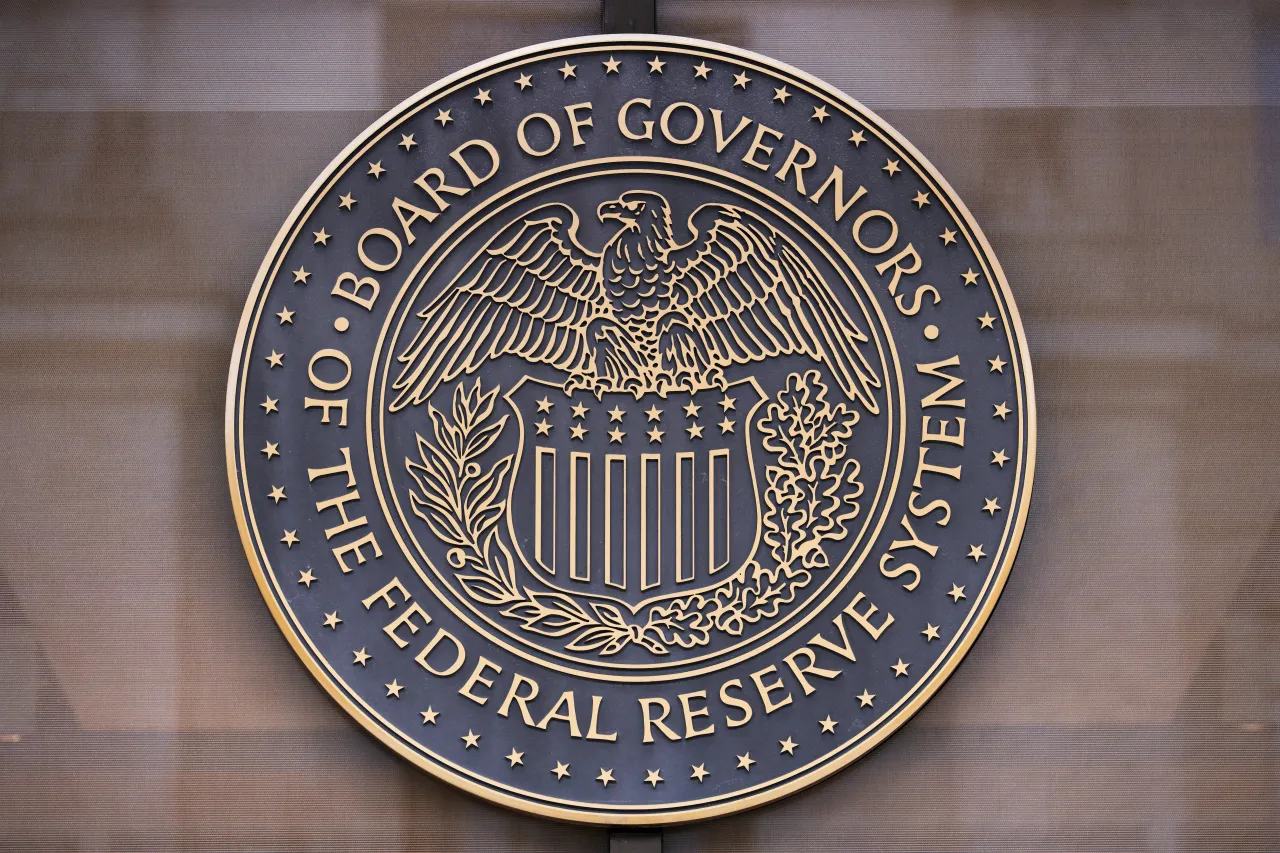


- When a central bank, such as the U.S. Federal Reserve, raises benchmark interest rates, businesses' borrowing costs also rise.
- Investors tend to shift their money to safer assets, such as government bonds, amid uncertainty over corporate earnings.
- Higher rates do not affect every corner of the market equally.
Advertisement|Remove ads.
As macroeconomic volatility continues to rise, the role of central banks is gaining more prominence. The markets not only react to changes in rates but also price in expectations of what the central banks might do next, in real time, as soon as any Fed Governor speaks or a key economic data point is released.
Interest rates are the price of borrowing money. When central banks like the U.S. Federal Reserve raise interest rates, loans become more expensive for businesses and consumers.
That means companies may spend less, earn less, and grow more slowly. As a result, some stock prices can fall. At the same time, safer investments like government bonds start offering better returns, so some investors move their money out of stocks.
Advertisement|Remove ads.
But higher interest rates don’t hurt every stock. Importantly, markets don’t just react to rate changes, but they respond to expectations.
Higher Rates Dent Corporate Profits
When a central bank, such as the U.S. Federal Reserve, raises benchmark interest rates, businesses' borrowing costs also rise. Businesses are forced to pay more on debt, while taking on additional debt becomes less attractive. As more cash flow is allocated to repayments, profit margins take a hit.
At the same time, investors tend to shift their money to safer assets, such as government bonds. Pension funds, insurance companies, and conservative investors are often the first ones to make the changes to their portfolios.
Advertisement|Remove ads.
Impact On Valuation
To gauge valuation, Wall Street analysts often use a metric called discounted cash flow that estimates the present value of an investment based on a firm’s projected future cash flows.
Higher interest rates increase the discount rate used in metrics like DCF, reducing the present value of future cash flows.
As forecasts move, investors adjust what they’re prepared to pay for future growth, a process that can drag valuations and share prices lower.
Who Gets Impacted By Rate Revisions?
Higher rates do not affect every corner of the market equally. Banks tend to get a lift because they can earn more on loans. But growth stocks often take a blow as their valuations tighten. Real estate and utilities, which depend heavily on borrowing, feel the pressure quickly. Consumer stocks can also slip as people rein in spending.
Advertisement|Remove ads.
However, elevated rates can also expose structural weaknesses in the financial system. In 2023, high interest rates played a role in the banking crisis that led to the failure of multiple U.S. lenders, including Silicon Valley Bank and First Republic.
Do Markets Always Go Down During An Elevated Rate Cycle?
During the most recent elevated interest rate cycle, the S&P 500 still posted double-digit gains in 2023 and 2024 and is on track to repeat the feat in 2025. Yet over the past two years, the 10-year U.S. Treasury note yield has traded within a broad range of 3.6%- 5%.
“Despite the highest interest rates in a decade, solid corporate earnings growth supports equity prices,” said Rob Haworth, senior investment strategy director with U.S. Bank Asset Management Group, in a note published in November. The growth stocks benefited from strong investor sentiment surrounding artificial intelligence.
Advertisement|Remove ads.
Also See: Elon Musk Is Ramping AI Compute At Breakneck Speed — Inside xAI’s Expanding Data Center Footprint
For updates and corrections, email newsroom[at]stocktwits[dot]com.
Comments posted here will also appear on symbol pages.

Latest News
/filters:format(webp)https://news.stocktwits-cdn.com/large_btcmanwalking_resized_png_3188b2f46f.webp)
/filters:format(webp)https://news.stocktwits-cdn.com/Anushka_Basu_make_me_smile_in_the_picture_b92832aa_af59_4141_aacc_4180d2241ba8_1_2_png_1086e0ed8c.webp) Anushka Basu·57m ago
Anushka Basu·57m ago/filters:format(webp)https://news.stocktwits-cdn.com/large_Semiconductors_jpg_c31a11a7a4.webp)
/filters:format(webp)https://news.stocktwits-cdn.com/IMG_9209_1_d9c1acde92.jpeg) Yuvraj Malik·2h ago
Yuvraj Malik·2h ago/filters:format(webp)https://news.stocktwits-cdn.com/large_Getty_Images_2290038559_c6f6528203.jpg)
/filters:format(webp)https://news.stocktwits-cdn.com/Revised_Profile_JPG_0e0afdf5e2.webp) Preeti Ayyathurai·2h ago
Preeti Ayyathurai·2h ago/filters:format(webp)https://news.stocktwits-cdn.com/large_Getty_Images_2157750376_jpg_2621e10cf1.webp)
/filters:format(webp)https://news.stocktwits-cdn.com/shivani_photo_jpg_dd6e01afa4.webp) Shivani Kumaresan·2h ago
Shivani Kumaresan·2h ago/filters:format(webp)https://news.stocktwits-cdn.com/large_michael_burry_cropped_b787ce89b4.jpg) Yuvraj Malik·2h ago
Yuvraj Malik·2h ago/filters:format(webp)https://news.stocktwits-cdn.com/large_rocketlab_jpg_fcfa5bb73e.webp)
/filters:format(webp)https://news.stocktwits-cdn.com/IMG_8805_JPG_6768aaedc3.webp) Deepti Sri·3h ago
Deepti Sri·3h ago