


Advertisement|Remove ads.
Is AI-Driven Market Rally Masking Consumer Pain? Veteran Investor George Noble Flags Historic Gap Between Wall Street And Main Street


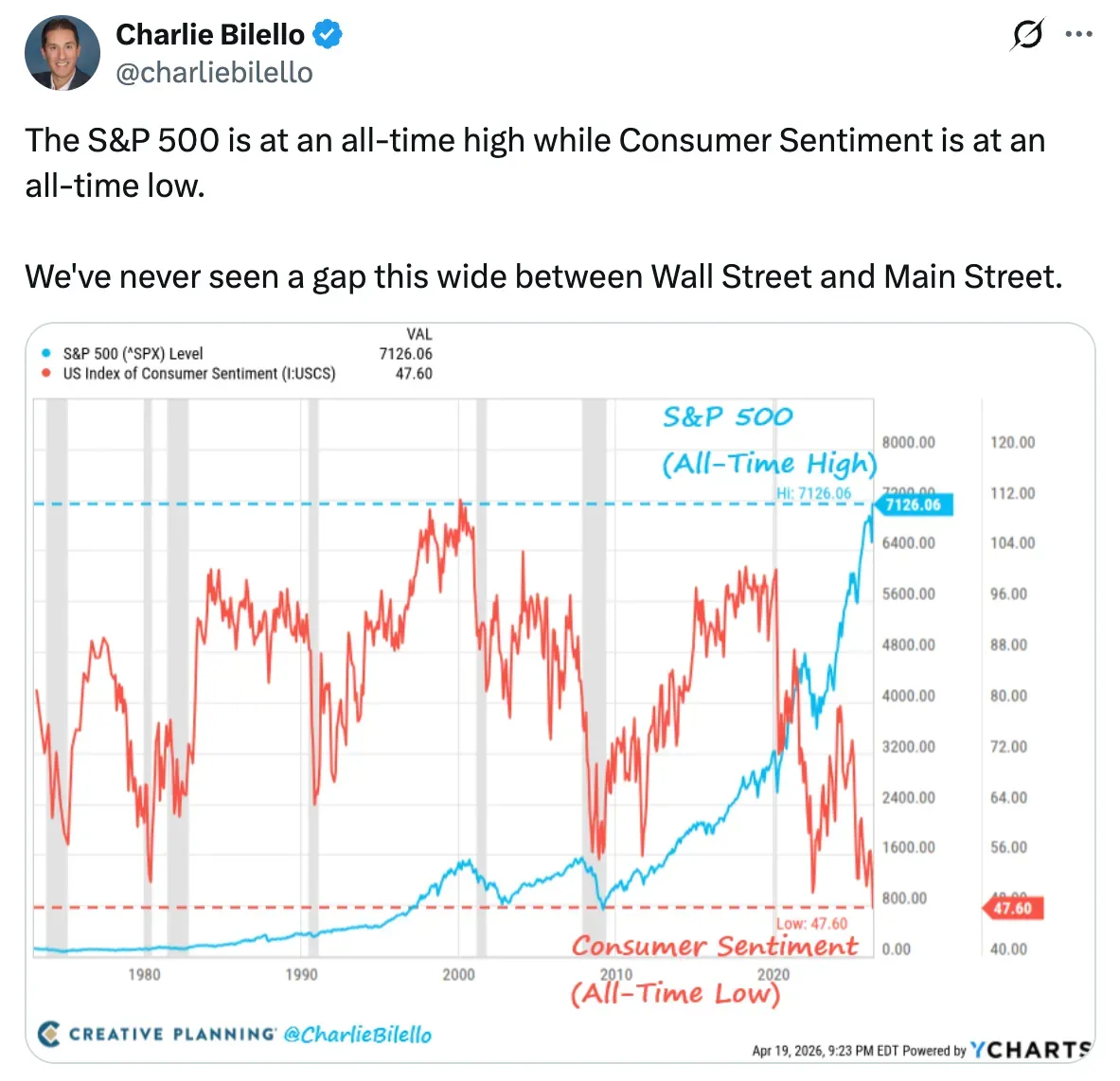
- On Friday, the S&P 500 climbed 1.2% higher to close at 7,126.06, jumping above the 7,100 mark for the first time in history, driven higher by an uptick in the ‘Magnificent Seven’ stocks, and optimism around de-escalating tensions with Iran.
- However, the University of Michigan Consumer Sentiment Index, reported earlier in the week, dropped to 47.6, sinking about 9% year-on-year.
- When markets and consumer sentiment highlight different narratives, Noble noted that consumers usually feel the pain much before it reflects in market movements.
Advertisement|Remove ads.
The S&P 500, a benchmark U.S. index, hit an all-time high last week. But a former associate of legendary investor Peter Lynch issued a stark warning as the market highs coincided with an all-time low in American consumer sentiment.
“Both happened in the same week. Think about this,” said George Noble, a hedge fund veteran and former Fidelity fund manager.

On Friday, the S&P 500 climbed 1.2% higher to close at 7,126.06, jumping above the 7,100 mark for the first time in history amid hopes for de-escalation of tensions between the U.S. and Iran. Meanwhile, the University of Michigan Consumer Sentiment Index, reported earlier in the week, dropped to 47.6, sinking about 9% year-on-year.
Advertisement|Remove ads.
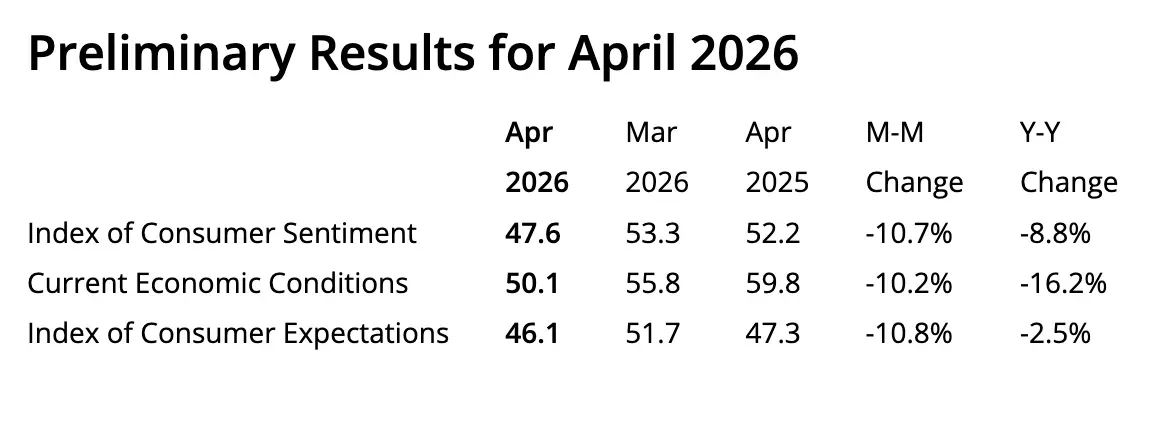
In a post on X, Noble noted that the consumer sentiment index was at its lowest point in history. “Lower than the 2008 financial crisis. Lower than the COVID crash. Lower than the worst of the post-pandemic inflation surge. Lower than anything recorded since Harry Truman was president,” Noble said. “When markets and consumers disagree this violently, one of them is wrong.”
What’s Driving Clashing Market Trends?
Last week, stock markets climbed higher as investors turned optimistic over waning tensions in the Middle East. Iran had agreed to reopen the Strait of Hormuz even as Israel and Lebanon agreed to a temporary ceasefire. Apart from the “happy ending” priced in due to developments in the war, Noble said that the uptick in the “Magnificent Seven” tech stocks also helped push markets higher.
“The S&P 500 is trading at all-time highs because 7 mega cap tech stocks (powered by AI narratives) account for nearly half the index's market cap,” he said. The Roundhill Magnificent Seven ETF, which tracks Alphabet (GOOGL), Amazon (AMZN), Apple (AAPL), Meta (META), Microsoft (MSFT), NVIDIA (NVDA), and Tesla (TSLA), climbed 8.68% higher last week, the most weekly gains in about 11 months.
Advertisement|Remove ads.
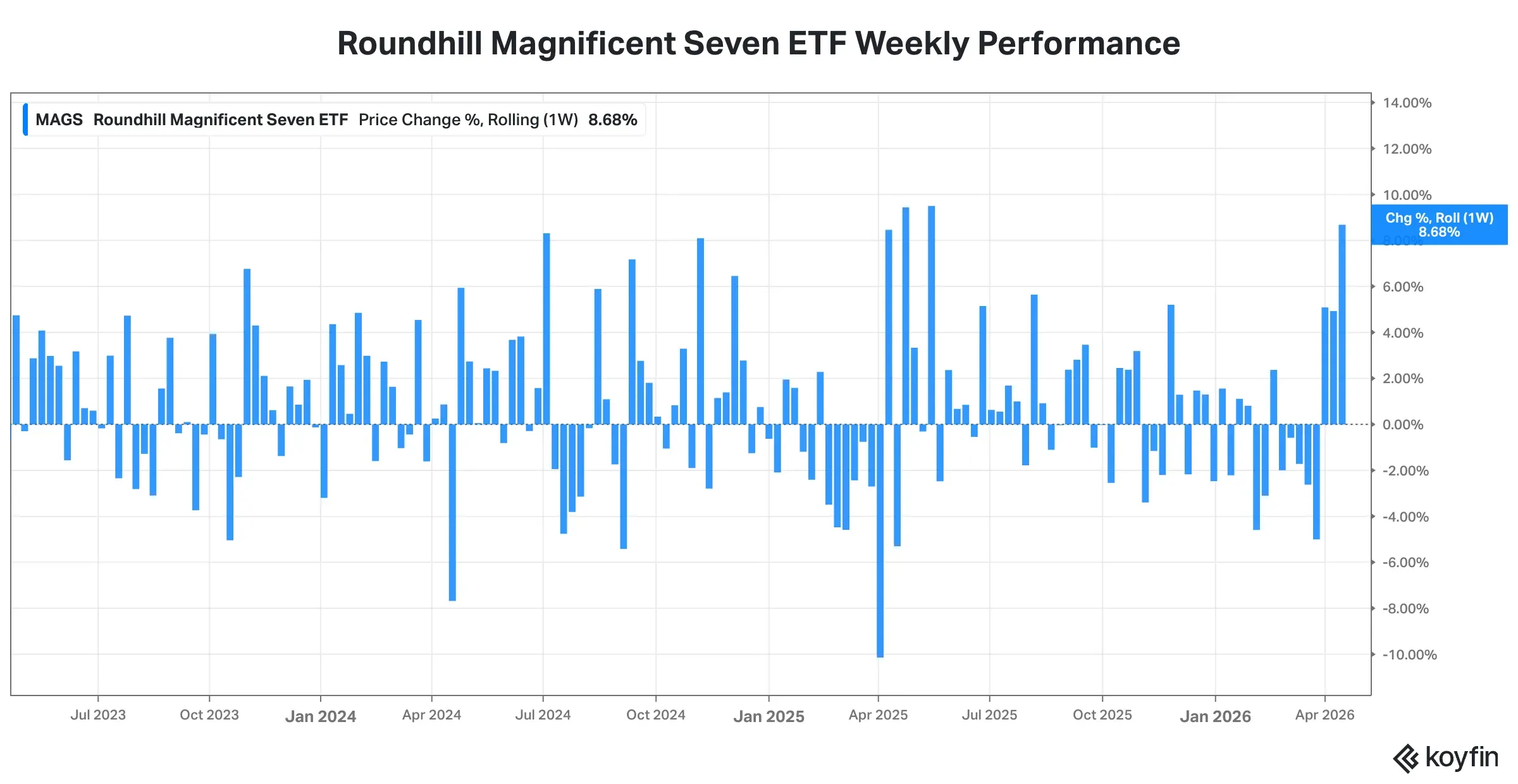
“Those stocks run on their own dynamic, independent of anything, including the war in Iran. That's a market being dragged to record highs by a handful of names while the real economy deteriorates underneath,” Noble noted.
Meanwhile, the investor highlighted how the broader market was sinking, with software stocks plummeting this year, private credit “imploding,” gas prices surging, and consumer purchasing conditions for big-ticket items falling sharply.
Noble Warns Of Consumer Distress
When markets and consumer sentiment highlight different narratives, “Consumers feel the pain before it shows up in the indices,” Noble said. “In 2007, the S&P 500 hit its record in October. Consumer sentiment had been falling since July 2007. 3 months later, we were in recession.”
Advertisement|Remove ads.
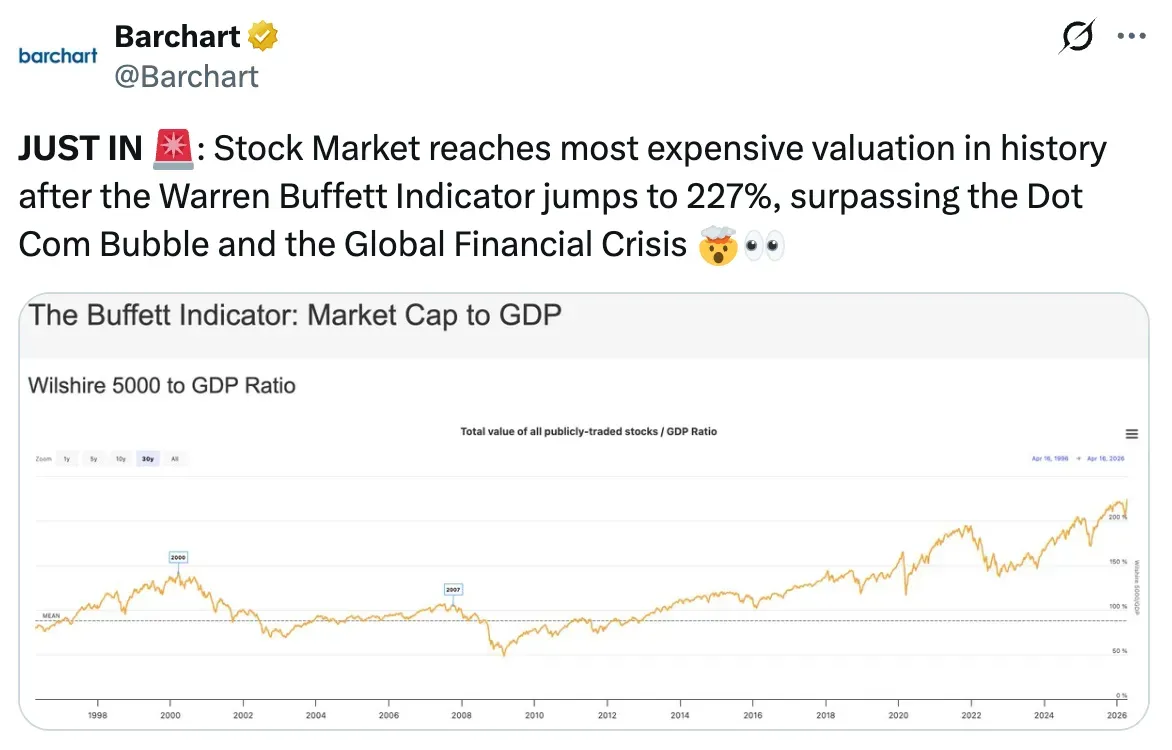
Meanwhile, the U.S. stock market has reached its most expensive valuation relative to economic output in recorded history, according to Barchart. The so-called Warren Buffett Indicator — which measures total market capitalization against GDP — has climbed to 227%, surpassing the peaks seen during the dot-com bubble and the 2008 global financial crisis.
US Markets Reaction
However, U.S. markets slipped lower in Sunday’s overnight trading after Iran reversed an earlier decision to reopen the Strait of Hormuz after President Donald Trump announced the U.S. Navy blockade of Iranian ports. Later on Sunday, Trump also said that an Iranian-flagged cargo ship had been seized in the strait.
At the time of writing, the SPDR S&P 500 ETF (SPY), which tracks the S&P 500 index, slipped 0.54%, the Invesco QQQ Trust ETF (QQQ) declined 0.52%, and the SPDR Dow Jones Industrial Average ETF Trust (DIA) fell 0.67%.
Advertisement|Remove ads.
Retail sentiment on Stocktwits regarding the S&P 500 ETF was in the ‘extremely bullish’ territory.
For updates and corrections, email newsroom[at]stocktwits[dot]com.
Comments posted here will also appear on symbol pages.

Latest News
/filters:format(webp)https://news.stocktwits-cdn.com/large_musk_88257e3573.jpg)
/filters:format(webp)https://news.stocktwits-cdn.com/1707726834303_jpg_11f20a9aa9.webp) Shashank Nayar·3m ago
Shashank Nayar·3m ago/filters:format(webp)https://news.stocktwits-cdn.com/large_Lockheed_Martin_jpg_8c751d0020.webp)
/filters:format(webp)https://news.stocktwits-cdn.com/Heera_1_1c30cb0170.PNG) Heera Hari·9m ago
Heera Hari·9m ago/filters:format(webp)https://news.stocktwits-cdn.com/large_iova_stock_jpg_ac0924fcdd.webp)
/filters:format(webp)https://news.stocktwits-cdn.com/vivekkrishnanphotography_58_jpg_0e45f66a62.webp) Arnab Paul·35m ago
Arnab Paul·35m ago/filters:format(webp)https://news.stocktwits-cdn.com/large_Getty_Images_2298278370_c1742670a6.jpg)
/filters:format(webp)https://news.stocktwits-cdn.com/Prabhjote_DP_67623a9828.jpg) Prabhjote Gill·53m ago
Prabhjote Gill·53m ago/filters:format(webp)https://st-everywhere-cms-prod.s3.us-east-1.amazonaws.com/large_telecommunications_networks_representative_image_resized_310fc1eb5b.jpg)
/filters:format(webp)https://news.stocktwits-cdn.com/Harshita_3cfe02022c.jpg) Harshita Tyagi·1h ago
Harshita Tyagi·1h ago/filters:format(webp)https://st-everywhere-cms-prod.s3.us-east-1.amazonaws.com/large_American_Express_Gold_Card_3a56738e85.jpg) Heera Hari·1h ago
Heera Hari·1h ago