


Advertisement|Remove ads.
Michael Burry Goes After Nvidia Again — Flags ‘Temporary’ Demand, Customer Concentration Risks
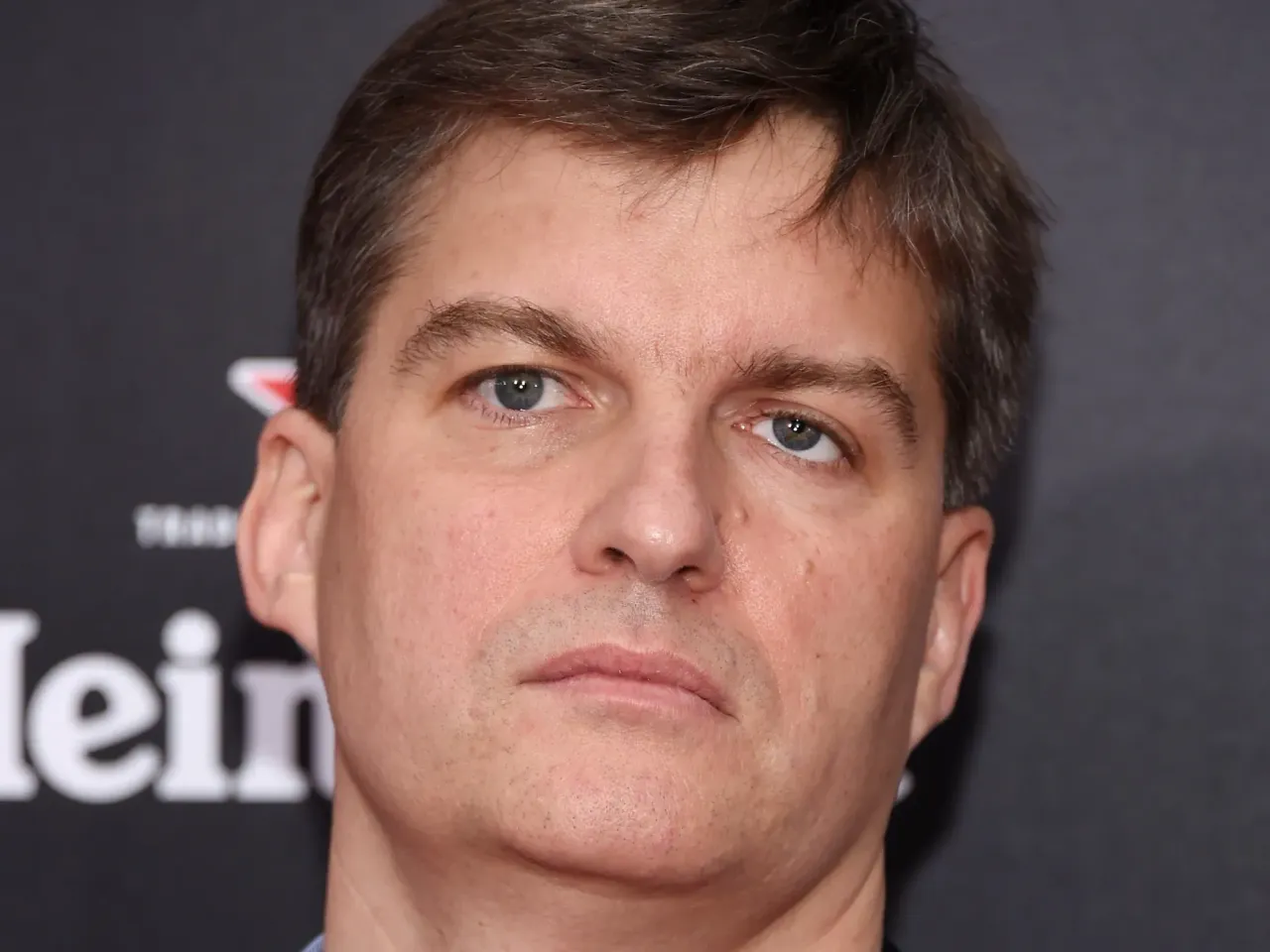


- Since shorting Nvidia late last year, Burry has become one of the loudest critics of the AI-driven rally in chip and AI stocks.
- Nvidia is overly reliant on a handful of customers, the investor said.
- NVDA stock declined 4.3% last week, even as the retail sentiment moved higher to ‘extremely bullish.’
Advertisement|Remove ads.
“The Big Short” investor Michael Burry issued another warning on Nvidia and the broader AI trade on Saturday, arguing that the current surge in AI demand is only “temporary.”
He said Nvidia has committed billions of dollars toward capacity expansion to meet hyperscaler demand, while those same hyperscalers have piled on massive debt to finance aggressive data-center buildouts — a combination Burry believes creates significant risks across the market.
Since taking a short position in Nvidia late last year, Burry has been one of the most vocal skeptics of the market euphoria surrounding AI and the resulting rally in chipmakers and other AI-linked stocks.
Advertisement|Remove ads.
Burry Details NVDA Risks
In a new Substack post, he argued that the current AI-linked demand is driven by a temporary phase of benchmarking, trace-harvesting, and "tokenmaxxing," which refers to the practice of companies forcing employees to exhaustively use tokens to train models through unpaid prompt labor. This demand is being counted as permanent when it is actually a passing trend, Burry believes.
Nvidia is overly reliant “on a concentrated set of buyers whose demand is being distorted by a training phase that will not last,” Burry said, pointing out that if Microsoft were to cut its capital expenditure on Nvidia chips by just 20%, it would result in a massive 4.2% hit to Nvidia's total revenue.
He also flagged what is likely front-loading. For the first time, Microsoft’s percentage of Nvidia’s accounts receivable rose significantly even as its percentage of Nvidia’s total revenue fell. This suggests Microsoft may be pulling forward inventory it doesn't need, or Nvidia is pushing inventory forward to artificially boost quarterly numbers, Burry argued.
Advertisement|Remove ads.
The customer concentration risk is exacerbated by Nvidia’s expansion of its supply chain to meet elevated demand. Burry noted that Nvidia has committed $119 billion to custom, non-cancellable lines at TSMC.
The company’s total forward non-cancellable commitments were $182 billion – an amount that exceeds Nvidia’s annual operating cash flow, creating severe financial vulnerability if demand drops, Burry said.
Add to the blog post, Moody’s found that the five major hyperscalers – Microsoft, Amazon, Alphabet, Meta, and Oracle – together have $662 billion off-balance sheet commitments, which Burry said will “become very real in a correlation event and create strong motivation to walk away from data centers en masse.”
Advertisement|Remove ads.
NVDA Stock Move, Retail View
Last week, Nvidia reported blowout quarterly results, announced an $80 billion share buyback, and raised its dividend — moves that signaled strong financial health and underscored robust demand for AI chips.
Yet, for a variety of reasons, the stock barely moved higher. Nvidia has notably underperformed several of its chip peers in recent months, fueling both curiosity and frustration among investors.
On Stocktwits, the retail sentiment for NVDA has been climbing since the start of last week and was ‘extremely bullish’ as of late Monday.
Advertisement|Remove ads.
Year to date, NVDA shares have added 15.5%, compared to the 78.5% gains in the iShares Semiconductor ETF (SOXX) and 9.2% gains in the benchmark S&P 500 Index (SPX).
For updates and corrections, email newsroom[at]stocktwits[dot]com.
Read Next: Why NVTS Stock Is Extending Its Breakout Rally From Last Week
Advertisement|Remove ads.
Comments posted here will also appear on symbol pages.

Latest News
/filters:format(webp)https://news.stocktwits-cdn.com/large_Getty_Images_2212073770_5d748cf4e6.jpg)
/filters:format(webp)https://news.stocktwits-cdn.com/Anushka_Basu_make_me_smile_in_the_picture_b92832aa_af59_4141_aacc_4180d2241ba8_1_2_png_1086e0ed8c.webp) Anushka Basu·3h ago
Anushka Basu·3h ago/filters:format(webp)https://news.stocktwits-cdn.com/large_Getty_Images_2191588209_jpg_4bdcedf469.webp) Anushka Basu·4h ago
Anushka Basu·4h ago/filters:format(webp)https://news.stocktwits-cdn.com/large_Getty_Images_2260497335_jpg_9e5edc45ca.webp) Anushka Basu·5h ago
Anushka Basu·5h ago/filters:format(webp)https://news.stocktwits-cdn.com/large_Getty_Images_1239809188_jpg_1d9fac9e1f.webp) Anushka Basu·6h ago
Anushka Basu·6h ago/filters:format(webp)https://news.stocktwits-cdn.com/large_Getty_Images_915443252_7521437c51.jpg) Anushka Basu·8h ago
Anushka Basu·8h ago/filters:format(webp)https://news.stocktwits-cdn.com/large_arthur_hayes_2026_OG_jpg_9f3524f8b1.webp) Anushka Basu·9h ago
Anushka Basu·9h ago