


Advertisement|Remove ads.
Michael Burry Sees 'Deadly Case Of Indigestion' Spreading From Big Tech To Broader Market As Mag 7 ETF Heads For Worst Quarter Ever
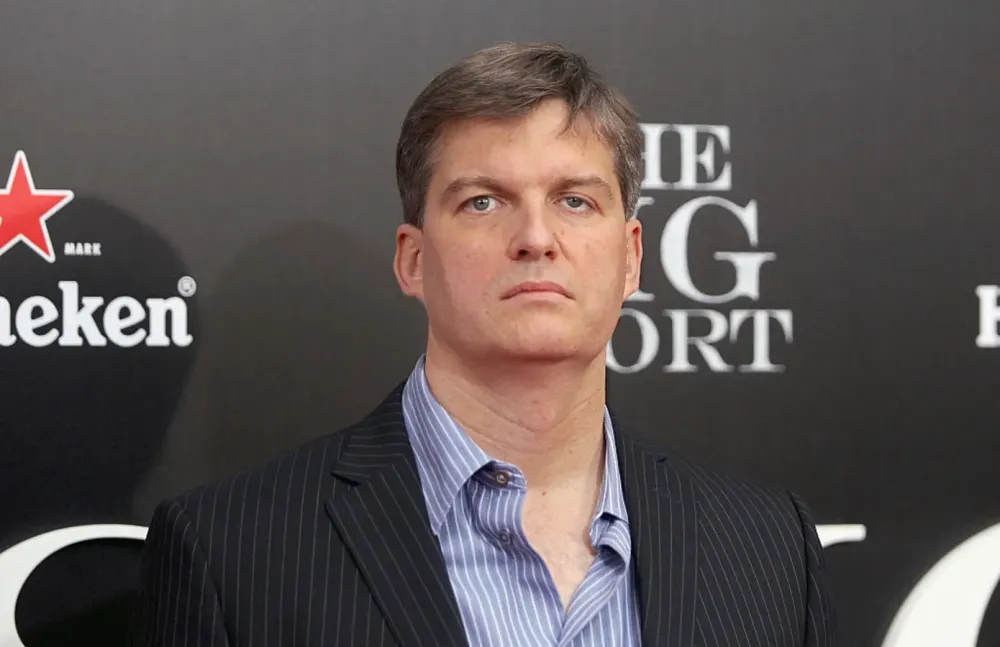


- With stocks falling, Big Tech companies and their investors will begin to question the huge capex plans, potentially leading to cuts or slower investment.
- “Regardless of what happens in Iran, it will be tough for the hyperscalers and the big tech,” said Burry
- An ETF tracking Nasdaq-100 stocks is heading for its worst quarterly drop since 2022; Another ETF tracking Mag7 equities is heading for its worst drop since the fund started in 2023.
Advertisement|Remove ads.
Big Tech stocks are having a terrible 2026. While that has increased the appeal of certain marquee names that were, until recently, believed to be too expensive, a notable investor has sounded the alarm, warning of systemic risks that could continue to weigh on the sector and the broader market.
Michael Burry, who famously predicted and profited from the 2008 financial crisis, believes that top investors who piled heavily into Big Tech stocks in recent years would find it hard to generate returns on their investments.
With bond yields rising, which increases the cost of borrowing for private equity and other large investment funds, and tech stocks remaining weak, they might have to sell off their other investments to keep returns flowing, according to Burry's comments in his Substack AMA chat.
Advertisement|Remove ads.
“PE (private equity) isn't going to recover from the fact they paid way too much because they could borrow at such low rates, and that problem is accelerating lately as funding costs go up and bonds start to widen,” Burry wrote.
“That will end badly because it is so illiquid and so bad that the Endowments, Pensions, Sovereign Wealth Funds, Foundations that have been gorging on PE chasing the returns will have a deadly case of indigestion that spreads to other asset classes held by these giant investors,” Burry said.
That stress, in Burry’s view, is colliding with a second issue: the uncertain return on AI spending. Big Tech and hyperscalers have been pouring massive capex into AI infrastructure, but the payoff is still unclear. If stock prices keep falling, boards and investors will begin questioning that spending, potentially leading to capex cuts or slower investment.
“Regardless of what happens in Iran, it will be tough for the hyperscalers and the big tech,” Burry said, adding that he might publish “short thoughts” on Microsoft soon.
Advertisement|Remove ads.
Q1 Tech Rout
Burry’s gloomy view comes at a time of already widespread weakness in the tech sector. The Invesco QQQ Trust Series 1 (QQQ), which tracks stocks in the Nasdaq-100 index, declined 9% in the first three months of the year, its worst quarterly performance since the June quarter of 2022. The Roundhill Magnificent Seven ETF (MAGS), which tracks the Magnificent Seven group of equities, declined 16% – marking its worst showing since the fund was launched in 2023.
Beyond the megacaps, niche software companies were hammered significantly. Atlassian Corp is the biggest loser on Nasdaq, declining nearly 60% in the quarter. AppLovin, Workday, The Trade Desk, Zscaler, and Intuit declined 35% to 46%.
The once-high-flying memory stocks – Micron, SanDisk, Western Digital, and Seagate – hit a wall in March. Microsoft is heading for its worst quarterly showing since the 2008 financial crisis.
Advertisement|Remove ads.
For updates and corrections, email newsroom[at]stocktwits[dot]com.
Read Next: MU, SNDK, WDC, STX: Memory Chip Stocks Retreat Amid Google's TurboQuant Threat, Broader Tech Selloff
Comments posted here will also appear on symbol pages.

Latest News
/filters:format(webp)https://news.stocktwits-cdn.com/large_Getty_Images_1569415620_1ad6cfc5c6.jpg)
/filters:format(webp)https://news.stocktwits-cdn.com/Anushka_Basu_make_me_smile_in_the_picture_b92832aa_af59_4141_aacc_4180d2241ba8_1_2_png_1086e0ed8c.webp) Anushka Basu·12m ago
Anushka Basu·12m ago/filters:format(webp)https://news.stocktwits-cdn.com/large_Getty_Images_2295245703_1237d2403d.jpg)
/filters:format(webp)https://st-everywhere-cms-prod.s3.us-east-1.amazonaws.com/i_OS_App_Icon_1_8054f2a2fe.png) Stocktwits News Desk·18m ago
Stocktwits News Desk·18m ago/filters:format(webp)https://news.stocktwits-cdn.com/large_new_york_stock_exchange_jpg_e1f85c0d8c.webp) Stocktwits News Desk·2h ago
Stocktwits News Desk·2h ago/filters:format(webp)https://news.stocktwits-cdn.com/large_starlink_jpg_39bb7b2774.webp) Stocktwits News Desk·3h ago
Stocktwits News Desk·3h ago/filters:format(webp)https://news.stocktwits-cdn.com/large_cathiewood_OG_jpg_a3c8fddb3f.webp) Stocktwits News Desk·5h ago
Stocktwits News Desk·5h ago/filters:format(webp)https://news.stocktwits-cdn.com/Getty_Images_2237643016_jpg_17a9a7eb9d.webp) Stocktwits News Desk·6h ago
Stocktwits News Desk·6h ago