


Advertisement|Remove ads.
Nvidia Reportedly Sees Alibaba, ByteDance, Tencent Order $35B In RTX PRO 5500 Chips Amid US Export Curbs
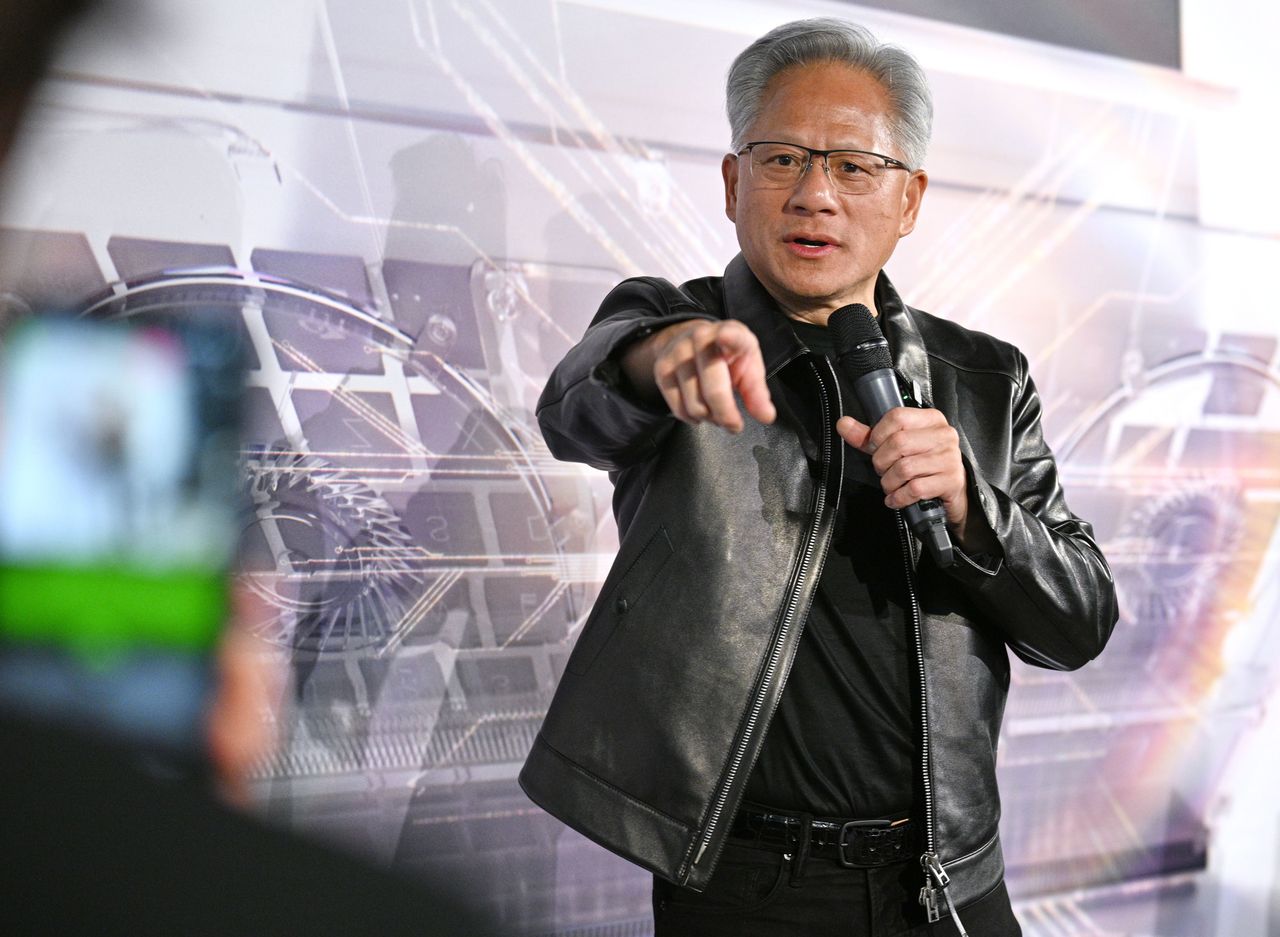


- According to a Reuters report, Nvidia has received orders for more than 3 million RTX PRO 5500 graphics cards from Alibaba, Tencent and ByteDance, with a combined list price exceeding $35 billion.
- Total orders for the cards from Chinese customers have reportedly topped 6 million units, exceeding Nvidia’s planned production capacity.
- U.S. export restrictions on Nvidia’s more powerful AI chips have pushed Chinese technology companies toward alternative GPUs.
Advertisement|Remove ads.
Chinese tech giants Alibaba (BABA), Tencent (TCEHY), ByteDance and other Chinese companies have reportedly ordered over $70 billion worth of Nvidia’s (NVDA) new RTX PRO 5500 graphics cards amid U.S. export curbs that keep them from purchasing the company’s more powerful chips.
According to a Reuters report, the three companies have ordered more than 3 million of the workstation ships, which come with a collective sticker price of over $35 billion. Moreover, the overall number of orders from Chinese customers has exceeded 6 million.

On the flip side, the report added that Nvidia has told its partners that it cannot guarantee that it will be able to fill the orders because the demand that’s come in from Chinese companies has exceeded the planned production they had in place. One source said Nvidia may be able to deliver only 5% to 10% of the total order amount.
Advertisement|Remove ads.
NVDA stock edged 0.18% lower in pre-market trade on Tuesday amid broader market weakness. On Stocktwits, retail sentiment around the Jensen Huang-led company trended in ‘neutral’ territory, accompanied by ‘normal’ levels of chatter.
US Export Restrictions Drive Demand For Nvidia’s Alternative GPUs
The rush of chip orders comes amid U.S. export controls that prohibit Nvidia from selling its Blackwell-based B300 data-center chip to Chinese buyers. The sale of its older Hopper-based H200 chips is only approved on a case-by-case basis.
The RTX PRO 5500 is a workstation graphics card that is less powerful than the H200 and B300. Those data-center chips are designed to be linked in large numbers for demanding AI training and deployment workloads.
Advertisement|Remove ads.
Chinese Tech Firms Seek GPUs For AI Inference
Chinese companies are reportedly seeking the RTX PRO 5500 cards primarily for AI inference, or running trained models to generate responses to user queries. Inference generally requires less computing power than training AI models on massive datasets, making less powerful chips potentially suitable for some workloads.
The reported orders highlight the demand for Nvidia hardware in China despite restrictions on sales of its most powerful processors. But the gap between the number of orders and Nvidia’s planned production raises questions about how much of that demand the company can ultimately fulfill.
Read also: Black Monday Calls, $110 Oil, A Chip Rout: 3 Charts to Watch This Week
Advertisement|Remove ads.
For updates and corrections, email newsroom[at]stocktwits[dot]com.
Comments posted here will also appear on symbol pages.

Latest News

 Prabhjote Gill·5m ago

 Harshita Tyagi·18m ago
 Prabhjote Gill·36m ago

 Heera Hari·40m ago

 Anushka Basu·1h ago
 Prabhjote Gill·1h ago