


Advertisement|Remove ads.
Is Oil Risk Premium Peaking? USO, BATL, TPET Slide Premarket As Iran Talks Resume, IEA Turns Bearish On Demand
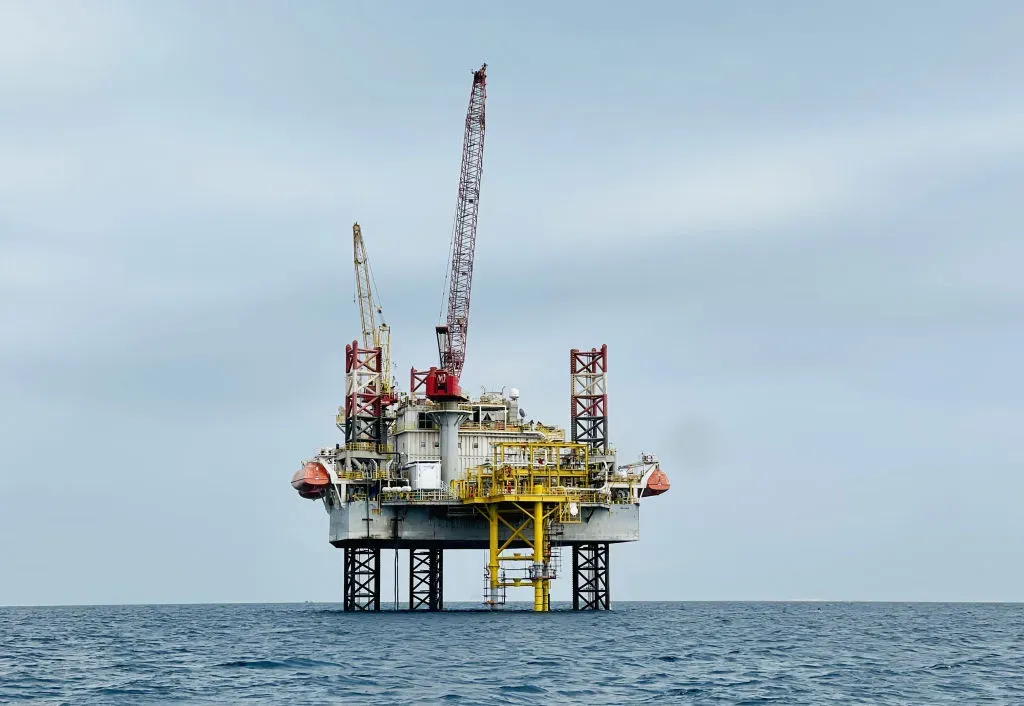


- Brent hovered near $98.50 and WTI near $96.88 as traders assessed the likelihood of renewed face-to-face talks possibly returning to Pakistan this week.
- Saudi Arabia reportedly urged the U.S. to reconsider the blockade, warning escalation could risk broader disruption to regional shipping corridors.
- The IEA has projected Q2 demand to drop 1.5 million barrels per day.
Advertisement|Remove ads.
Major oil stocks and index funds fell in premarket trading on Tuesday as crude prices slipped below recent highs on signs that Washington and Tehran may resume negotiations despite the start of a U.S. blockade in the Strait of Hormuz.
Shares of Battalion Oil (BATL) fell about 5% in premarket trading, while Trio Petroleum (TPET) and EON Resources (EONR) each declined roughly 4%. Indonesia Energy (INDO) slipped over 1%, and the United States Oil Fund (USO) edged marginally lower.
Oil Slips As US-Iran Peace Talks Return To Focus
Brent crude traded near $98.50 a barrel, while West Texas Intermediate hovered around $96.88.
Advertisement|Remove ads.
Oil prices edged lower as traders assessed signals that the U.S. and Iran may hold another round of face-to-face negotiations before the expiration of a two-week pause in hostilities announced on April 7. Negotiating teams could reportedly return to Pakistan this week following last weekend’s unsuccessful talks in securing a longer-term ceasefire framework.
Meanwhile, Washington moved ahead with maritime restrictions targeting vessels heading to or leaving Iranian Persian Gulf ports. Shipping data showed a Chinese tanker, Rich Starry, transiting the Strait of Hormuz, according to Bloomberg.
Vice President JD Vance said the blockade increases Washington’s leverage in negotiations with Tehran, while acknowledging higher gasoline prices have added pressure on U.S. consumers.
Advertisement|Remove ads.
Saudi Arabia has urged the U.S. to reconsider the blockade and return to negotiations, according to a Wall Street Journal report, citing Arab officials, amid concerns the escalation could prompt Iran to disrupt additional shipping corridors across the region.
IEA Sees Global Oil Demand Turning Negative In 2026
The International Energy Agency (IEA) said the conflict is now expected to push global oil demand into contraction this year, reversing earlier expectations for growth and marking the first annual decline since the pandemic.
The agency now forecasts demand falling by 80,000 barrels per day this year compared with its earlier projection for 640,000 barrels per day of growth. Additionally, second-quarter demand is expected to drop by 1.5 million barrels per day, the biggest drop since the pandemic.
Advertisement|Remove ads.
ANZ Warns Supply Recovery May Stay Slow Into Mid-2026
ANZ said the oil market no longer needs a worst-case escalation scenario to justify elevated pricing levels, warning that tight balances alone are sufficient to sustain Brent near recent thresholds, WSJ noted.
The bank estimates that 10 million barrels per day of supply has been removed from global markets relative to January baseline expectations due to the Iran conflict, with recovery likely to remain slow, incomplete and uneven through mid-2026. ANZ expects crude to remain above $90 per barrel for the rest of the year, adding that continued disruption to Strait of Hormuz shipping increases the risk that supply normalization could take significantly longer than markets had anticipated.
How Do Retail Traders Feel About Energy Stocks?
On Stocktwits, retail sentiment around USO, INDO, and EONR was ‘extremely bearish’, with message volume ‘high’ for USO, ‘low’ for INDO, and ‘extremely low’ for EONR. Sentiment on TPET was ‘bearish’ amid ‘low’ message volume, while BATL stood out with ‘bullish’ sentiment alongside ‘high’ message volume.
Advertisement|Remove ads.
Over the past year, BATL has surged 227%, followed by EONR up 103% and USO gaining 86%, while INDO rose 15% and TPET declined 33% over the same period.
For updates and corrections, email newsroom[at]stocktwits[dot]com.
Read Next: Novo Nordisk Stock Up Over 2% Premarket Today — Thanks To OpenAI Tie-Up
Advertisement|Remove ads.
Comments posted here will also appear on symbol pages.

Latest News
/filters:format(webp)https://news.stocktwits-cdn.com/gettyimages_2281711644_612x612_afdda9ed16.jpg)
/filters:format(webp)https://news.stocktwits-cdn.com/Prabhjote_DP_67623a9828.jpg) Prabhjote Gill·25m ago
Prabhjote Gill·25m ago/filters:format(webp)https://news.stocktwits-cdn.com/large_Semiconductors_jpg_c31a11a7a4.webp)
/filters:format(webp)https://news.stocktwits-cdn.com/Harshita_3cfe02022c.jpg) Harshita Tyagi·29m ago
Harshita Tyagi·29m ago/filters:format(webp)https://news.stocktwits-cdn.com/large_spacex_jpg_0ee570830f.webp)
/filters:format(webp)https://news.stocktwits-cdn.com/vivekkrishnanphotography_58_jpg_0e45f66a62.webp) Arnab Paul·53m ago
Arnab Paul·53m ago/filters:format(webp)https://news.stocktwits-cdn.com/large_Getty_Images_2296543515_578df64e54.jpg)
/filters:format(webp)https://news.stocktwits-cdn.com/Anushka_Basu_make_me_smile_in_the_picture_b92832aa_af59_4141_aacc_4180d2241ba8_1_2_png_1086e0ed8c.webp) Anushka Basu·53m ago
Anushka Basu·53m ago/filters:format(webp)https://news.stocktwits-cdn.com/large_ibrx_1fe35a873b.jpg)
/filters:format(webp)https://news.stocktwits-cdn.com/unnamed_jpg_9dff551b50.webp) Anan Ashraf·1h ago
Anan Ashraf·1h ago/filters:format(webp)https://news.stocktwits-cdn.com/large_LMT_Lockheed_f7347cd9e5.webp)
/filters:format(webp)https://news.stocktwits-cdn.com/Heera_1_1c30cb0170.PNG) Heera Hari·1h ago
Heera Hari·1h ago