


Advertisement|Remove ads.
OpenAI’s Damning Year Of Legal Battles Exposes Cost Of Moving Fast In AI Gold Rush
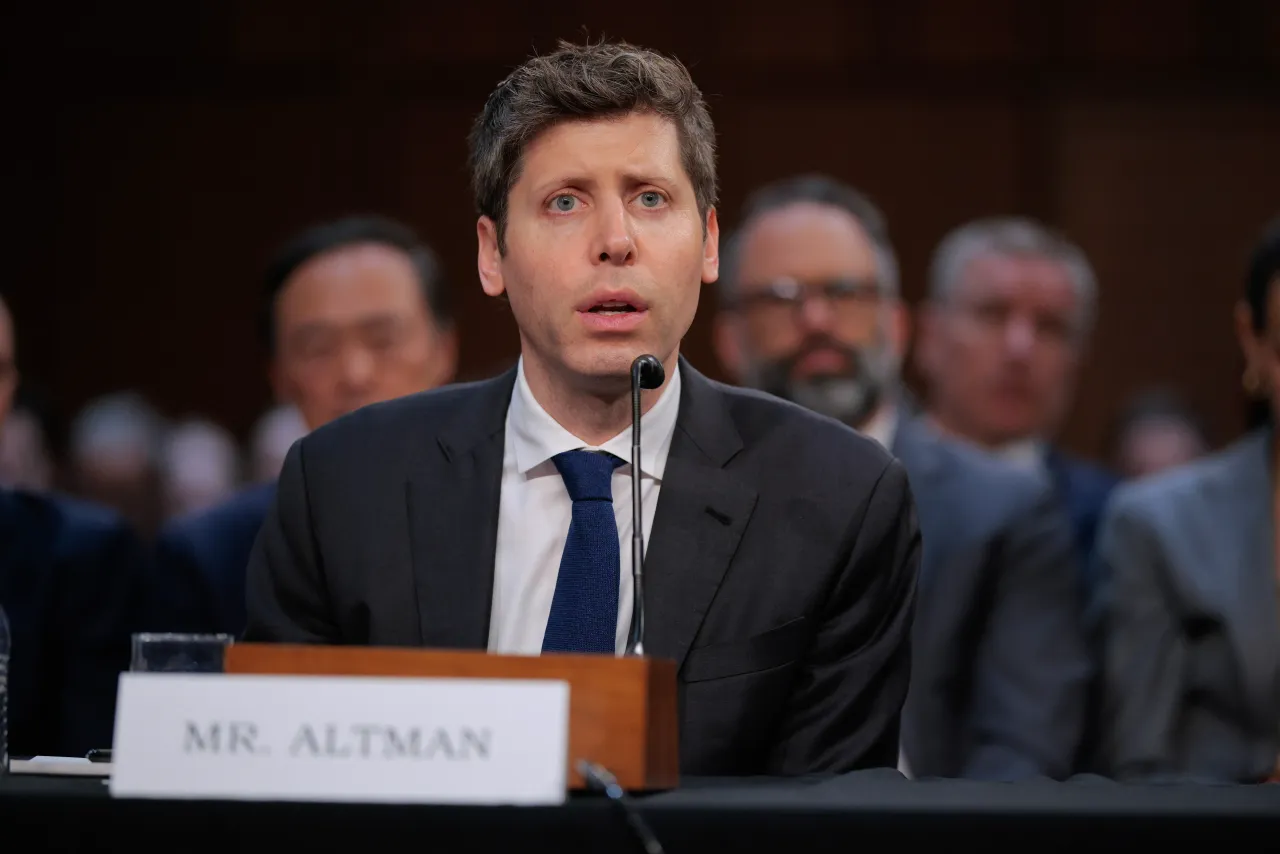

- A group of writers, which includes the author of "Bad Blood,” sued OpenAI and leading AI chatbot firms on Monday.
- The lawsuit is the latest in a list of complaints against AI companies, mainly OpenAI.
- Data shows that OpenAI has received at least seven new lawsuits this year.
Advertisement|Remove ads.
John Carreyrou, a New York Times reporter and author of "Bad Blood: Secrets and Lies in a Silicon Valley Startup," and five other writers sued OpenAI, Anthropic, xAI, Google, and Meta Platform on Monday for using copyrighted books without permission to train their AI systems.
The development is only the latest in a series of lawsuits and complaints against AI chatbot companies, particularly OpenAI. Stocktwits-compiled data (see table) shows that the ChatGPT maker has had a rather busy year on the legal front. In fact, an increasing share of lawsuits is now being brought by independent plaintiffs, rather than large corporations, as was the case in the past.
The latest authors’ lawsuit – which follows a similar but more significant one filed by the Authors Guild and prominent novelists like John Grisham and George R.R. Martin in 2023 – accuses AI companies of pirating their books and feeding them into the large language models (LLMs) that power the companies' chatbots. The case is the first to name xAI as a defendant.
Advertisement|Remove ads.
OpenAI’s List Of Legal Troubles
Lawsuit | Filed | Issue | Status |
Authors Guild | Sep-23 | Copyright/Class Action | Ongoing; claims were allowed to proceed with discovery underway |
The New York Times v. OpenAI & Microsoft | Dec-23 | Copyright | Ongoing; discovery and litigation ahead |
GEMA | Nov-24 | Copyright | Court ruled against OpenAI in Nov 2025; OpenAI is considering an appeal |
Ziff Davis | Apr-25 | Copyright | Ongoing; discovery underway |
Raine Family | Aug-25 | Negligence/Wrongful Death | Ongoing; lawsuit actively proceeding in California state court |
Elon Musk/xAI v. OpenAI & Apple | Aug-25 | Antitrust | Ongoing; early bid to block the for-profit plan was rejected, but broader claims continue |
Cameo | Oct-25 | Trademark | Ongoing; OpenAI has disputed an exclusive trademark claim |
ANI | Nov-25 | Copyright | Ongoing; hearings and submissions continuing in India |
Suzanne Adams' Estate | Dec-25 | Negligence/Wrongful Death | Newly filed |
Source: media reports, Stocktwits research
Those claims are not new. Interestingly, OpenAI rival Perplexity recently reached a $1.5 billion settlement with a class of authors who made similar claims against it. However, even as lawsuits mount, OpenAI has yet to offer a settlement or bring a significant case to a definitive close.
Advertisement|Remove ads.
Significant Cases
The most significant case against OpenAI is one brought by The New York Times in late 2023. It also names Microsoft, an OpenAI investor, as a defendant. In March this year, a New York judge allowed the core copyright claims to proceed. The widely watched case could serve as a benchmark for an evolving AI copyright landscape.
More recently, a separate kind of development jolted the AI industry. A U.S. teenager took his life in April after allegedly discussing the plan at length with ChatGPT; his parents subsequently sued OpenAI and CEO Sam Altman for negligence and wrongful death. The Adam Raine case revived the debate over another, but more critical, topic: AI safety. The case is ongoing.
The legal issues come as OpenAI’s massive expansion draws scrutiny. Although the company has raised significant funding and recently converted to a for-profit entity (which opens it up to further capital raises), its pledge to invest $1.4 trillion in AI infrastructure has raised concerns.
Advertisement|Remove ads.
Altman has said that OpenAI is on track to achieve $20 billion in annualized revenue by the year-end, “and grow to hundreds of billions by 2030.” However, its billions of dollars in seemingly “circular deals” with cloud and chip companies are drawing scrutiny and putting pressure on partners, such as Oracle.
For updates and corrections, email newsroom[at]stocktwits[dot]com.
Advertisement|Remove ads.
Comments posted here will also appear on symbol pages.

Latest News
/filters:format(webp)https://news.stocktwits-cdn.com/large_verizon_OG_jpg_4b76f0e1af.webp)
/filters:format(webp)https://news.stocktwits-cdn.com/unnamed_jpg_9dff551b50.webp) Anan Ashraf·26m ago
Anan Ashraf·26m ago/filters:format(webp)https://news.stocktwits-cdn.com/large_Getty_Images_2295226888_dcdb8e346d.jpg)
/filters:format(webp)https://news.stocktwits-cdn.com/Prabhjote_DP_67623a9828.jpg) Prabhjote Gill·1h ago
Prabhjote Gill·1h ago/filters:format(webp)https://news.stocktwits-cdn.com/large_Trending_stock_resized_may_jpg_bc23339ae7.webp)
/filters:format(webp)https://news.stocktwits-cdn.com/vivekkrishnanphotography_58_jpg_0e45f66a62.webp) Arnab Paul·1h ago
Arnab Paul·1h ago/filters:format(webp)https://st-everywhere-cms-prod.s3.us-east-1.amazonaws.com/large_merck_logo_resized_05f46cfc54.jpg) Arnab Paul·2h ago
Arnab Paul·2h ago/filters:format(webp)https://news.stocktwits-cdn.com/gettyimages_2268540678_612x612_61ca3b12d2.jpg)
/filters:format(webp)https://news.stocktwits-cdn.com/Heera_1_1c30cb0170.PNG) Heera Hari·2h ago
Heera Hari·2h ago/filters:format(webp)https://news.stocktwits-cdn.com/large_Tom_Lee_9782f9c21f.webp) Prabhjote Gill·2h ago
Prabhjote Gill·2h ago