


Advertisement|Remove ads.
Shopify’s AI Push Paid Off Handsomely In 2025 — Will The New Year Usher In More Gains?
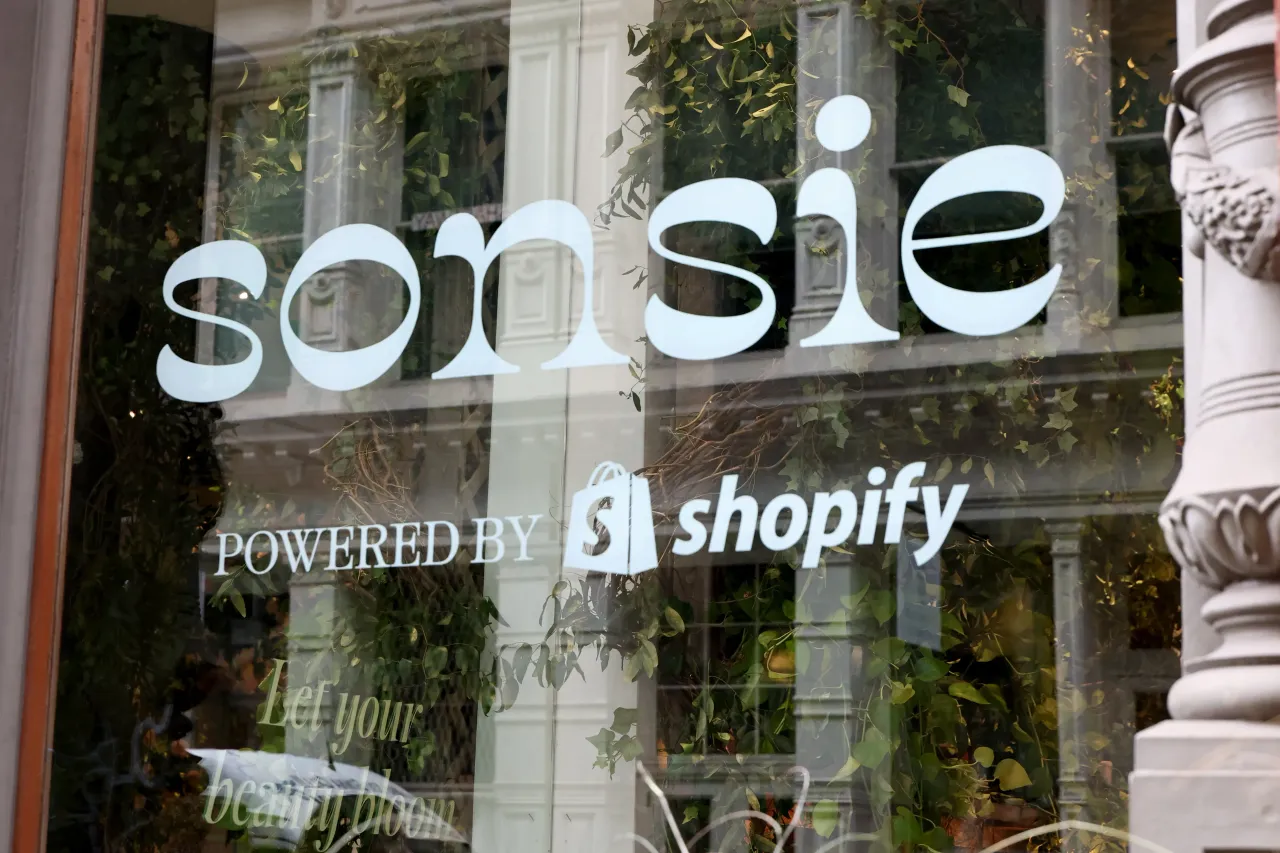


- In December, Shopify announced that Agentic Storefronts help brands on Shopify instantly and accurately get discovered on AI platforms like ChatGPT, Perplexity, and Microsoft Copilot.
- The company launched its 2026 Winter edition called “The RenAIssance Edition,” aimed at further enhancing its AI tools for businesses.
- Wells Fargo said in December that it sees Shopify as an under-earning asset positioned to be a primary beneficiary of changes in AI search and discovery.
Advertisement|Remove ads.
Americans have embraced artificial intelligence (AI) in their everyday lives. With nearly every firm integrating it into their ecosystems, even small businesses on the Shopify platform have tapped into this trend, helping boost the e-commerce platform’s growth.
The AI initiatives that Shopify has rolled out have propelled the stock to a 50% jump in 2025, showcasing investor confidence in the company’s efforts to ensure the growing need for AI is part of merchant growth on their platform.
Shopify’s “Magic” Efforts
When Shopify first launched “Shopify Magic,” it was to help merchants complete tedious tasks more easily. The release of Shopify Magic’s suite of AI-powered features was designed to generate everything from emails to product descriptions with the push of a button.
Advertisement|Remove ads.
Since the launch in 2023, the company has worked to enhance the AI-powered suite's offerings to leverage AI capabilities better and make it easier for merchants to use the tool through its assistant, Sidekick.
Sidekick - Shopify's AI assistant
In an attempt to make AI more friendly for its merchants, Shopify started Sidekick, which helps businesses initiate conversations to assist with improving their business, ensure creativity and also streamline workflows.
Sidekick, as the company describes, is an AI-enabled commerce assistant that gives business owners more “superpowers” on Shopify. It is purpose-built to answer all of their questions as they start and scale their business.
Advertisement|Remove ads.
Shopify has tasked Sidekick with helping businesses with tasks such as setting up discounts for holiday sales, redesigning stores, and tracking best-selling products. Over the year, Shopify has integrated better image generation, automated product tagging, and customer service replies into the Sidekick service.
Wall Street Analysts On Shopify’s AI
Wells Fargo said in December that it sees Shopify as an under-earning asset positioned to be a primary beneficiary of changes in AI search and discovery. Wells Fargo noted Shopify would capture demand-generation economics in the AI world.
Barclays noted that Shopify is in a "sweet spot" where enterprise merchandise volume is scaling, and agentic commerce is "coming up quickly." This holiday season, retailers across the board turned to AI and agents to boost sales with ChatGPT and other AI chatbots now woven into many companies’ e-commerce systems.
Advertisement|Remove ads.
Shopify’s Agentic Storefronts
In December, Shopify announced that Agentic Storefronts help brands on Shopify instantly and accurately get discovered on AI platforms like ChatGPT, Perplexity, and Microsoft Copilot, with others soon to be integrated.
“One quick setup in your admin and you’re selling everywhere AI conversations happen. And it does this while keeping your brand front and center,” Shopify said in a statement. The company said that customers discover and buy the products live directly in the conversation and businesses on its platform get end-to-end agentic commerce powered by Shopify checkout.
With Agentic Storefronts, merchants on Shopify will be integrated with every AI platform individually, and Shopify Catalog will syndicate and surface their products to AI chats everywhere.
Advertisement|Remove ads.
Shopify's 2026 “RenAIassance”
In December, the company launched its 2026 Winter edition called “The RenAIssance Edition,” aimed at further enhancing its AI tools for businesses. It included an upgrade to Sidekick, with the assistant now helping to analyze and find growth opportunities. Sidekick’s research uses both store-specific and Shopify-wide signals, ensuring every recommendation is “unique, contextual, and valuable,” Shopify said.
Shopify added that Sidekick will notify merchants when it sees something worthwhile and can now take on more complex tasks, generating to-do lists and working with the businesses to complete them. Sidekick also offers automation building, improved theme editing, email editing, and the ability to create a custom app.
How Are Stocktwits Users Reacting?
Retail sentiment on Shopify dipped to ‘bearish’ from ‘bullish’ a month ago, with message volumes at ‘low’ levels, according to data from Stocktwits.
Advertisement|Remove ads.
Shares of Shopify have gained over 6% in the last three months.
For updates and corrections, email newsroom[at]stocktwits[dot]com.
Also See: Chili’s Bet It Could Do ‘Value Meals’ Better Than McD & Wendy’s — Its Stock Shows It Was Right
Advertisement|Remove ads.
Comments posted here will also appear on symbol pages.

Latest News
/filters:format(webp)https://news.stocktwits-cdn.com/large_So_Fi_new_6d7889a863.webp)
/filters:format(webp)https://news.stocktwits-cdn.com/Aashika_Suresh_Profile_Picture_jpg_2acd6f446c.webp) Aashika Suresh·25m ago
Aashika Suresh·25m ago/filters:format(webp)https://news.stocktwits-cdn.com/large_Getty_Images_2272991538_826b8a4556.jpg)
/filters:format(webp)https://news.stocktwits-cdn.com/IMG_8805_JPG_6768aaedc3.webp) Deepti Sri·33m ago
Deepti Sri·33m ago/filters:format(webp)https://news.stocktwits-cdn.com/large_Getty_Images_2274484367_jpg_e7062348b5.webp)
/filters:format(webp)https://news.stocktwits-cdn.com/shivani_photo_jpg_dd6e01afa4.webp) Shivani Kumaresan·1h ago
Shivani Kumaresan·1h ago/filters:format(webp)https://news.stocktwits-cdn.com/large_SK_Hynix_jpg_efba9fa39d.webp)
/filters:format(webp)https://news.stocktwits-cdn.com/IMG_9209_1_d9c1acde92.jpeg) Yuvraj Malik·1h ago
Yuvraj Malik·1h ago/filters:format(webp)https://news.stocktwits-cdn.com/large_rocketlab_jpg_fcfa5bb73e.webp) Deepti Sri·1h ago
Deepti Sri·1h ago/filters:format(webp)https://news.stocktwits-cdn.com/gettyimages_2267701500_594x594_1cfbb8b517.jpg) Aashika Suresh·2h ago
Aashika Suresh·2h ago