


Advertisement|Remove ads.
Stocktwits AI Roundup: Meta's Muse Lifts Chip Stocks, Anthropic's $11B Akamai Deal And Oracle's New Mexico Snag
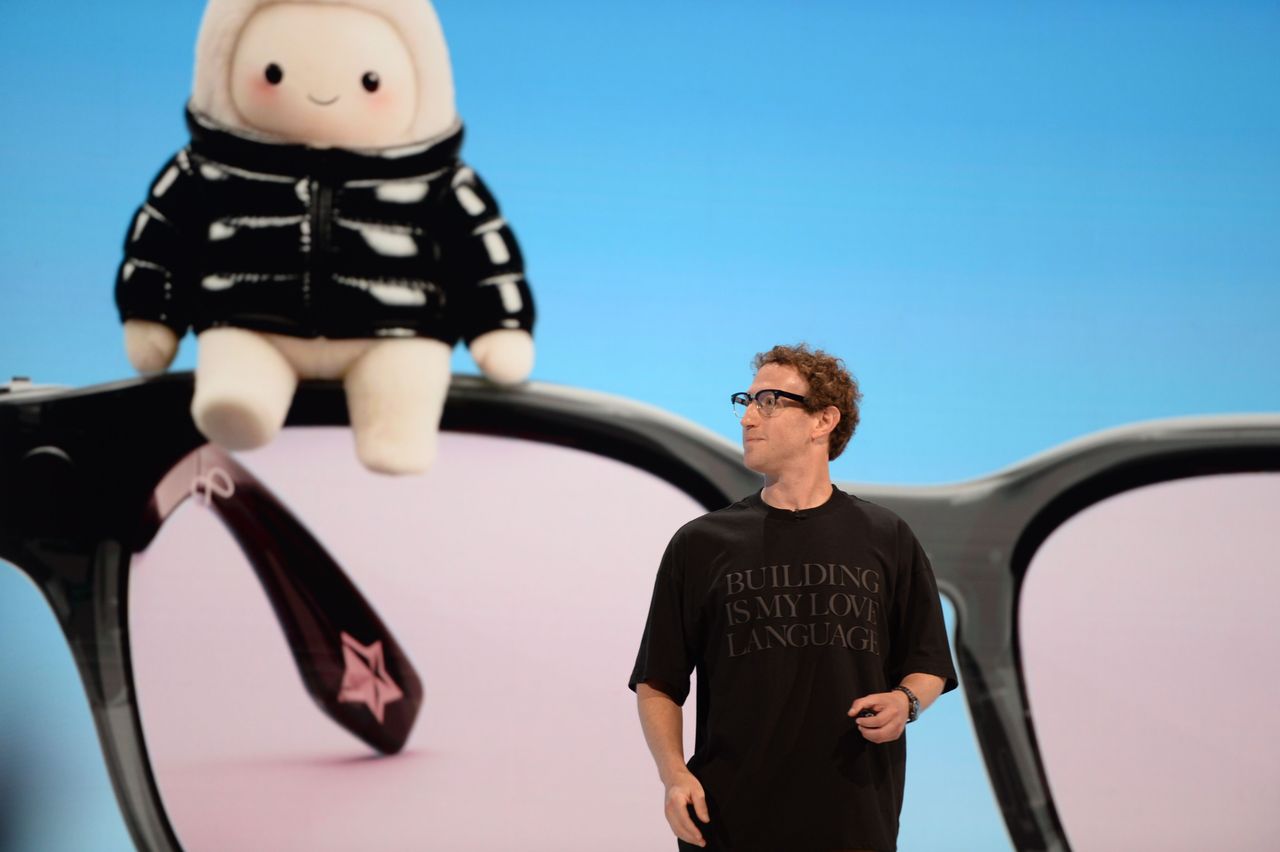


The AI trade stayed firmly in focus this week. Meta Platforms Inc.'s new Muse agent fueled fresh excitement around AI agents, while multibillion-dollar deals underscored the scale of AI spending.
At the same time, a delay risk at an Oracle Corp. (ORCL) Stargate site highlighted a growing industry challenge: turning huge AI investment commitments into actual data-center capacity. Here are the week's key developments:
Meta’s Muse Ignites AI Rally
Meta’s new Muse personal AI agent became the week’s biggest market-moving AI story, with strong early adoption reviving investor enthusiasm around agentic AI and helping push Meta shares sharply higher.
Advertisement|Remove ads.
Muse’s reception and more color on the AI strategy shared by the company at Meta Connect lifted chipmakers’ stocks (AMD crossed $1 trillion in market capitalization for the first time) and helped the Nasdaq reach a record high.
The prevailing view is that AI agents, including Muse, strengthen the case for continued spending on CPUs, GPUs and AI infrastructure. META shares rose 17% through Thursday, while the iShares Semiconductor ETF (SOXX) gained 6.2%.
Anthropic Signs $11.6B Akamai Deal
Anthropic agreed to an $11.6 billion, seven-year cloud infrastructure deal with Akamai, with a potential expansion to up to $20 billion.
Advertisement|Remove ads.
The deal is significant for AI infrastructure because it shows that scaling frontier AI workloads is creating enormous demand beyond GPUs, particularly for CPUs, networking and distributed cloud capacity.
Akamai will also grant Anthropic warrants representing up to roughly 5% of its outstanding stock, tying the two companies more closely together. AKAM shares fell initially on the deal but remained up 6.8% for the week.
Oracle Data Center Faces Delay Risk
Oracle sent a force majeure notice related to Project Jupiter, a massive New Mexico AI data-center campus being developed for the Stargate initiative, potentially allowing Oracle to delay payments if the facility misses its 2028 target.
Advertisement|Remove ads.
The 2.45-GW campus faces delays involving its gas pipeline and pending permits for its power system, although Oracle said the project remains on schedule.
Investors reacted negatively. Oracle still has to pay the rent, or “carry cost,” for up to three years if the project isn’t ready on time, the Financial Times reported, citing contract terms. Morningstar analysts said a sizable delay would impact the company’s long-term revenue targets and its investment-grade credit rating.
AI Labs Form Safety Standards Body
Google, OpenAI, and Anthropic are lining up a voluntary industry body — tentatively named the Frontier AI Standards Agency — that would launch in late 2026 or 2027, with the three companies approaching former White House AI policy adviser Sriram Krishnan to serve as chief executive.
Advertisement|Remove ads.
The pillars under discussion include shared technical evaluations, pre-release audits, independent testing frameworks and standardized safety protocols. OpenAI has publicly said it will proceed "with or without government support."
SoftBank Borrows Big For OpenAI Bet
SoftBank moved to raise more than $11 billion through one of its largest-ever junk-bond offerings, with part of the proceeds earmarked for a further investment in OpenAI.
The proposed financing, composed of dollar- and euro-denominated bonds, illustrates the extraordinary amounts of capital now required to fund OpenAI and the broader AI infrastructure buildout, while also highlighting SoftBank’s increasing financial exposure to the AI sector.
Advertisement|Remove ads.
Bloomberg reported SoftBank drew more than $20 billion of preliminary demand.
How Did Big Tech Stocks Move?
Chip stocks INTC and AMD were the top gainers among large tech stocks, rising 17% and 12.4%, respectively, this week, along with META.
The Invesco QQQ Trust Series 1 (QQQ) rose 2.3%. DELL dropped 9%, showing weakness after its incredible rally this year.
Advertisement|Remove ads.
For updates and corrections, email newsroom[at]stocktwits[dot]com.
Advertisement|Remove ads.
Comments posted here will also appear on symbol pages.

Latest News
/filters:format(webp)https://news.stocktwits-cdn.com/large_Getty_Images_2209881066_jpg_ebc4b9b217.webp)
/filters:format(webp)https://news.stocktwits-cdn.com/IMG_9209_1_d9c1acde92.jpeg) Yuvraj Malik·17m ago
Yuvraj Malik·17m ago/filters:format(webp)https://news.stocktwits-cdn.com/large_Getty_Images_2290038559_c6f6528203.jpg)
/filters:format(webp)https://news.stocktwits-cdn.com/Revised_Profile_JPG_0e0afdf5e2.webp) Preeti Ayyathurai·57m ago
Preeti Ayyathurai·57m ago/filters:format(webp)https://news.stocktwits-cdn.com/large_Getty_Images_2189472651_f98e31fd8d.jpg) Yuvraj Malik·1h ago
Yuvraj Malik·1h ago/filters:format(webp)https://news.stocktwits-cdn.com/large_Getty_Images_1236085492_jpg_4e8fbc192f.webp)
/filters:format(webp)https://news.stocktwits-cdn.com/IMG_8805_JPG_6768aaedc3.webp) Deepti Sri·1h ago
Deepti Sri·1h ago/filters:format(webp)https://news.stocktwits-cdn.com/large_space_stocks_864a31f176.jpg) Deepti Sri·1h ago
Deepti Sri·1h ago/filters:format(webp)https://news.stocktwits-cdn.com/large_Getty_Images_2296215726_e82f86b85a.jpg) Yuvraj Malik·2h ago
Yuvraj Malik·2h ago