


Advertisement|Remove ads.
'What Happened To All The Tesla Killers?' Elon Musk Taunts Rivals As Q1 US Deliveries Beat Every Other EV Maker Combined
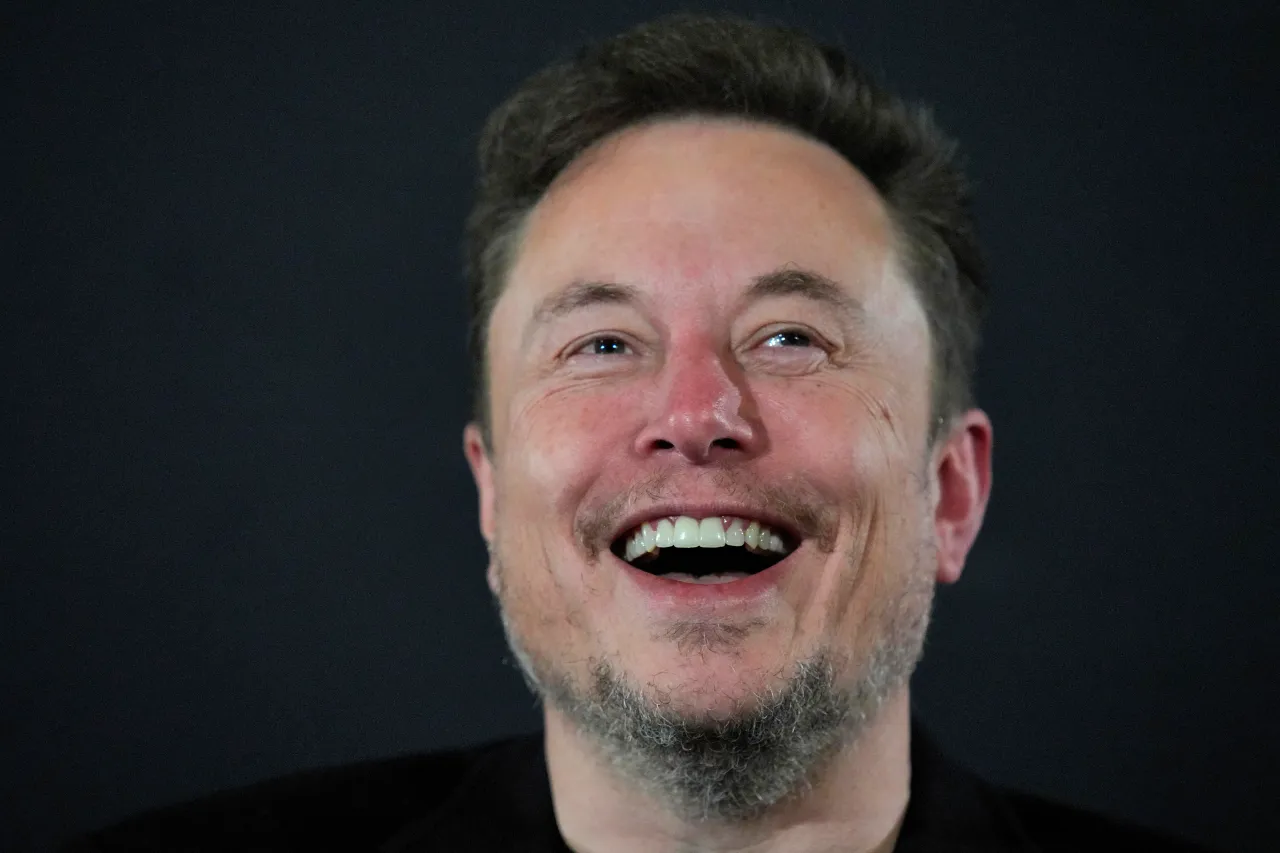


- Tesla sold 117,300 vehicles in Q1 on home turf, capturing 54.2% of the U.S. EV market share, compared with 99,099 EV deliveries by all competitors combined.
- The Model Y delivered 78,591 units, accounting for over one-third of all U.S. EV sales during the quarter.
- Legacy media outlets had previously labeled rivals such as General Motors’ Chevy Bolt, Nio, and Rivian as potential “Tesla killers.”
Advertisement|Remove ads.
Tesla, Inc. (TSLA) CEO Elon Musk took a swipe at legacy press and hedge fund short sellers after fresh U.S. EV sales data showed Tesla delivered more vehicles in the first quarter (Q1) than all competing EV brands combined.
TSLA stock rose 1% on Monday to $352.42, recording its third straight session of gains.
Musk Revives ‘Tesla Killer’ Debate After Q1 Sales Data
“What happened to all the Tesla killers that legacy press and hedge fund short sellers predicted were coming?” Musk said on X, referring to a nearly decade-long media narrative about rival EV challengers.
Advertisement|Remove ads.
According to Cox Automotive estimates, Tesla sold 117,300 vehicles in the U.S. in Q1, capturing 54.2% market share, compared with 99,099 combined deliveries from all other EV firms. Tesla’s deliveries declined 8.4% from the previous year, but its market share expanded as total U.S. EV sales fell 27% to about 216,399 units.
In 2016, Bloomberg ran a segment titled “Tesla Killer? A First Look at the Chevy Bolt,” highlighting General Motors’ long-range Bolt EV as an early potential challenger. Later in 2019, The Wall Street Journal reported that Chinese EV maker Nio was dubbed a “Tesla killer” during a CBS 60 Minutes segment featuring founder William Li.
The theme resurfaced again in 2021, when CNBC noted that Rivian had been called a “Tesla killer in some quarters” ahead of its public debut the same year.
Advertisement|Remove ads.
Tesla Widens Gap With Model Y Sales Surge
Tesla’s dominance remains anchored to the Model Y. The vehicle delivered 78,591 units in Q1, accounting for over one-third of all EVs sold in the U.S. during the quarter. On the other hand, Toyota’s bZ4X recorded 10,029 sales, while Chevrolet’s Equinox EV delivered 9,589 units.
Even EV-focused firms remained significantly smaller in volume. Rivian delivered 10,365 vehicles, up 21.2% from the previous year, but still less than one-tenth of Tesla’s quarterly total. Automakers, including Ford, Volkswagen, Audi, Honda and Nissan, also reported steep EV delivery declines in Q1.
Short Seller Criticism Of Tesla
Musk’s comment also referenced skepticism from hedge fund short sellers who have questioned Tesla’s valuation, robotaxi plans, and autonomy strategy.
Advertisement|Remove ads.
Kynikos Associates President Jim Chanos, known for predicting the fall of Enron before its collapse, recently said on X: “Why would anyone be selling a stock at 170x declining earnings (EPS peaked in 2022)…?!” He also criticized Tesla’s robotaxi projections as “ridiculous,” arguing that analysts and investors were overlooking major cost assumptions.
Chanos also argued last year that “roughly half of all ride-hailing miles are ‘dead’ (non-revenue) miles,” adding that commercial insurance alone could cost “30-40 cents per mile.”
Currently, Tesla trades at 172.9x forward 12-month earnings, compared with about 21.9x for Microsoft. The EV giant has emerged as the worst-performing stock among the "Magnificent Seven" so far this year, while Microsoft is the second-weakest performer in the group.
Advertisement|Remove ads.
Last year, investor Mark Spiegel of Stanphyl Capital was short on TSLA stock and said the company’s autonomous system “does not work safely and never will without radar and lidar,” while calling the company’s robotaxi business “nothing but a dangerous scam.”
Meanwhile, S3 Partners' data from last week showed that Tesla’s short interest declined from 80 million shares to 60 million, reducing what had been a key source of buy-to-cover demand during rallies. The stock is now more exposed to directional downside moves.
How Do Retail Traders Feel About TSLA?
On Stocktwits, retail sentiment for Tesla jumped to ‘bullish’ from ‘neutral’ levels a day ago amid ‘high’ message volume.
Advertisement|Remove ads.

One user said, “$356 is ridiculously cheap. We are in the accumulations zone.”
Another bullish user said, “it is about time for us to fly into the green territory and stay there for many weeks to come. We need to recover to $500.00 level.”
Advertisement|Remove ads.
For updates and corrections, email newsroom[at]stocktwits[dot]com.
Advertisement|Remove ads.
Comments posted here will also appear on symbol pages.

Latest News
/filters:format(webp)https://news.stocktwits-cdn.com/large_Getty_Images_2169449321_719241c1ea.jpg)
/filters:format(webp)https://news.stocktwits-cdn.com/unnamed_jpg_9dff551b50.webp) Anan Ashraf·18m ago
Anan Ashraf·18m ago/filters:format(webp)https://news.stocktwits-cdn.com/large_Getty_Images_1688507143_jpg_27b19431c5.webp)
/filters:format(webp)https://news.stocktwits-cdn.com/1707726834303_jpg_11f20a9aa9.webp) Shashank Nayar·23m ago
Shashank Nayar·23m ago/filters:format(webp)https://news.stocktwits-cdn.com/large_Getty_Images_1477909777_206162a09d.jpg) Anan Ashraf·2h ago
Anan Ashraf·2h ago/filters:format(webp)https://news.stocktwits-cdn.com/large_Getty_Images_2264463340_81cfaeb1d1.jpg)
/filters:format(webp)https://news.stocktwits-cdn.com/Anushka_Basu_make_me_smile_in_the_picture_b92832aa_af59_4141_aacc_4180d2241ba8_1_2_png_1086e0ed8c.webp) Anushka Basu·2h ago
Anushka Basu·2h ago/filters:format(webp)https://news.stocktwits-cdn.com/large_Getty_Images_2245498775_8d071f7bc8.jpg) Shashank Nayar·3h ago
Shashank Nayar·3h ago/filters:format(webp)https://news.stocktwits-cdn.com/gettyimages_2281711644_612x612_afdda9ed16.jpg)
/filters:format(webp)https://news.stocktwits-cdn.com/Prabhjote_DP_67623a9828.jpg) Prabhjote Gill·3h ago
Prabhjote Gill·3h ago