


Advertisement|Remove ads.
SPCX, RKLB, ASTS, LUNR In Focus — Trump Administration To Expedite Approvals For Commercial Rocket Launches
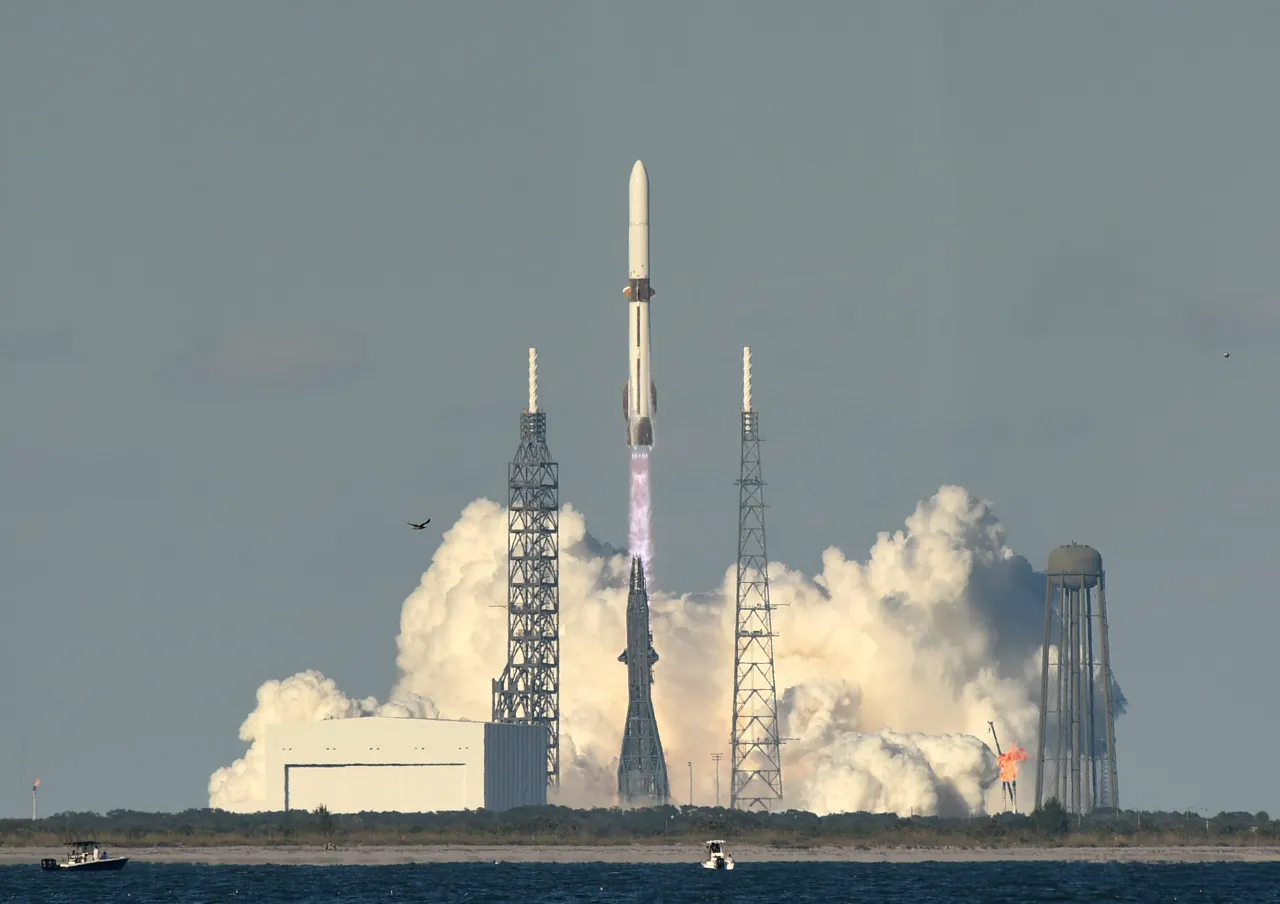


- The initiative addresses a massive surge in commercial space operations, which are projected to grow from 214 launches this fiscal year to over 500 per year over the next decade.
- Commercial space stocks, including Rocket Lab, AST SpaceMobile and SpaceX, are experiencing heightened investor interest driven by rapid deregulation, strategic acquisitions, and operational milestones.
- Transportation Secretary Sean P. Duffy, aims to eliminate red tape for commercial operators as the U.S. prepares for an unprecedented surge in orbital launches.
Advertisement|Remove ads.
In a major bid to accelerate American dominance in the commercial space sector, the Trump administration announced a proposal allowing the Federal Aviation Administration (FAA) to bypass lengthy environmental reviews for rocket launches, spacecraft reentries, and commercial launch site approvals.
The initiative, announced on Tuesday by Transportation Secretary Sean P. Duffy, aims to eliminate red tape for commercial operators as the U.S. prepares for an unprecedented surge in orbital launches and space infrastructure development.

Commercial space stocks, including Rocket Lab (RKLB), AST SpaceMobile (ASTS), Intuitive Machines (LUNR), and Planet Labs (PL) dropped between 3% and 7% on Tuesday, while SpaceX (SPCX) added 3%.
Advertisement|Remove ads.
Stripping Environmental Reviews To Fast-Track Launches
Under the proposed framework, the FAA would gain the authority to waive requirements established across 13 major federal environmental statutes. These include the National Environmental Policy Act (NEPA), the Endangered Species Act, the Clean Water Act, and the Clean Air Act.
Federal officials emphasized that exemptions would only apply where environmental rules delay innovation, maintaining that core public health, national security, and safety safeguards will remain intact.
"America won the first Space Race, and we can do it again -- but only if we get government red tape out of the way," Transportation Secretary Sean Duffy stated, noting that the goal is to lower costs and strengthen U.S. competitiveness.
Advertisement|Remove ads.
Environmental assessments—which currently can take over a year to complete—have long been a target of frustration for commercial launch providers. While conservation groups view these evaluations as crucial for protecting coastal wildlife habitats, launch companies have repeatedly slammed the reviews as duplicative administrative bottlenecks.
The FAA's proposal opens a 30-day public comment window before final rules are enacted.
Ten-Fold Surge In Launch Capacity
The drive to deregulate comes as the commercial space industry experiences exponential growth. The FAA reported authorizing a record 204 commercial space operations in FY2025.
Advertisement|Remove ads.
Over the next decade, federal forecasts project total operations could reach over 4,200, climbing from 214 this year to more than 500 annual operations by 2036.
Much of this growth is being driven by heavyweights like Elon Musk’s SpaceX, Jeff Bezos’ Blue Origin, Rocket Lab, and rising startups like Stoke Space. These firms are aggressively deploying satellite constellations for broadband connectivity, defense applications, and orbital data centers.
Space Stocks: M&A Waves And Orbital Milestones
Rocket Lab (RKLB) made massive waves in the market after announcing an $8-billion acquisition of Iridium Communications. The deal hands Rocket Lab an operational 66-satellite network, global L-band spectrum, and 2.55 million active subscribers, firmly establishing it as the primary commercial competitor to SpaceX.
Advertisement|Remove ads.
AST SpaceMobile (ASTS) confirmed its next-generation BlueBird 8, 9, and 10 satellites are fully operational in orbit, while SpaceX recently cleared its FAA mishap investigation for Starship Flight 12, paving the way for Flight 13 as it prepares for up to 44 orbital launches annually from NASA's Kennedy Space Center in Florida.
SPCX, RKLB, ASTS Stock: Retail View
Retail sentiment on Stocktwits was ‘neutral’ for SPCX, ‘bullish’ for RKLB and ‘bearish’ for ASTS stocks, all with ‘high’ message volumes.
RKLB and ASTS stock have lost 8% and 20% year-to-date, while SPCX has lost 22.3% since listing.
Advertisement|Remove ads.
For updates and corrections, email newsroom[at]stocktwits[dot]com.
Comments posted here will also appear on symbol pages.

Latest News
/filters:format(webp)https://st-everywhere-cms-prod.s3.us-east-1.amazonaws.com/Getty_Images_1781339108_fotor_20250121135048_32339978fe.jpg)
/filters:format(webp)https://news.stocktwits-cdn.com/Heera_1_1c30cb0170.PNG) Heera Hari·27m ago
Heera Hari·27m ago/filters:format(webp)https://news.stocktwits-cdn.com/gettyimages_2296155088_594x594_e8c6d1d489.jpg)
/filters:format(webp)https://news.stocktwits-cdn.com/Harshita_3cfe02022c.jpg) Harshita Tyagi·48m ago
Harshita Tyagi·48m ago/filters:format(webp)https://news.stocktwits-cdn.com/Getty_Images_2235778544_jpg_2b7ceca102.webp)
/filters:format(webp)https://news.stocktwits-cdn.com/Prabhjote_DP_67623a9828.jpg) Prabhjote Gill·1h ago
Prabhjote Gill·1h ago/filters:format(webp)https://news.stocktwits-cdn.com/large_Bloom_Energy_jpg_915ade69f9.webp)
/filters:format(webp)https://news.stocktwits-cdn.com/vivekkrishnanphotography_58_jpg_0e45f66a62.webp) Arnab Paul·1h ago
Arnab Paul·1h ago/filters:format(webp)https://news.stocktwits-cdn.com/large_Getty_Images_2219723511_103fa4d061.jpg) Heera Hari·2h ago
Heera Hari·2h ago/filters:format(webp)https://news.stocktwits-cdn.com/large_Western_Digital_ffb653da96.jpg) Harshita Tyagi·3h ago
Harshita Tyagi·3h ago