


Advertisement|Remove ads.
Trump Expected To Roll Out Fresh Levies If Supreme Court Rules Against Tariffs: Report
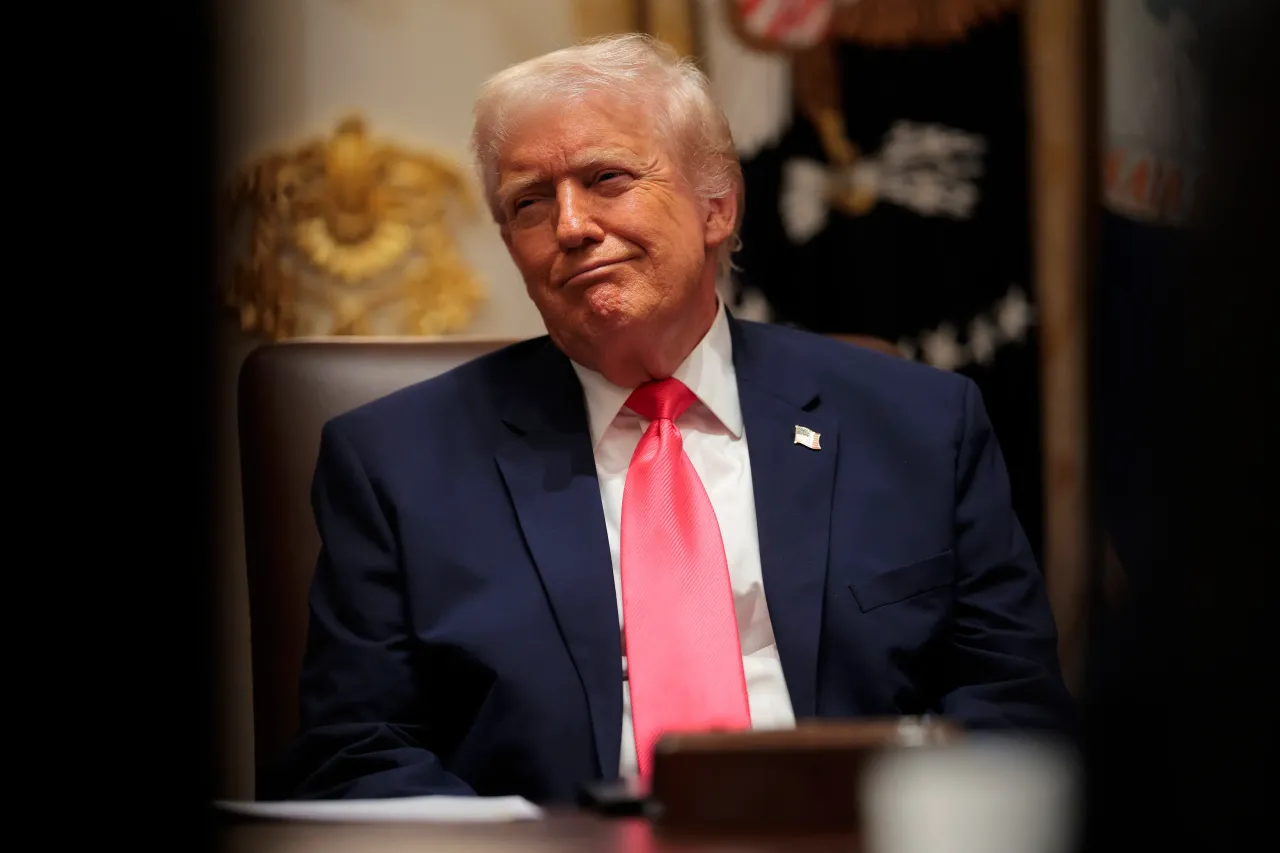


- The exact combination of legal routes the administration would use depends on the details of the ruling, especially if the court rules the use of emergency powers as illegal, the report noted.
- Ted Murphy, a trade lawyer at Sidley Austin in Washington, believes that the tariffs will be reissued on the same day, as per the report.
- The Supreme Court’s ruling on Trump’s tariffs, including the legality of using emergency powers to impose tariffs on trading partners, is likely to come in January 2026.
Advertisement|Remove ads.
President Donald Trump is reportedly expected to roll out fresh tariffs if the Supreme Court ruling goes against the current ones.
According to a Financial Times report, the Trump administration will use alternative legislation and existing trade measures to reissue the tariffs even if the court strikes down the present ones. There are a series of plans in place, the report said, citing diplomats and trade lawyers familiar with the matter.
The exact combination of legal routes the administration would use depends on the details of the ruling, especially if the court rules the use of emergency powers as illegal, the report noted. However, Ted Murphy, a trade lawyer at Sidley Austin in Washington, believes that the tariffs will be reissued on the same day, as per the report.
Advertisement|Remove ads.
The Supreme Court’s ruling on Trump’s tariffs, including the legality of using emergency powers to impose tariffs on trading partners, is likely to come in January 2026.
Expected Legal Moves
If the Supreme Court strikes down the current tariffs, the administration could use one or a combination of laws, including Section 122 of the Trade Act of 1974 and Section 338 of the Tariff Act of 1930, both of which were already under consideration for use earlier this year, FT reported, citing people familiar with the matter.
Section 122 is typically a short-term tool to allow quick import restrictions when major trade imbalances occur. It will give the President temporary authority to impose tariffs of up to 15% for up to 150 days. Meanwhile, Section 338 is a rarely used law that would grant the President the power to levy retaliatory tariffs of up to 50% or even ban imports from countries considered to be engaging in discriminatory trade practices against the U.S.
Advertisement|Remove ads.
The administration may also rely on Section 232 of the Trade Expansion Act of 1962 and Section 301 of the 1974 U.S. Trade Act, the report noted. Section 232 is a law that authorizes the President to impose tariffs or restrictions on goods deemed to threaten or impair U.S. national security and is already being leveraged to apply tariffs on the import of cars, steel, aluminium, copper and lumber.
Section 301 applies to investigations into unfair foreign trade practices and grants the U.S. Trade Representative (USTR) authority to retaliate against them. This is currently deployed for investigations against Brazil, Nicaragua and China, and the administration is likely to probe further, the report said.
Supreme Court Ruling
The Supreme Court is expected to rule on whether Trump may have overstepped his Presidential authority by using the 1977 International Emergency Economic Powers Act (IEEPA) to impose trade tariffs on a vast number of imports from trading partners.
Advertisement|Remove ads.
In a post on Truth Social, the President said it could leave the U.S. “financially defenseless” and asserted that striking down the tariffs would be “the biggest threat in history to United States National Security.”
Meanwhile, U.S. equities were flat in Tuesday morning’s trade. At the time of writing, the SPDR S&P 500 ETF (SPY), which tracks the S&P 500 index, was up marginally, and the Invesco QQQ Trust ETF (QQQ) was unchanged. The SPDR Dow Jones Industrial Average ETF Trust (DIA) climbed 0.02% and the iShares 7-10 Year Treasury Bond ETF (IEF) declined 0.04% at the time of writing.
Retail sentiment around the S&P 500 ETF on Stocktwits was in the ‘neutral’ territory.
Advertisement|Remove ads.
For updates and corrections, email newsroom[at]stocktwits[dot]com.
Comments posted here will also appear on symbol pages.

Latest News
/filters:format(webp)https://news.stocktwits-cdn.com/large_Getty_Images_2287821354_70e42c3fcd.jpg)
/filters:format(webp)https://news.stocktwits-cdn.com/unnamed_jpg_9dff551b50.webp) Anan Ashraf·24m ago
Anan Ashraf·24m ago/filters:format(webp)https://news.stocktwits-cdn.com/large_verastem_jpg_8ed70d9d9a.webp) Anan Ashraf·1h ago
Anan Ashraf·1h ago/filters:format(webp)https://news.stocktwits-cdn.com/large_Getty_Images_2296215726_e82f86b85a.jpg)
/filters:format(webp)https://news.stocktwits-cdn.com/1707726834303_jpg_11f20a9aa9.webp) Shashank Nayar·2h ago
Shashank Nayar·2h ago/filters:format(webp)https://news.stocktwits-cdn.com/large_Getty_Images_2219723511_103fa4d061.jpg) Anan Ashraf·3h ago
Anan Ashraf·3h ago/filters:format(webp)https://news.stocktwits-cdn.com/large_Getty_Images_2277830109_jpg_8566757c70.webp) Shashank Nayar·3h ago
Shashank Nayar·3h ago/filters:format(webp)https://news.stocktwits-cdn.com/large_Getty_Images_1826874253_91fc8db60b.jpg)
/filters:format(webp)https://news.stocktwits-cdn.com/vivekkrishnanphotography_58_jpg_0e45f66a62.webp) Arnab Paul·4h ago
Arnab Paul·4h ago