


Advertisement|Remove ads.
Trump’s 10% Credit Card Rate Cap Explained: Are Visa, Mastercard, American Express At Risk?
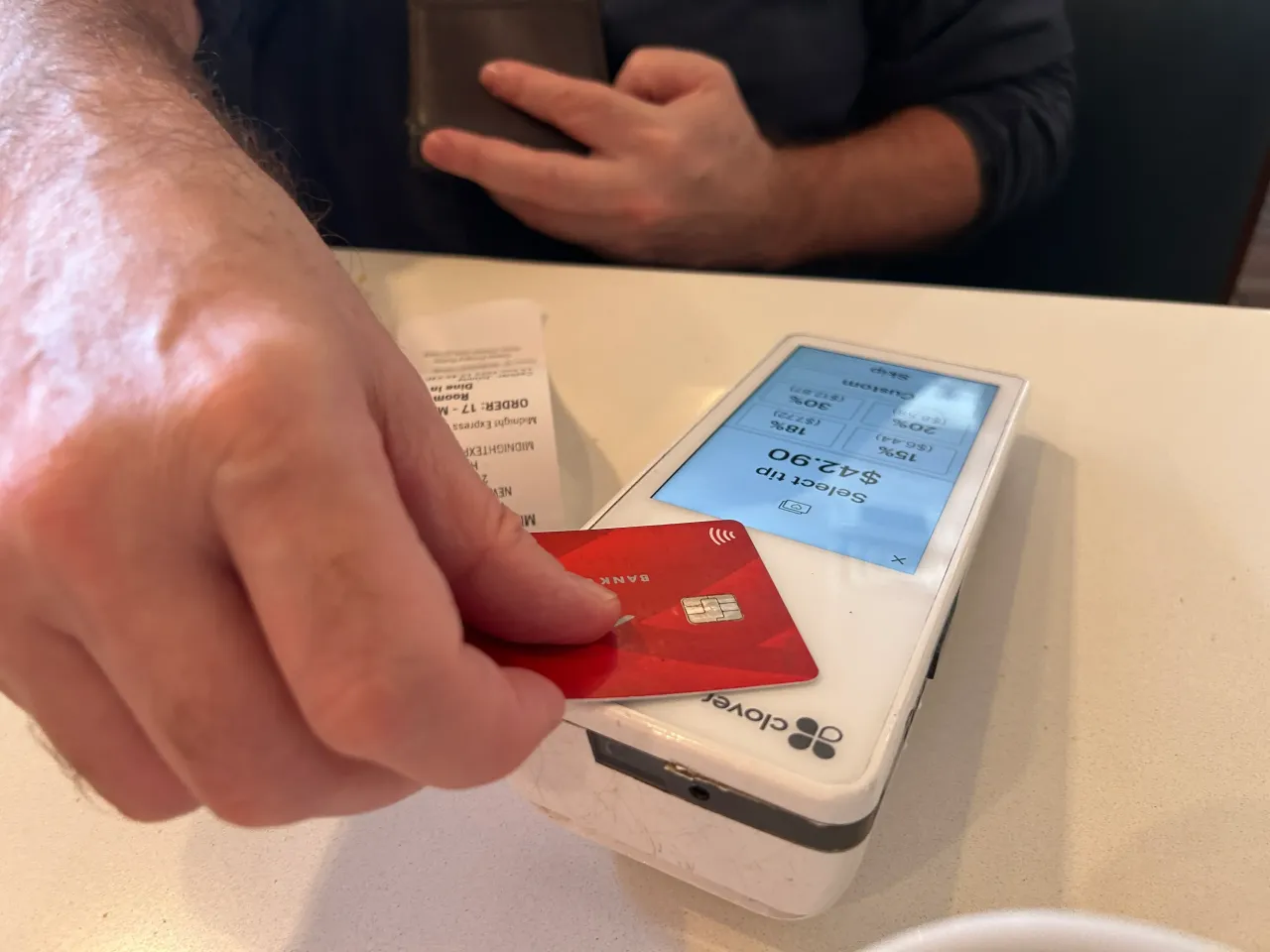


- President Donald Trump has said he plans to cap credit card interest rates at 10% for one year, and the rule would likely go into effect later this month.
- Trump’s plan would rein in interest income for the financial services sector.
- The banking industry has opposed the move, arguing that it would slow down credit growth.
Advertisement|Remove ads.
President Donald Trump on Friday said he was considering a one-year, 10% cap on credit card interest rates, arguing that current rates of 20%–30% are excessively high and that he was moving to fulfill one of his campaign promises.
Although Trump hasn’t confirmed whether the cap would be implemented via executive order or legislation, the move would have significant implications for the banking and credit card sectors.
Banks, Credit Card Companies In Focus
JP Morgan, Citigroup, and Bank of America are the nation’s largest credit card lenders; Capital One is the largest pure-play card issuer, while Visa and Mastercard are the back-end network providers. Most of these trended on Stocktwits over the weekend, with members discussing potential trades.
Advertisement|Remove ads.
As of the last reading, the retail sentiment was ‘neutral’ for JPMorgan and Citigroup, ‘bearish’ for Bank of America, and ‘extremely bullish’ for Capital One. Sentiment for other major players in the space — American Express, Synchrony Financial, Mastercard and Visa – remained ‘bullish’ by the end of the weekend, although they could whipsaw once the market opens on Monday.
COP is the top watch for put options, and “I expect this to get ugly fast,” said one user.
Expected Hit
Credit card companies earn three streams of revenue from their products: fees charged to merchants, fees charged to customers, and the interest charged on balances. Interest income typically accounts for the majority of credit card revenue and an even larger share of profit, and would be reduced if Trump’s cap is implemented.
Advertisement|Remove ads.
Vanderbilt University researchers last year estimated that the 10% cap would save Americans roughly $100 billion a year in interest costs. Further, banks and credit card companies would be able to withstand, and even remain profitable, if there were a national cap on interest rates.
About 200 million Americans use credit cards and now carry the highest credit card debt ever, to the tune of about $1.23 trillion, the Associated Press reported, citing figures from the Consumer Financial Protection Bureau and the New York Federal Reserve.
Industry’s Position
The banking industry has opposed Trump’s proposal. “If enacted, this cap would only drive consumers toward less regulated, more costly alternatives,” the American Bankers Association and allied groups said in a statement on Friday.
Advertisement|Remove ads.
“We share the President’s goal of helping Americans access more affordable credit. At the same time, evidence shows that a 10% interest rate cap would reduce credit availability and be devastating for millions of American families and small businesses who rely on and value their credit cards.”
Bank lobbyists have long argued that lowering interest rates on their credit card products would require the banks to lend less to high-risk borrowers, according to the Associated Press. When Congress enacted a cap on the fee that stores pay large banks when customers use a debit card, banks responded by removing all rewards and perks from those cards.
Trump’s Jan. 20 Rollout Plan
Trump said he hopes the rule will take effect on Jan. 20; so far, at least one Republican senator has backed the President’s proposal. Sen. Roger Marshall, R-Kan., who said he talked with Trump on Friday night, said the effort is meant to “lower costs for American families and to rein in greedy credit card companies who have been ripping off hardworking Americans for too long.”
Advertisement|Remove ads.
For updates and corrections, email newsroom[at]stocktwits[dot]com.
Read Next: Allegiant, Sun Country Team Up In $1.5B Merger To Take On Airline Heavyweights
Comments posted here will also appear on symbol pages.

Latest News
/filters:format(webp)https://news.stocktwits-cdn.com/large_Getty_Images_2301328096_936a483051.jpg)
/filters:format(webp)https://news.stocktwits-cdn.com/Prabhjote_DP_67623a9828.jpg) Prabhjote Gill·15m ago
Prabhjote Gill·15m ago/filters:format(webp)https://news.stocktwits-cdn.com/large_Getty_Images_1258292964_d4895e93ad.jpg) Prabhjote Gill·49m ago
Prabhjote Gill·49m ago/filters:format(webp)https://news.stocktwits-cdn.com/large_IBM_jpg_db5b7d0908.webp)
/filters:format(webp)https://news.stocktwits-cdn.com/Harshita_3cfe02022c.jpg) Harshita Tyagi·52m ago
Harshita Tyagi·52m ago/filters:format(webp)https://news.stocktwits-cdn.com/large_Getty_Images_2294108581_678b1cf125.jpg)
/filters:format(webp)https://news.stocktwits-cdn.com/shivani_photo_jpg_dd6e01afa4.webp) Shivani Kumaresan·2h ago
Shivani Kumaresan·2h ago/filters:format(webp)https://news.stocktwits-cdn.com/large_Meta_jpg_0f17dacb20.webp) Shivani Kumaresan·3h ago
Shivani Kumaresan·3h ago/filters:format(webp)https://news.stocktwits-cdn.com/large_Getty_Images_2301241048_efc5b32b0a.jpg)
/filters:format(webp)https://news.stocktwits-cdn.com/IMG_8805_JPG_6768aaedc3.webp) Deepti Sri·3h ago
Deepti Sri·3h ago