


Advertisement|Remove ads.
Warsh Criticizes Fed’s 2020 Framework, Says It Wasn’t First Central Bank To Seek ‘A Little More Inflation And End Up With A Lot More’
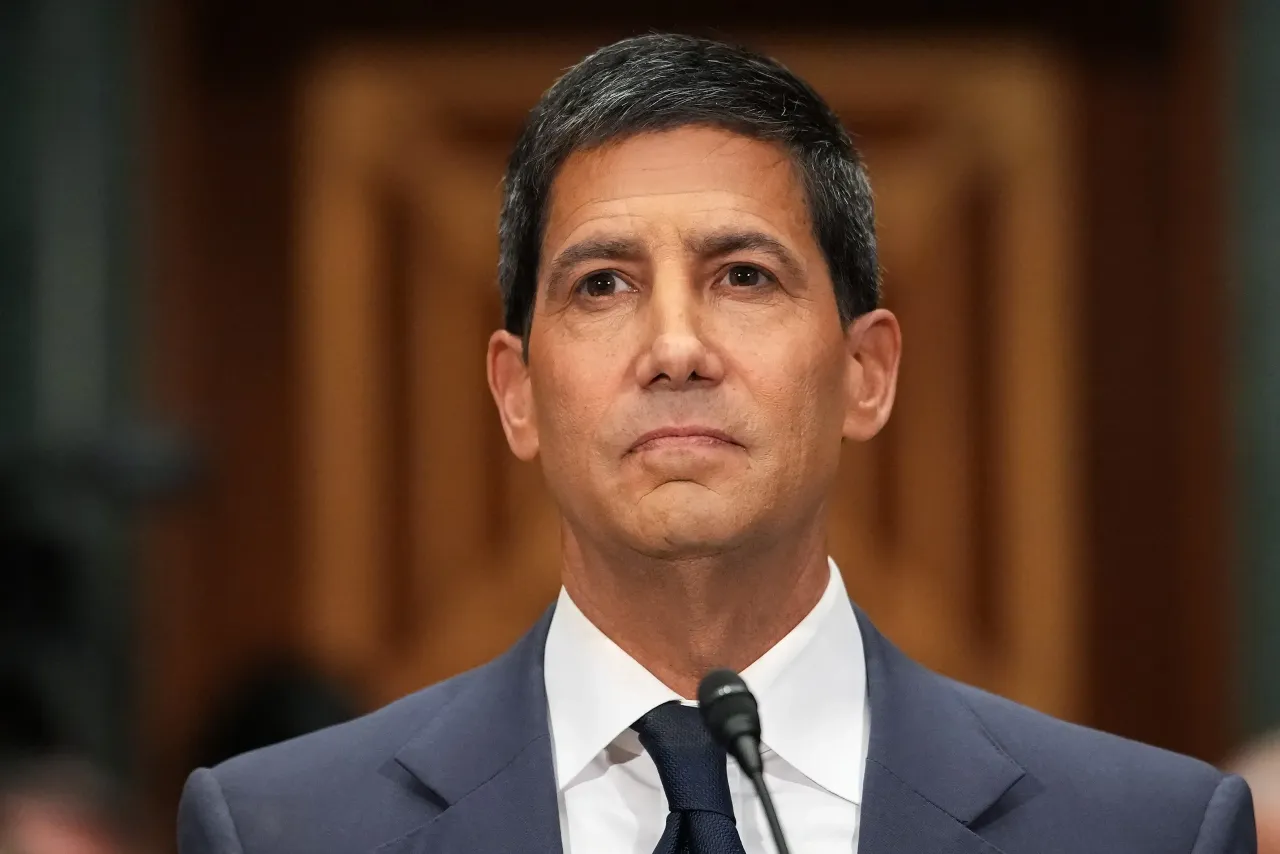


- Warsh also said that the Fed’s 2020 framework imposed an “undue tax” on Americans.
- He added that if this framework had been called out sooner, Americans wouldn’t have been burdened with elevated inflation over the past five years to the same degree.
- Warsh said one of the Fed's new task forces will review the central bank's inflation framework to better understand the drivers of inflation.
Advertisement|Remove ads.
Federal Reserve Chair Kevin Warsh on Tuesday said that it’s no secret that he was critical of the central bank’s framework announced in 2020.
During his congressional testimony, Warsh called the framework a mistake and added that it did not succeed in its objective.

“That central bank wasn’t the first central bank to ask for a little more inflation and end up with a lot more,” he said, while adding that he is pleased that the 2020 framework was cast aside by his predecessors before his arrival.
Advertisement|Remove ads.
Warsh took the oath of office as the Chairman of the Fed in May this year, after being nominated by President Donald Trump in March.
On Tuesday, in prepared remarks ahead of his congressional testimony, Warsh promised that the inflation surge will be a “thing of the past,” while adding that the Fed has “no tolerance” for persistently high inflation.
Warsh said that while short-term price fluctuations are inevitable, especially during periods of global uncertainty, long-term inflation is largely determined by monetary policy.
Advertisement|Remove ads.
Warsh Says Fed's 2020 Framework Imposed An ‘Undue Tax’ On Americans
Warsh also said that the Fed’s 2020 framework imposed an “undue tax” on Americans. He added that if this framework had been called out sooner, Americans wouldn’t have been burdened with elevated inflation over the past five years to the same degree.
“That’s why we’re reform oriented. That’s why my colleagues and I are driven by these task forces to think about a new [approach],” he said.
Warsh also added that the objective of one of the task forces set up by the Fed under his leadership is to revisit the central bank’s inflation framework to better understand what causes inflation to rise and fall, and what the Fed can do about it.
Advertisement|Remove ads.
He also added that the Fed has the power and responsibility given to it by the House Financial Services Committee to deliver on the dual mandate of maximum employment and stable prices.
Warsh Previously Called For A ‘Regime Change’ In Fed’s Inflation Framework
During the Senate Banking Committee’s confirmation hearing in April this year, Warsh called for a “regime change” in the Fed’s inflation framework.
“We’re still dealing with the legacy of the policy errors in 2021 and 2022. Once you let inflation take hold in the economy, it’s more expensive and harder to bring it down,” he said.
Advertisement|Remove ads.
Warsh also said that the Fed missed its mark as prices soared between 25% and 35% across the board after the COVID-19 pandemic.
What The Fed's 2020 Framework Was About
The Fed’s 2020 monetary policy framework introduced a flexible average inflation targeting strategy, under which the central bank sought inflation that averaged 2% over time rather than treating 2% as a ceiling.
The approach allowed inflation to run moderately above the target for some time following periods of persistent undershooting, with the goal of keeping longer-term inflation expectations anchored around 2%.
Advertisement|Remove ads.
The framework also revised the Fed's approach to employment. Rather than responding to both "deviations" above and below maximum employment, policymakers said they would focus on "shortfalls" from maximum employment, signaling they would not raise interest rates solely because unemployment had fallen to historically low levels if inflation remained under control.
Meanwhile, U.S. equities gained in Tuesday morning’s trade. At the time of writing, the SPDR S&P 500 ETF (SPY), which tracks the S&P 500 index, was up 0.42%; the Invesco QQQ Trust ETF (QQQ) rose 1.37%; and the SPDR Dow Jones Industrial Average ETF Trust (DIA) edged up by 0.02%. Retail sentiment on Stocktwits regarding the S&P 500 ETF was in the ‘bullish’ territory.
The iShares 7-10 Year Treasury Bond ETF (IEF) was up 0.46% at the time of writing.
Advertisement|Remove ads.
Also See: SPCX Stock Is Down 37% From Peak, But Evercore Says Upside Is 'Too Compelling To Ignore’
For updates and corrections, email newsroom[at]stocktwits[dot]com.
Comments posted here will also appear on symbol pages.

Latest News
/filters:format(webp)https://news.stocktwits-cdn.com/Getty_Images_2228900888_jpg_338103de79.webp)
/filters:format(webp)https://news.stocktwits-cdn.com/Anushka_Basu_make_me_smile_in_the_picture_b92832aa_af59_4141_aacc_4180d2241ba8_1_2_png_1086e0ed8c.webp) Anushka Basu·8h ago
Anushka Basu·8h ago/filters:format(webp)https://news.stocktwits-cdn.com/large_Getty_Images_1767602875_jpg_db2e050c08.webp) Anushka Basu·9h ago
Anushka Basu·9h ago/filters:format(webp)https://news.stocktwits-cdn.com/large_new_york_stock_exchange_jpg_e1f85c0d8c.webp)
/filters:format(webp)https://st-everywhere-cms-prod.s3.us-east-1.amazonaws.com/i_OS_App_Icon_1_8054f2a2fe.png) Stocktwits News Desk·9h ago
Stocktwits News Desk·9h ago/filters:format(webp)https://news.stocktwits-cdn.com/large_grayscale_OG_jpg_c35dc5b1a2.webp) Anushka Basu·10h ago
Anushka Basu·10h ago/filters:format(webp)https://news.stocktwits-cdn.com/large_Google_Office_in_New_York_City_2ff844002a.jpg) Stocktwits News Desk·10h ago
Stocktwits News Desk·10h ago/filters:format(webp)https://news.stocktwits-cdn.com/large_mark_rubio_original_jpg_1e75e0c7f2.webp) Stocktwits News Desk·11h ago
Stocktwits News Desk·11h ago