


Advertisement|Remove ads.
This Midcap Entertainment Stock Is Leaving Netflix, Warner Bros And Disney In The Dust — Is Retail Keyed In?
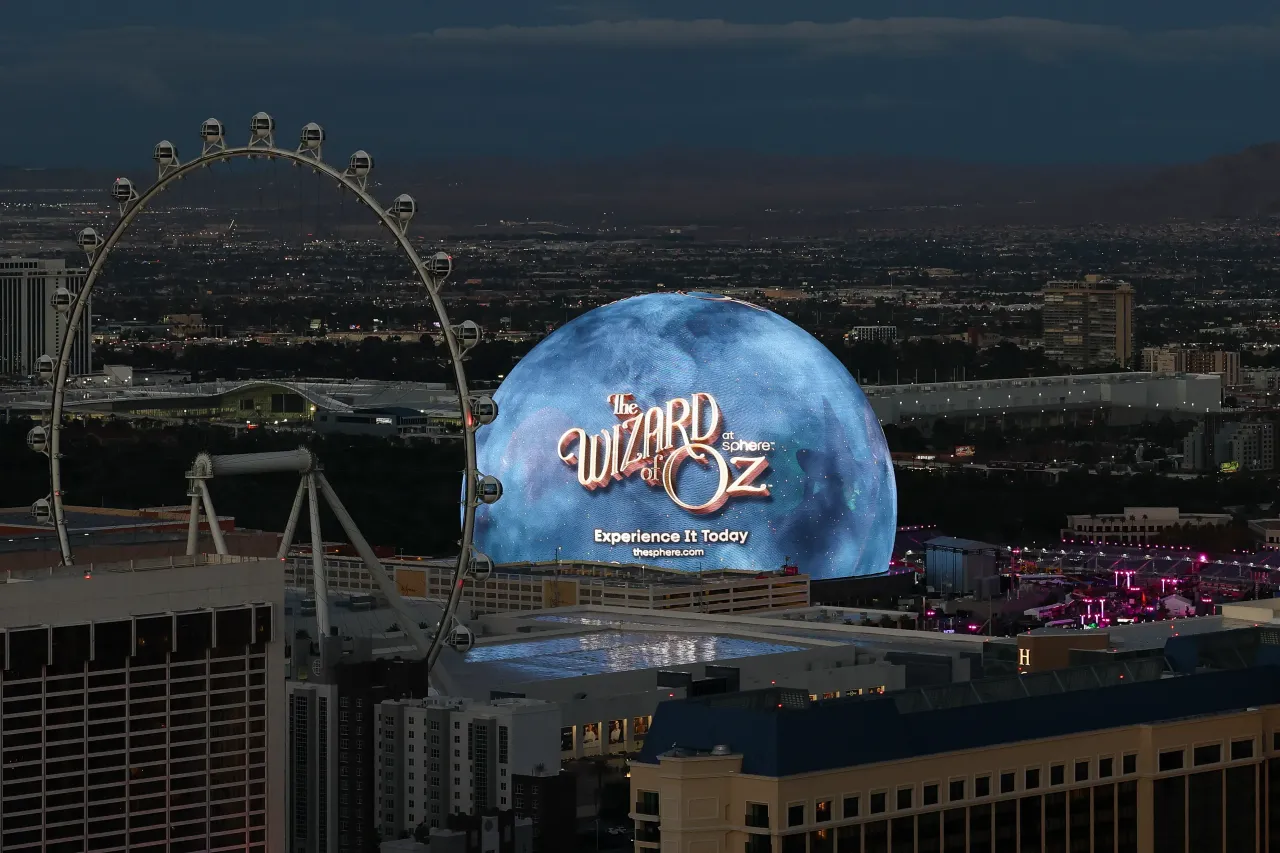


- SPHR has surged roughly 39% year-to-date, while NFLX, DIS, and WBD are all in the red.
- The company behind the Las Vegas Sphere, the world's highest-grossing concert and live event arena, swung to a $33.4 million profit last year after a $325 million loss the prior year.
- Wall Street consensus is 'Strong Buy' with an average price target implying the stock trades at just a 3% discount to fair value.
Advertisement|Remove ads.
Sphere Entertainment (SPHR) has been one of 2026's quietest outperformers in the entertainment sector, up nearly 40% year to date, while bigger media giants Netflix, Disney, and Warner Bros. Discovery are all nursing losses.
Key to its resounding success has been its immersive Las Vegas Sphere, the world's highest-grossing concert and live-event venue, which has transformed a costly experiment into a high-margin growth story.
SPHR: From Near-Disaster To Record Revenue
It wasn't supposed to go this way. When the Sphere opened in 2023, completed at $2.3 billion, nearly $1 billion over budget and years behind schedule, it had "all the signs of an impending disaster," according to the Wall Street Journal. Three years later, the venue is posting record numbers.
Advertisement|Remove ads.
The Sphere features the world's largest LED screen, advanced haptic seating, and beamforming audio, creating an immersive experience that has no direct rival. Situated in Las Vegas — a global hub for tourism, conventions, and live entertainment — it benefits from a built-in pipeline of visitors and an established event infrastructure.
Since opening, the venue has hosted U2, Phish, Dead & Company, the Eagles, and the Backstreet Boys. It has also begun screening an immersive 4D version of the 1939 classic, "The Wizard of Oz" — a project for which chairman and CEO James Dolan reportedly paid $100 million and enlisted Google's AI engineers. That production alone surpassed two million tickets sold in mid-January.
For Sphere Entertainment, revenue hit a record $274 million in the fourth quarter of 2025, a 62% jump from a year earlier, and the company swung to a full-year net profit of $33.4 million in 2025 after a $325 million loss the prior year.
Advertisement|Remove ads.
Sphere Grows Bigger While Streaming Buffers
Success is clearly breeding ambition. Sphere Entertainment is bringing a venue to Abu Dhabi and has plans for a smaller 6,000-seat Sphere at National Harbor in Maryland, just outside Washington, D.C. The company is also in early discussions about a Nashville outpost, Axios reported in March, and executives are surveying additional cities for future locations.
Traditional media leaders such as Disney, Warner Bros and Netflix continue to navigate slower growth, rising content costs, and structural shifts away from legacy cable systems. Sphere's scarcity-driven model stands in stark contrast to streaming libraries that compete for attention in saturated digital ecosystems. Its venue offers a limited, location-based experience that cannot be replicated at home.
What Wall Street And Retail Think About SPHR
Among 12 analysts covering SPHR on Koyfin, the consensus rating is 'Strong Buy,' with an average price target of $136.36, implying the stock trades at just a 3% discount to fair value.
Advertisement|Remove ads.
Retail interest has grown steadily, with Stocktwits watchers up nearly 20% over the past year. Sentiment, however, has cooled — sliding from 'extremely bullish' to 'bearish' — suggesting that retail traders are growing more cautious about how much further the stock can run.
In April, BofA analyst Peter Henderson lifted his price target on the stock to $132 from $110 while maintaining a 'Neutral' rating, according to a summary on The Fly. He noted that Sphere has successfully positioned itself as a premium live entertainment destination, but cautioned that revenue consistency remains closely tied to event scheduling and attendance cycles.
Guggenheim analyst Curry Baker boosted his price target to $160 from $150 and reiterated a 'Buy' rating, particularly citing the continued success of the "Wizard of Oz" production, which has exceeded expectations even amid softer tourism trends in Las Vegas.
Advertisement|Remove ads.
SPHR stock has surged nearly fivefold in the last 12 months, and has a market capitalization of $4.6 billion as of the last close.
For updates and corrections, email newsroom[at]stocktwits[dot]com.
Also See: INTC, AMD, POET Stocks Hit 52-Week Highs Last Week: What's Driving The Rally?
Advertisement|Remove ads.
Comments posted here will also appear on symbol pages.

Latest News
/filters:format(webp)https://news.stocktwits-cdn.com/large_Getty_Images_2287298723_67960e9982.jpg)
/filters:format(webp)https://news.stocktwits-cdn.com/Anushka_Basu_make_me_smile_in_the_picture_b92832aa_af59_4141_aacc_4180d2241ba8_1_2_png_1086e0ed8c.webp) Anushka Basu·4m ago
Anushka Basu·4m ago/filters:format(webp)https://st-everywhere-cms-prod.s3.us-east-1.amazonaws.com/large_Bio_N_Tech_m_RNA_based_vaccine_manufacturing_site_in_Kigali_2_4fd2e38342.jpg)
/filters:format(webp)https://news.stocktwits-cdn.com/vivekkrishnanphotography_58_jpg_0e45f66a62.webp) Arnab Paul·46m ago
Arnab Paul·46m ago/filters:format(webp)https://news.stocktwits-cdn.com/large_arthur_hayes_2026_OG_jpg_9f3524f8b1.webp) Anushka Basu·1h ago
Anushka Basu·1h ago/filters:format(webp)https://news.stocktwits-cdn.com/large_Getty_Images_2280392602_jpg_36718c4342.webp)
/filters:format(webp)https://news.stocktwits-cdn.com/Heera_1_1c30cb0170.PNG) Heera Hari·1h ago
Heera Hari·1h ago/filters:format(webp)https://news.stocktwits-cdn.com/large_oracle_logo_jpg_47f75657e7.webp)
/filters:format(webp)https://news.stocktwits-cdn.com/Harshita_3cfe02022c.jpg) Harshita Tyagi·1h ago
Harshita Tyagi·1h ago/filters:format(webp)https://news.stocktwits-cdn.com/large_Getty_Images_2285958555_jpg_3b020b5c3e.webp)
/filters:format(webp)https://news.stocktwits-cdn.com/Prabhjote_DP_67623a9828.jpg) Prabhjote Gill·2h ago
Prabhjote Gill·2h ago