


Advertisement|Remove ads.
Bitcoin Dumps Below $65K, Spurring $1.8B Wipeout Before Recovery – Analysts Debate The Cause, While Retail Blames Saylor



- Bitcoin’s price fell below $65,000 on Wednesday before recovering above $67,000, though it remained down more than 3% over the past 24 hours.
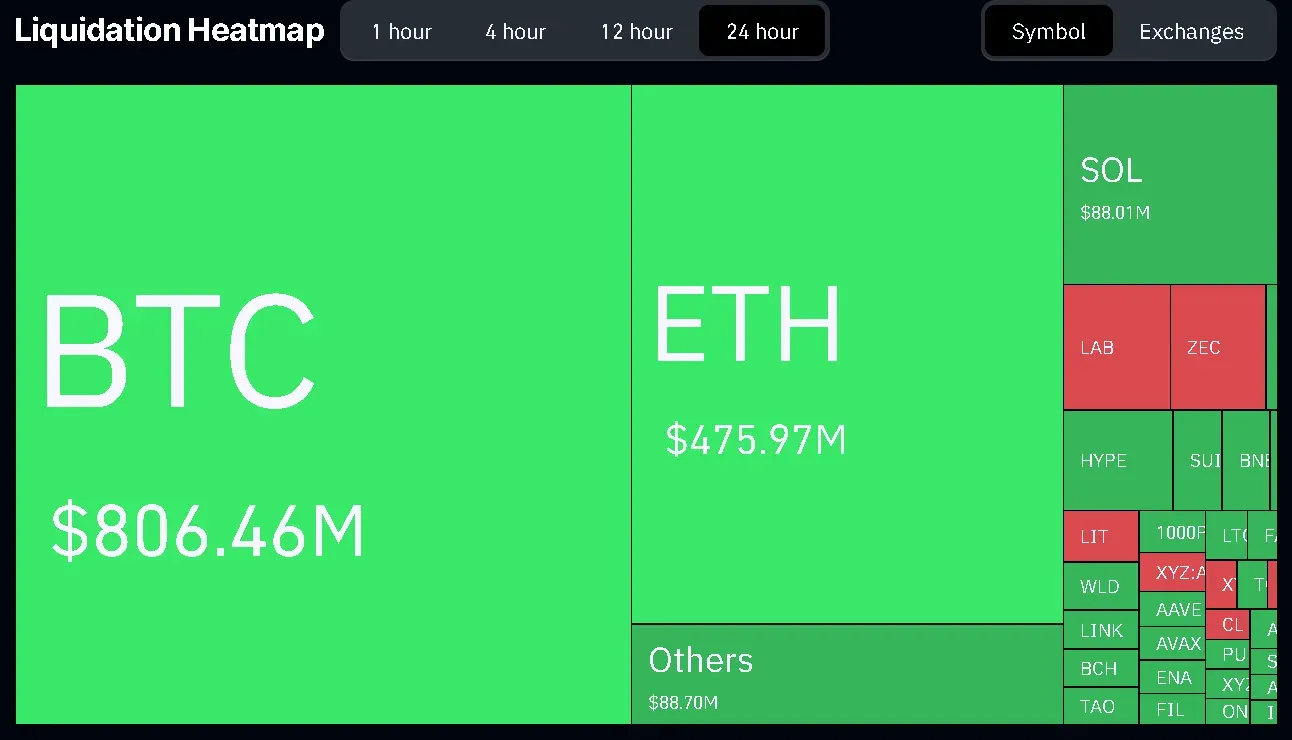
- The sell-off triggered roughly $1.8 billion in crypto liquidations, with more than $1.5 billion coming from long positions forced to close.
- Bitcoin traders absorbed the largest share of the losses, with more than $800 million liquidated, while Ethereum traders saw nearly $500 million wiped out.
Advertisement|Remove ads.
Bitcoin (BTC) dropped below $65,000 on Wednesday morning before staging a recovery, but not before a sharp selloff triggered nearly $1.8 billion in crypto liquidations.
Bitcoin’s price climbed above $67,000 at the time of writing, still down 3.2% in the last 24 hours. Retail sentiment around the apex cryptocurrency on Stocktwits trended in ‘extremely bearish’ territory over the past day, with chatter at ‘high’ levels.

CoinGlass data showed $1.8 billion in crypto liquidations over the last 24 hours, with more than $1.5 billion from long positions forced to unwind. Bitcoin traders accounted for the largest share of the losses at more than $800 million, followed by Ethereum (ETH) traders, who saw nearly $500 million wiped out. The current liquidation wave is shaping up to be one of 2026's biggest liquidation events after the $2.41 billion wipe out in late January.
Advertisement|Remove ads.
Why Is Bitcoin’s Price Falling?
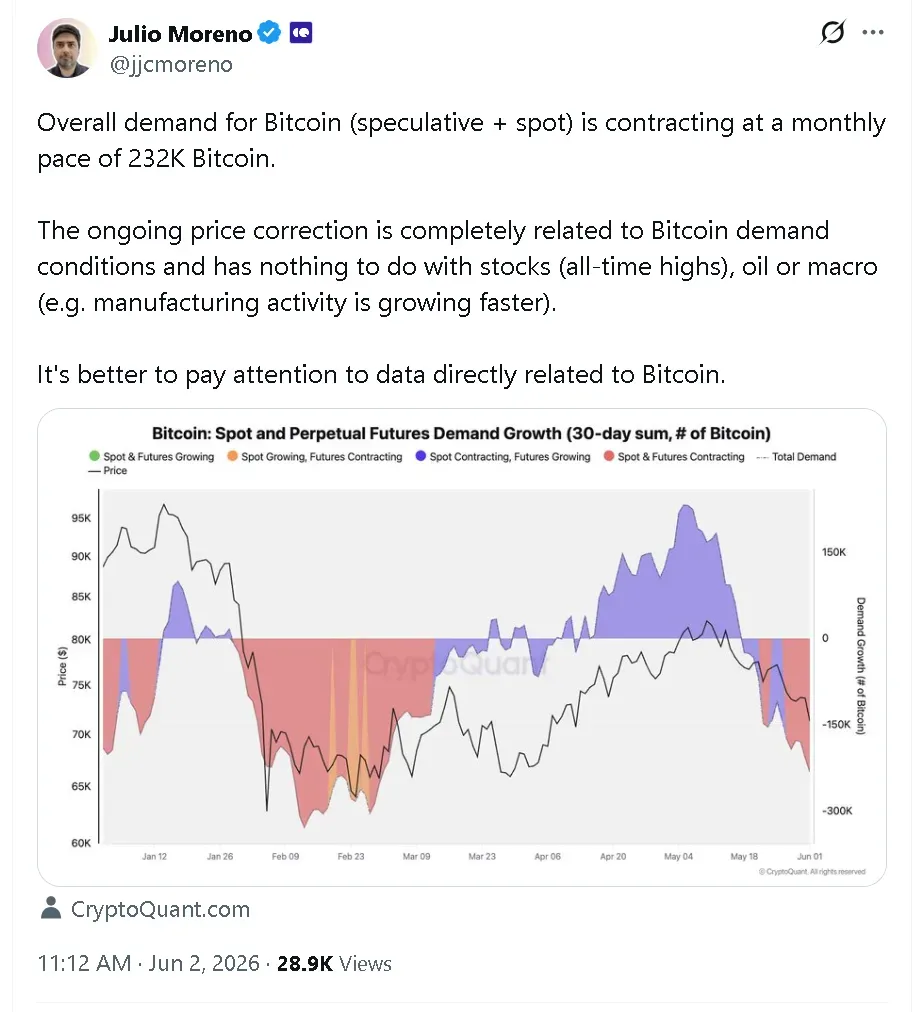
Julio Moreno, Head of Research at CryptoQuant, stated on X that the current decline is primarily being driven by weakening Bitcoin demand rather than broader macroeconomic factors.
"The ongoing price correction is completely related to Bitcoin demand conditions and has nothing to do with stocks, oil, or macro data," Moreno said, noting that U.S. equities remain near record highs while economic activity continues to expand.
Advertisement|Remove ads.
However, 10x Research said concerns about quantum computing and Bitcoin's relationship with technology stocks do not explain the latest downturn. Instead, MSTR’s Bitcoin sale and geopolitical uncertainty are the driving factors.
Late Tuesday, Kuwait's military said air-defense systems had intercepted hostile targets. U.S. Central Command later countered stating that American forces had defeated Iranian ballistic missiles and drones while carrying out self-defense strikes on Qeshm Island in response to attempted attacks by Iran across the Middle East.
President Donald Trump maintained in an interview with Pod Force Once that that the talks are going well, and that he’s “getting along quite well” with Iran’s Supreme Leader Mojtaba Khamenei. According to him, Iran has agreed not to have a nuclear weapon.
Advertisement|Remove ads.
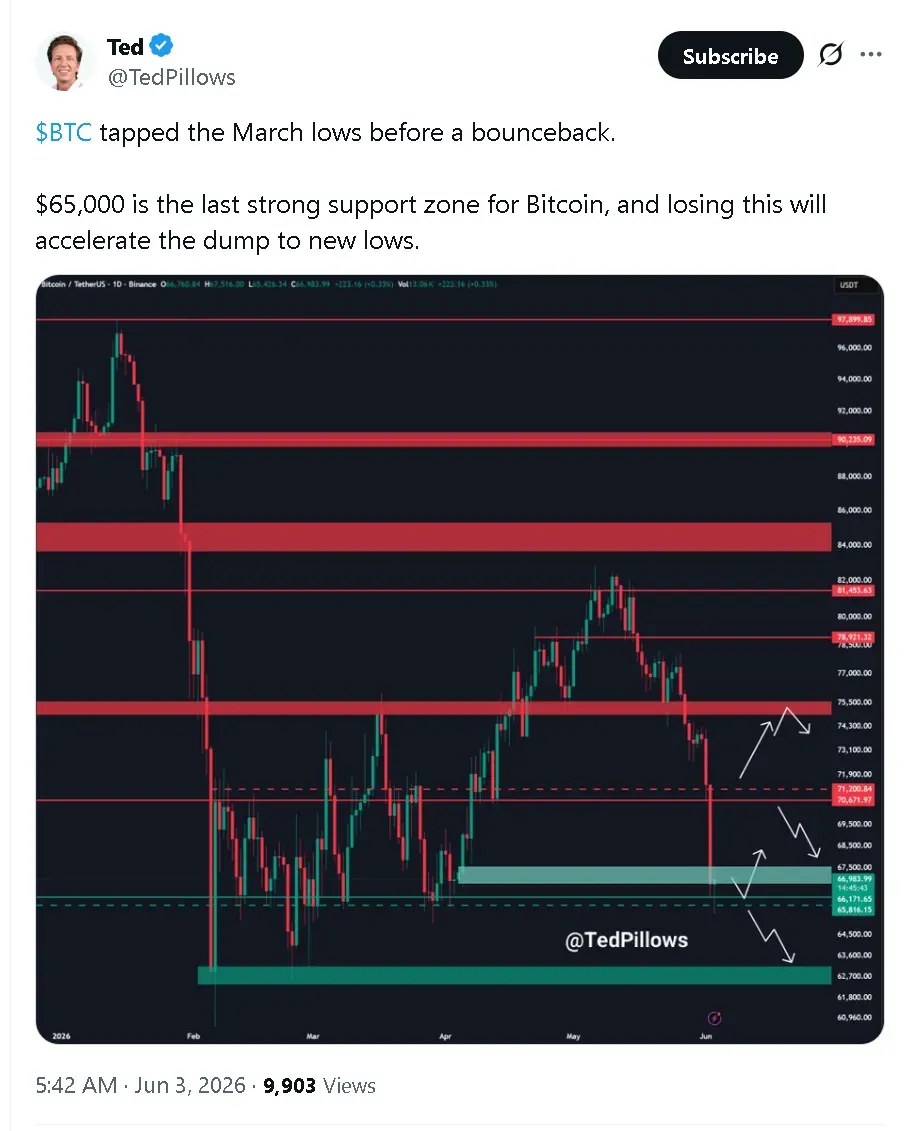
In his newsletter, crypto analyst Lark Davis said it was a combination of six factors, but the primary reason was Bitcoin's four-year market cycle. Another crypto analyst, Ted Pillows, forecast that if Bitcoin loses $65,000, it may be headed towards new lows.
How Is Retail Feeling About Bitcoin?
Platform data on Stocktwits showed retail chatter around Bitcoin jumped nearly 60% in the last 24 hours, even as sentiment scores declined. Over the past week, chatter around the apex cryptocurrency has more than doubled.
Retail commentary pointed to a combination of geopolitical and market-specific catalysts behind the selloff. Traders cited reports that shipping giant Maersk had suspended operations through the Strait of Hormuz, adding a geopolitical risk premium to global markets.
Advertisement|Remove ads.
Others focused on Michael Saylor's decision to sell 32 Bitcoin from Strategy's (MSTR) holdings of more than 840,000 BTC, a move many viewed as symbolic despite its small size relative to the company's overall position.
Advertisement|Remove ads.
The drop in Bitcoin’s price now has Strategy sitting on over $7 billion in losses, according to CoinGecko data. MSTR’s stock edged 0.24% lower in pre-market trade, after clocking a drop of over 9% in the previous session. Retail sentiment around the Bitcoin proxy dropped to ‘extremely bearish’ from ‘bearish’ territory over the past day.
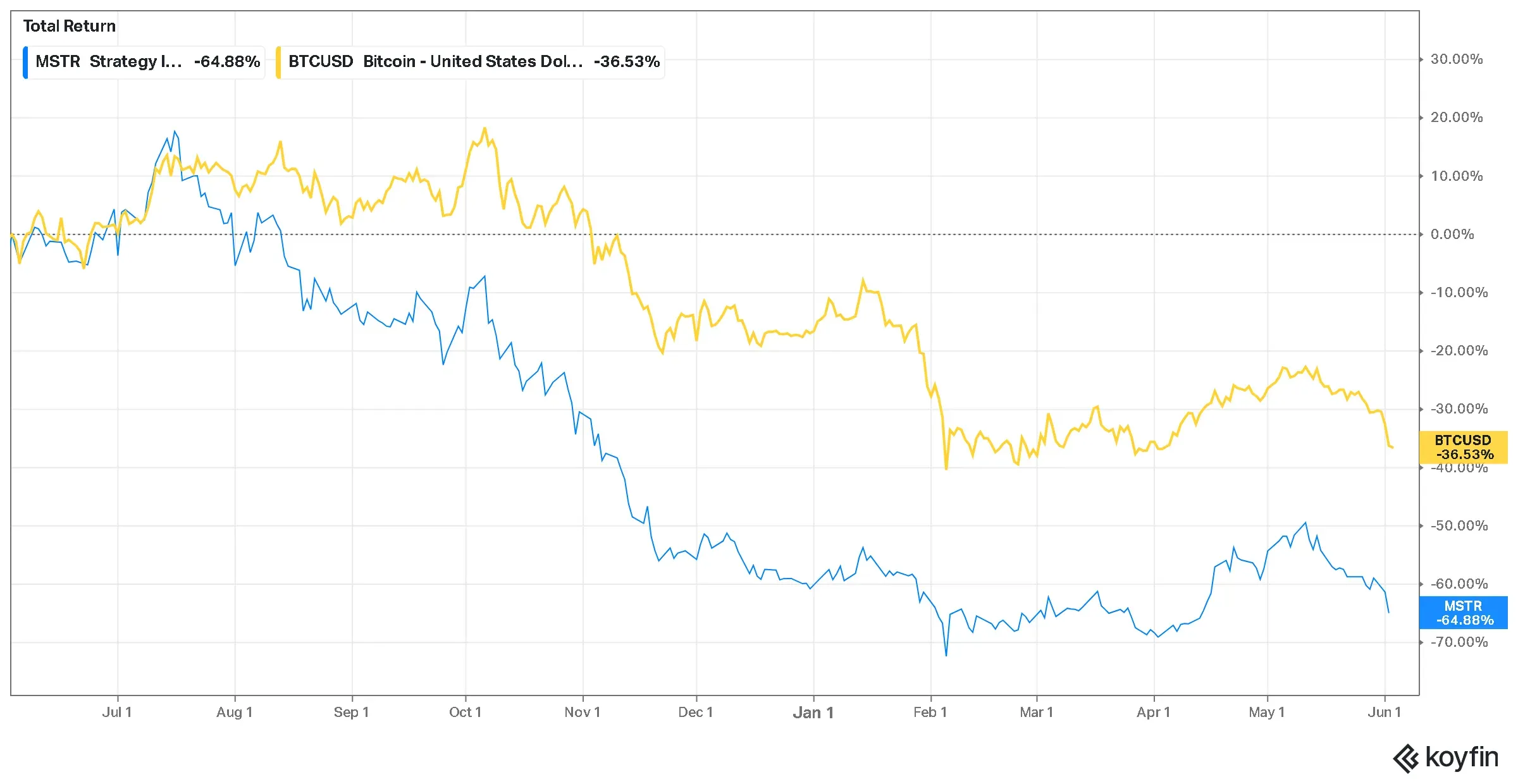
The shares have fallen nearly twice as much as Bitcoin’s price over the past one year.
Advertisement|Remove ads.
For updates and corrections, email newsroom[at]stocktwits[dot]com
Comments posted here will also appear on symbol pages.

Latest News
/filters:format(webp)https://news.stocktwits-cdn.com/large_Getty_Images_2295963708_f2aefbb8ff.jpg)
/filters:format(webp)https://news.stocktwits-cdn.com/unnamed_jpg_9dff551b50.webp) Anan Ashraf·19m ago
Anan Ashraf·19m ago/filters:format(webp)https://news.stocktwits-cdn.com/large_Getty_Images_2210077908_jpg_1a5660c872.webp)
/filters:format(webp)https://news.stocktwits-cdn.com/1707726834303_jpg_11f20a9aa9.webp) Shashank Nayar·27m ago
Shashank Nayar·27m ago/filters:format(webp)https://news.stocktwits-cdn.com/large_Getty_Images_2287878672_9f34a20abd.jpg) Anan Ashraf·2h ago
Anan Ashraf·2h ago/filters:format(webp)https://news.stocktwits-cdn.com/large_Getty_Images_2241292630_jpg_89ce647420.webp) Anan Ashraf·2h ago
Anan Ashraf·2h ago/filters:format(webp)https://news.stocktwits-cdn.com/large_Oracle_jpg_e53e8d1024.webp) Shashank Nayar·3h ago
Shashank Nayar·3h ago/filters:format(webp)https://news.stocktwits-cdn.com/large_Getty_Images_2205749784_1_jpg_248e46cc85.webp)
/filters:format(webp)https://news.stocktwits-cdn.com/vivekkrishnanphotography_58_jpg_0e45f66a62.webp) Arnab Paul·4h ago
Arnab Paul·4h ago