


Advertisement|Remove ads.
Bitcoin Price Outlook: Why BTC Is Struggling Under The New Fed Regime
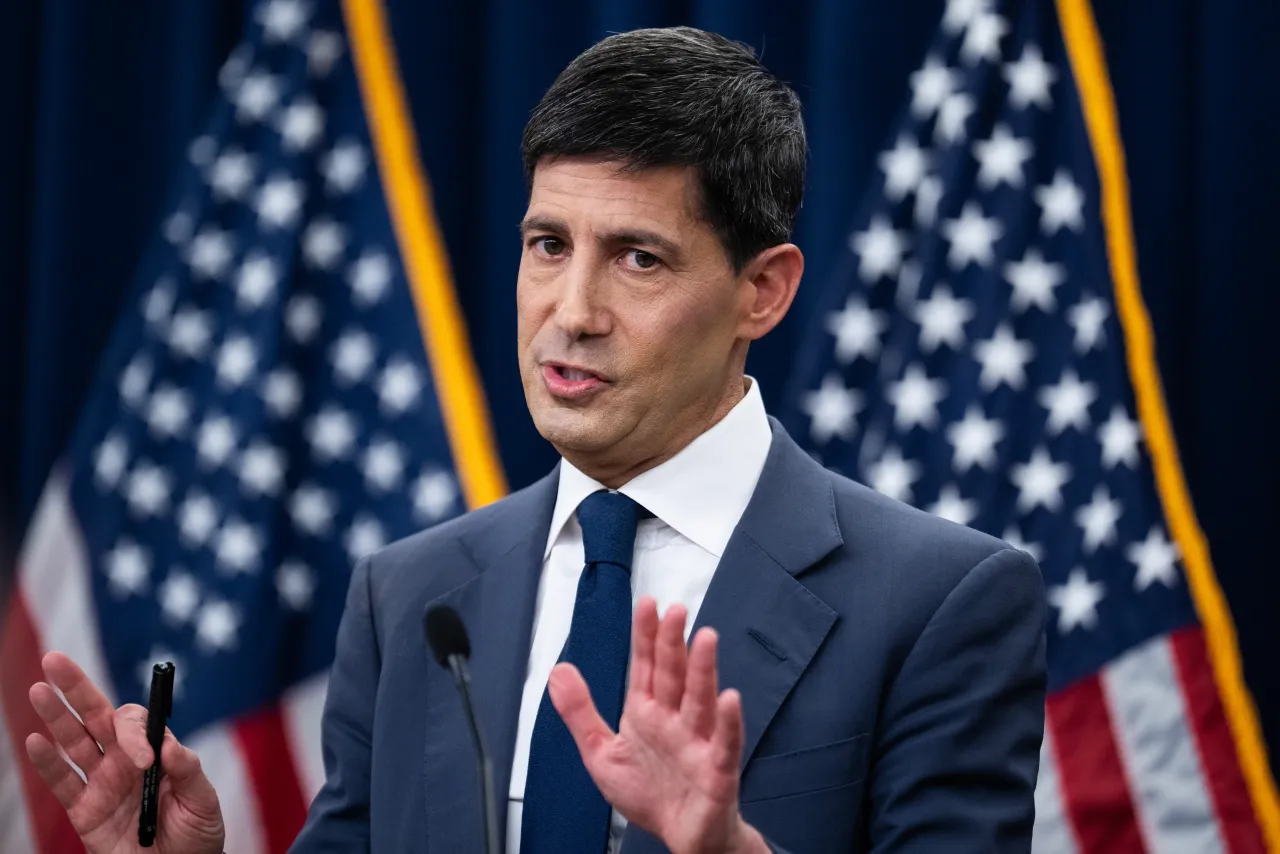


- Bitcoin fell to a two-week low on Tuesday near $62,000, down nearly 3% on the day, as markets prepared for a more hawkish Fed under new Chair Kevin Warsh.
- Bitcoin could catch up with stocks if fears of rate hikes fade, said Zach Pandl of Grayscale.
- Robin Brooks at Brookings warned that Warsh's scrapping of forward guidance could boost and destabilize Treasury yields, echoing the 2013 “taper tantrum”, which could be a headwind for risk assets.
- Bitfinex analysts said that BTC took a bigger hit than stocks or gold because it is a long-duration asset that suffers from real yields, and a “debasement trade” was undermined by Warsh’s focus on price stability.
Advertisement|Remove ads.
Bitcoin (BTC) fell to a two-week low on Tuesday as traders reassessed bets on a more hawkish Federal Reserve under new Chairman Kevin Warsh, while analysts are split on whether the move is a buying opportunity or the beginning of a deeper macro-driven pullback.
The repricing came after Warsh’s first meeting as Fed chair on June 17, when the central bank held its benchmark rate at 3.5%-3.75% but adopted a much more hawkish stance. The Fed removed language suggesting future rate cuts, raised its 2026 inflation forecasts, pushing its headline Personal Consumption Expenditures (PCE) estimate to 3.6% from 2.7%, and, in a notable departure from recent practice, removed forward guidance from its statement.

Markets responded by pricing a higher probability of rate hikes, supporting the dollar and real yields, but putting pressure on gold and Bitcoin. All eyes will be on the inflation print due later this week.
Advertisement|Remove ads.
Bitcoin’s price was trading at $62,183, down nearly 3% in the last 24 hours. On Stocktwits, retail sentiment around BTC remained in the ‘neutral’ territory over the past day, while chatter stayed at ‘low’ levels.
Grayscale Sees Bitcoin Catch-Up Trade If Rate Fears Ease
Grayscale Head of Research Zach Pandl argued in a Tuesday research note that if those hike fears don’t materialize, then Bitcoin “could bounce back." U.S. stocks are up roughly 9% since the Iran war started in late February, fueled by large-scale artificial-intelligence spending, while Bitcoin is down roughly 1% and gold has fallen roughly 20%, which is one of the largest performance gaps among major macro-assets.
Pandl attributed the divergence to rising rate expectations, which are up about 60 basis points over the period, but said Grayscale's base case is for the Fed to sit on its hands. If that happens, Bitcoin “could catch up with stocks,” he wrote.
Advertisement|Remove ads.
Brooks Warns Warsh’s Fed Could Trigger New Yield Shock
Another risk of Warsh’s communications overhaul was raised by Robin Brooks, a senior fellow at the Brookings Institution and former chief economist at the Institute of International Finance. Brooks said in a note on Tuesday that removing forward guidance, which has been a bedrock for yields, should make Treasury markets more volatile and push long-term yields higher as risk premia climb.
He compared it to the 2013 “taper tantrum,” when the 10-year yield surged from 1.5% to 3.0% in one summer after the Fed said it would begin to pull back on bond purchases. Brooks said he expects a milder version this time, but the conclusion points the same way: higher and more erratic yields, a familiar headwind for risk assets, including Bitcoin.
Bitcoin Price: What Next?
But the closer crypto analogy might be the 2021-22 Fed pivot. Bitcoin had been hovering around $60,000 after the Fed’s 2021 taper signal, only to crater below $20,000 the next year once aggressive hikes and tighter liquidity took hold, a signal that the real damage tends to come from the follow-through, not the guidance shift itself.
Advertisement|Remove ads.
Bitfinex analysts pointed out $68,500 to $72,000 on the charts as strong overhead resistance, an area where recent buyers are sitting at a loss, and will likely sell into any recovery. The aggregate realized price close to $54,000 would be a deeper floor that has not yet been tested, said the analysts.
Bitcoin recently declined below its quarterly open at $68,266 and could continue to compress within the $60,000-to-$70,000 range without a new catalyst for volatility. The path for now is through the data. A hike rather than a cut looks more likely for the Fed's next step unless inflation cools meaningfully, flagging the September FOMC meeting as a potential live date for an increase should price pressures stay firm, said Bitfinex.
Read also: Congress Shuts The Door On A Fed Digital Dollar For Now – And Opens One For Stablecoins
Advertisement|Remove ads.
For updates and corrections, email newsroom[at]stocktwits[dot]com
Comments posted here will also appear on symbol pages.

Latest News
/filters:format(webp)https://news.stocktwits-cdn.com/large_lufax_59d7e9e7ef.jpg)
/filters:format(webp)https://news.stocktwits-cdn.com/IMG_8805_JPG_6768aaedc3.webp) Deepti Sri·34m ago
Deepti Sri·34m ago/filters:format(webp)https://news.stocktwits-cdn.com/large_Salesforce_resized_jpg_f6c36dbac3.webp)
/filters:format(webp)https://news.stocktwits-cdn.com/Aashika_Suresh_Profile_Picture_jpg_2acd6f446c.webp) Aashika Suresh·37m ago
Aashika Suresh·37m ago/filters:format(webp)https://news.stocktwits-cdn.com/large_Getty_Images_2286763242_f15ffb6bfa.jpg)
/filters:format(webp)https://news.stocktwits-cdn.com/shivani_photo_jpg_dd6e01afa4.webp) Shivani Kumaresan·50m ago
Shivani Kumaresan·50m ago/filters:format(webp)https://news.stocktwits-cdn.com/large_nvidia_OG_Jun26_860ee43e02.jpg)
/filters:format(webp)https://news.stocktwits-cdn.com/IMG_9209_1_d9c1acde92.jpeg) Yuvraj Malik·1h ago
Yuvraj Malik·1h ago/filters:format(webp)https://news.stocktwits-cdn.com/large_Michael_Bury_resized_jpg_14e6fc7c2b.webp) Deepti Sri·2h ago
Deepti Sri·2h ago/filters:format(webp)https://news.stocktwits-cdn.com/large_cybercab_a95ec55e62.jpg) Deepti Sri·2h ago
Deepti Sri·2h ago