


Advertisement|Remove ads.
Blockstream's CEO Adam Back Says Bitcoin Rejected A Contested Upgrade And Won't Change Its Mind
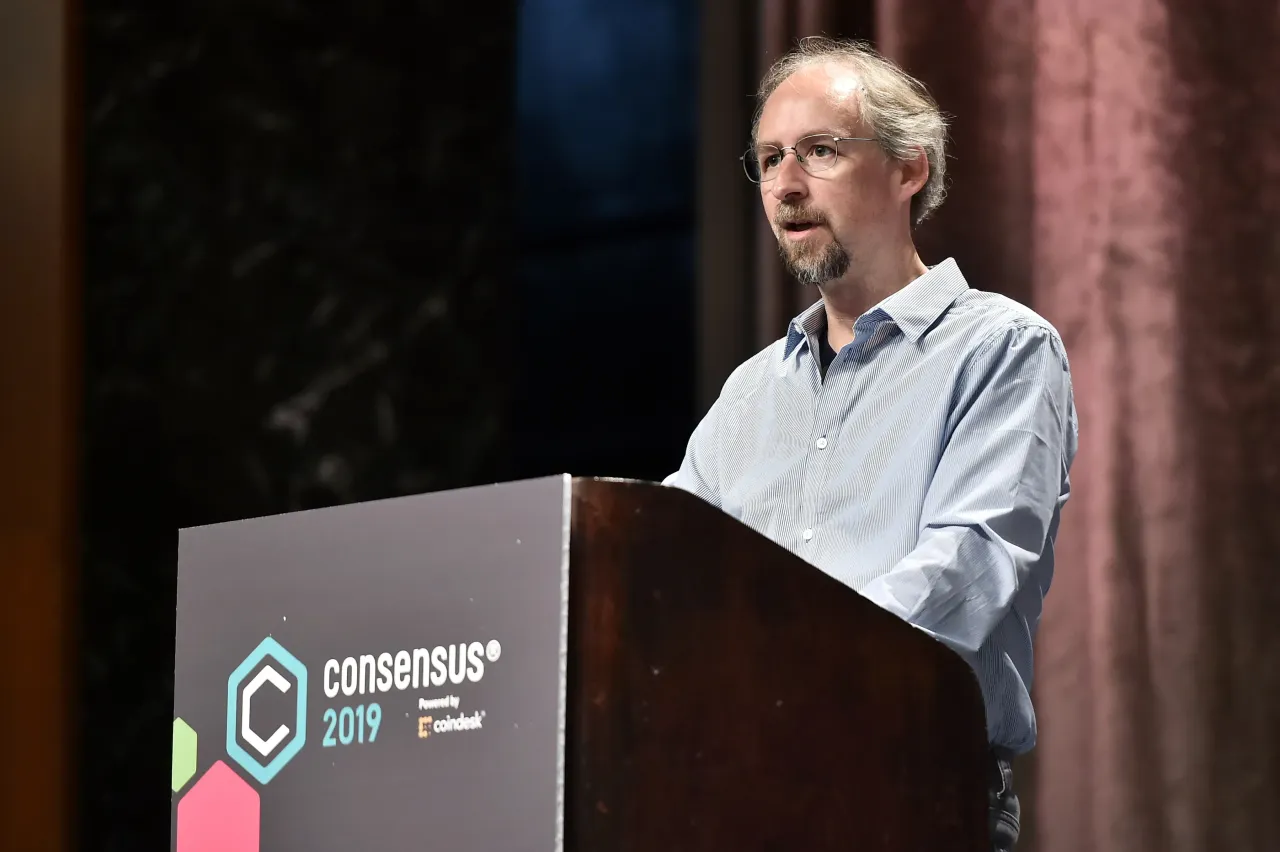


- Adam Back said Bitcoin has "robustly rejected" BIP-110, arguing the proposal conflicts with the network’s decentralized ethos.
- Back described BIP-110 as an attempt to impose rules on other users rather than solve a critical technical issue.
- He said supporters are free to launch a separate fork but insisted the main Bitcoin network is unlikely to adopt the changes.
Advertisement|Remove ads.
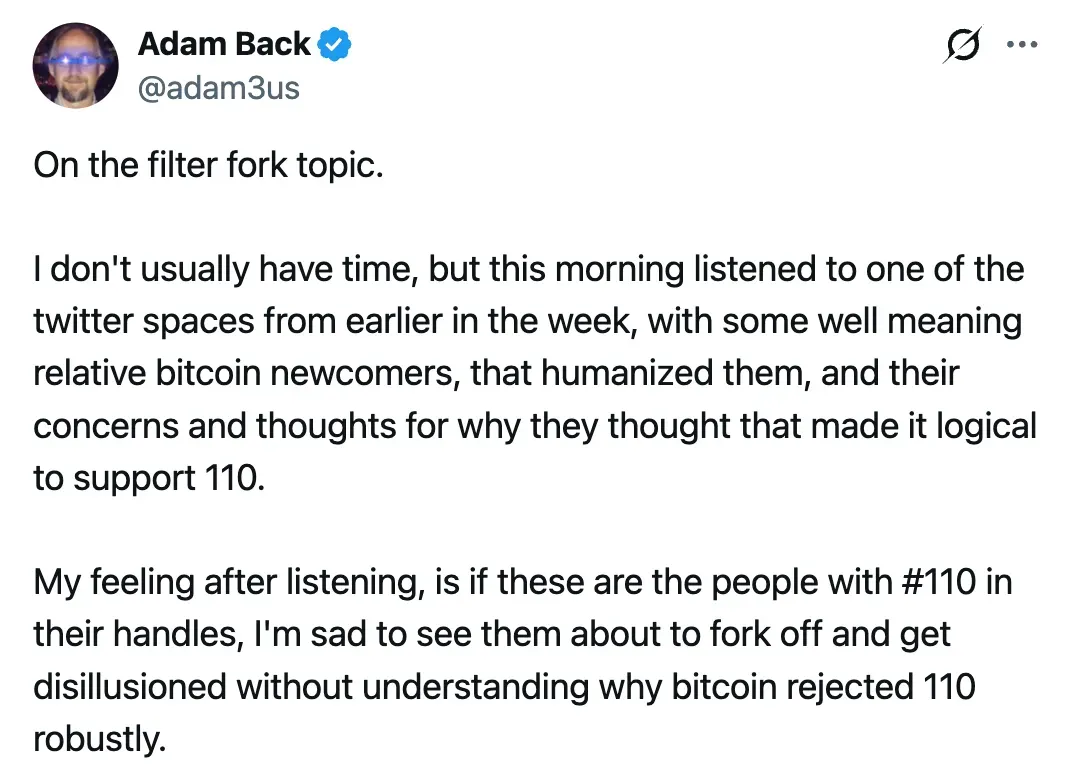
Blockstream co-founder and CEO Adam Back said on Saturday that Bitcoin (BTC) had "robustly rejected" BIP-110, a contested proposal to change how the network handled data, offering what he called a more empathetic explanation of why.
Back, who invented hashcash, the technology Bitcoin's mining process is built on, said he had listened to a “Twitter Space” earlier in the week where newcomers to Bitcoin voiced support for BIP-110. He said those supporters "seem to want to understand what makes people tick, and are suspicious of intent," and that he hoped to explain, in simple terms, why Bitcoin resisted the change. He described his broader hope for Bitcoin as building a "cypherpunk future" rooted in hard, mathematically dependable money that no single party can control.

Fork If You Want But Bitcoin Stays Put
According to Back, Bitcoin's decentralized design could not be used to enforce rules on other people, even by those with good intentions. He said no single group, including BIP-110's supporters, could force their preferences onto the wider network, because that would go against the very decentralization that made Bitcoin work.
Advertisement|Remove ads.
He described BIP-110 as, at its core, an attempt to "police other people" rather than a genuine technical fix.
Back said BIP-110's supporters were unlikely to win broad agreement from the rest of the Bitcoin network to adopt their proposed rules. He said their only real option, if they wanted to move forward anyway, was to split off and create their own separate version of Bitcoin, a process known as a “fork.”
"Your permissionless recourse is to club together and create a fork," Back wrote. "But bitcoin won't be joining it," meaning the main Bitcoin network would continue operating as it is, without adopting BIP-110's changes.
Advertisement|Remove ads.
Back closed by inviting BIP-110 supporters to abandon the proposal and return to the main Bitcoin network instead. "Please rejoin bitcoin now, or later if you're not convinced," he wrote, pointing to an upcoming event he called "cypherpunk summer" in the coming weeks.
What BIP-110 Would Change
Back's comments extend a dispute over BIP-110, a proposal that would limit how much non-payment data, like images or other files, could be attached to Bitcoin transactions, capping certain data fields at 83 bytes and others at 256 bytes.
Under the proposal, this change could take effect without needing approval from Bitcoin's miners, which is why Back and others have warned it risks splitting Bitcoin into two separate, competing versions rather than updating the one network everyone currently uses.
Advertisement|Remove ads.
Back’s Criticism Predates Current Debate
Back's skepticism of BIP-110 is not new.
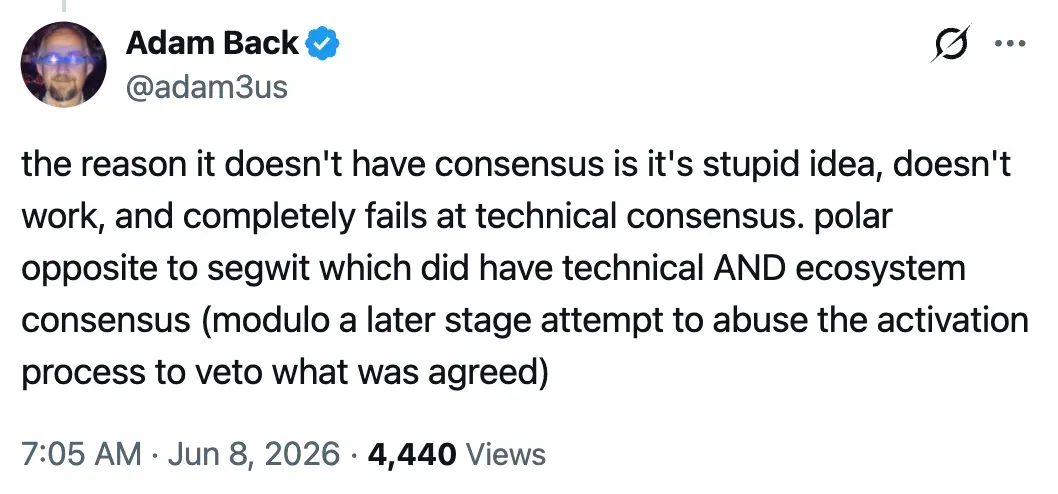
Earlier last month, when a supporter argued the proposal already had "consensus" because critics lacked compelling arguments against it, Back rejected the comparison outright: "the reason it doesn't have consensus is it's a stupid idea, doesn't work, and completely fails at technical consensus," he wrote.
Supporters of BIP-110, however, argued that the proposal's fate may hinge less on broad enthusiasm than on miner game theory.
Advertisement|Remove ads.
Bitcoin Mechanic, also known as GrassFedBitcoin on X, a BIP supporter, argued that mining pools face a "prisoner's dilemma" once BIP-110 approaches its activation height. If a rival pool signaled readiness to enforce the new rules and a pool that hadn’t prepared ended up mining on the wrong side of the split, it would block the risk of being wiped out entirely.
For updates and corrections, email newsroom[at]stocktwits[dot]com
Advertisement|Remove ads.
Comments posted here will also appear on symbol pages.

Latest News
/filters:format(webp)https://news.stocktwits-cdn.com/large_kroger_resized_jpg_df58ccdaf5.webp)
/filters:format(webp)https://news.stocktwits-cdn.com/1707726834303_jpg_11f20a9aa9.webp) Shashank Nayar·33m ago
Shashank Nayar·33m ago/filters:format(webp)https://news.stocktwits-cdn.com/large_Getty_Images_2271872828_24a8400504.jpg)
/filters:format(webp)https://news.stocktwits-cdn.com/unnamed_jpg_9dff551b50.webp) Anan Ashraf·35m ago
Anan Ashraf·35m ago/filters:format(webp)https://news.stocktwits-cdn.com/large_Seagate_jpg_50a56724b4.webp) Shashank Nayar·2h ago
Shashank Nayar·2h ago/filters:format(webp)https://news.stocktwits-cdn.com/large_Getty_Images_2128530471_1b79e1b428.jpg) Anan Ashraf·2h ago
Anan Ashraf·2h ago/filters:format(webp)https://news.stocktwits-cdn.com/large_qualcomm_jpg_bf257cee94.webp) Shashank Nayar·2h ago
Shashank Nayar·2h ago/filters:format(webp)https://news.stocktwits-cdn.com/large_Getty_Images_1321754803_jpg_a6258004b8.webp)
/filters:format(webp)https://news.stocktwits-cdn.com/Anushka_Basu_make_me_smile_in_the_picture_b92832aa_af59_4141_aacc_4180d2241ba8_1_2_png_1086e0ed8c.webp) Anushka Basu·3h ago
Anushka Basu·3h ago