


Advertisement|Remove ads.
AMZN, META, GOOGL, MSFT Earnings This Week: One AI Bubble Signal Will Keep Investors On Edge


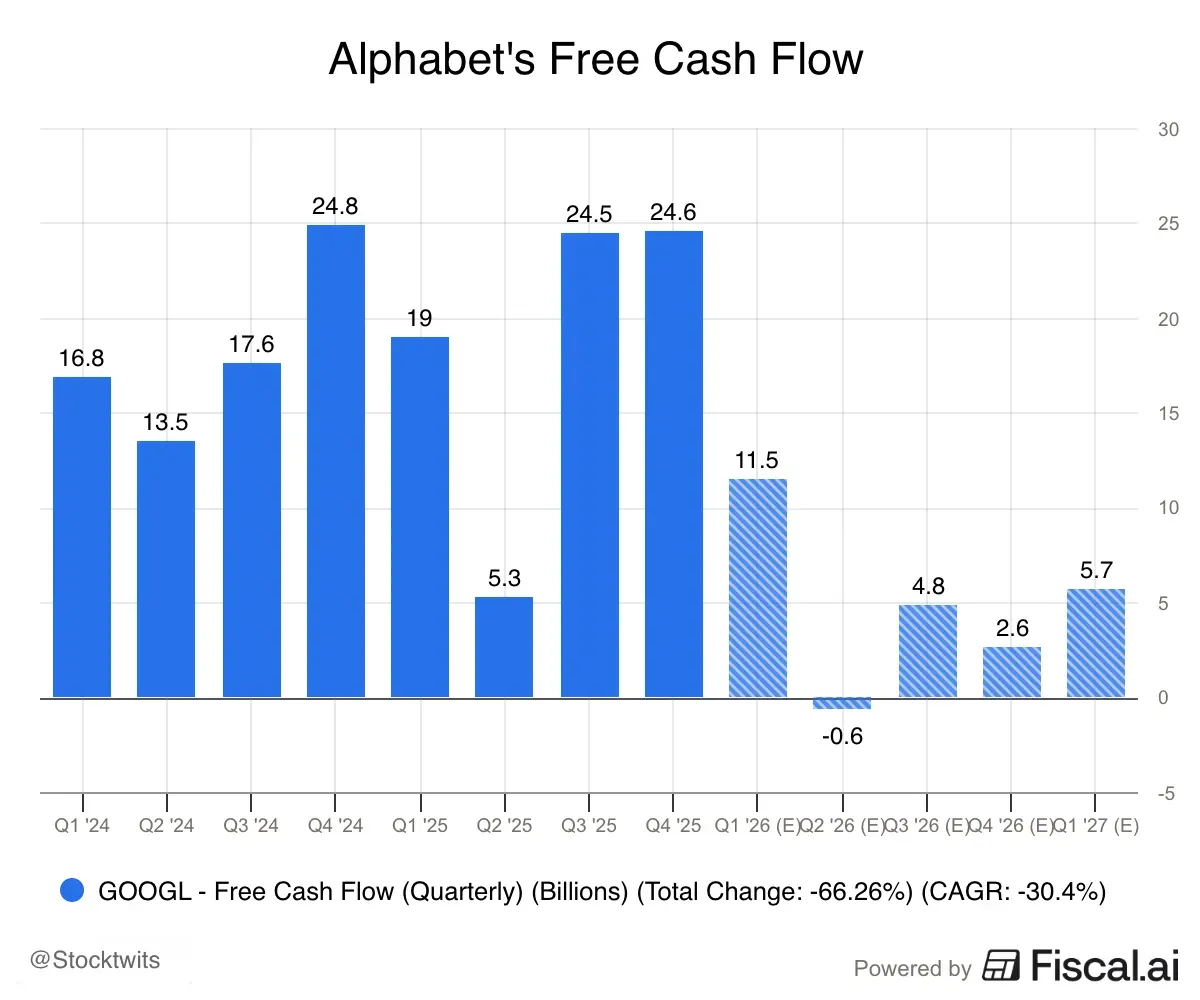
- The dip in FCF is expected to be more pronounced for Amazon and Meta.
- Shrinking free cash flow means less surplus cash on hand — and if that trend persists, it can constrain dividends, debt repayment, and growth spending.
- Amazon, Meta, Alphabet, and Microsoft – all are scheduled to report their quarterly earnings after market hours on Wednesday.
Advertisement|Remove ads.
As Big Tech earnings kick off on Wednesday, a clear theme may emerge: the sector could face a cash flow squeeze that, in a worst-case scenario, could start to pressure operations by limiting what’s available for dividends and buybacks.
The massive capital expenditure plans announced by tech giants earlier this year are set to show up in shrunken free cash flow (FCF), starting with the March quarter. Five of the biggest U.S. tech firms plan to pour over $630 billion into data centers, AI, and capacity this year — a sum larger than the GDP of countries like Singapore or Israel, and more than double last year’s combined spend. Amazon alone is committing to a staggering $200 billion, while Microsoft has doubled its outlay to $185 billion.
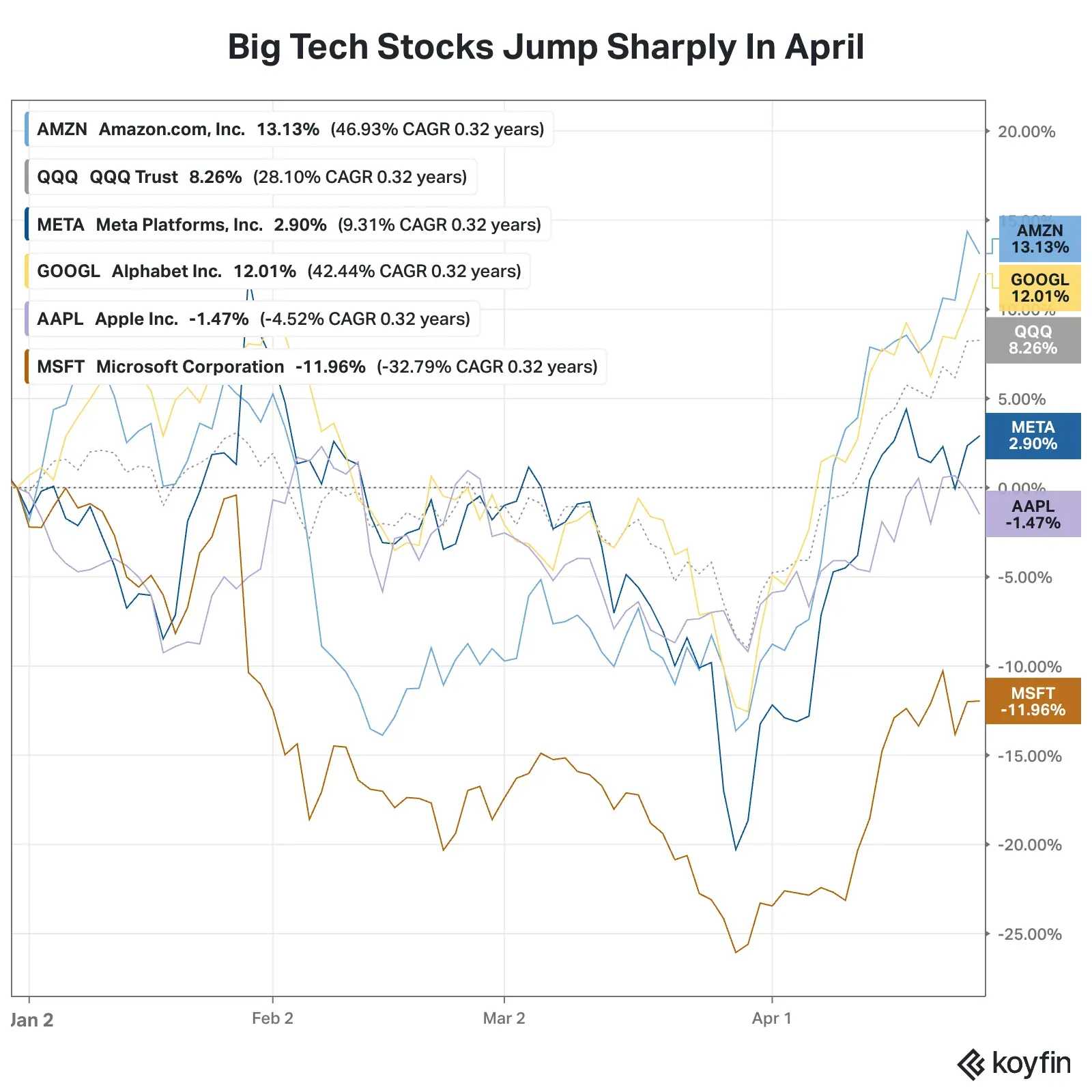
Investors should note that the past few months have been especially rough for tech. Money rotated out of the sector into defensives like utilities and consumer goods, though April offered a breather, with chip stocks leading a sharp rebound.
Advertisement|Remove ads.
Fears of an AI bubble are still pervasive, with concerns that tech’s lofty valuations and heavy AI-driven spending may not ultimately square with the returns the technology delivers.
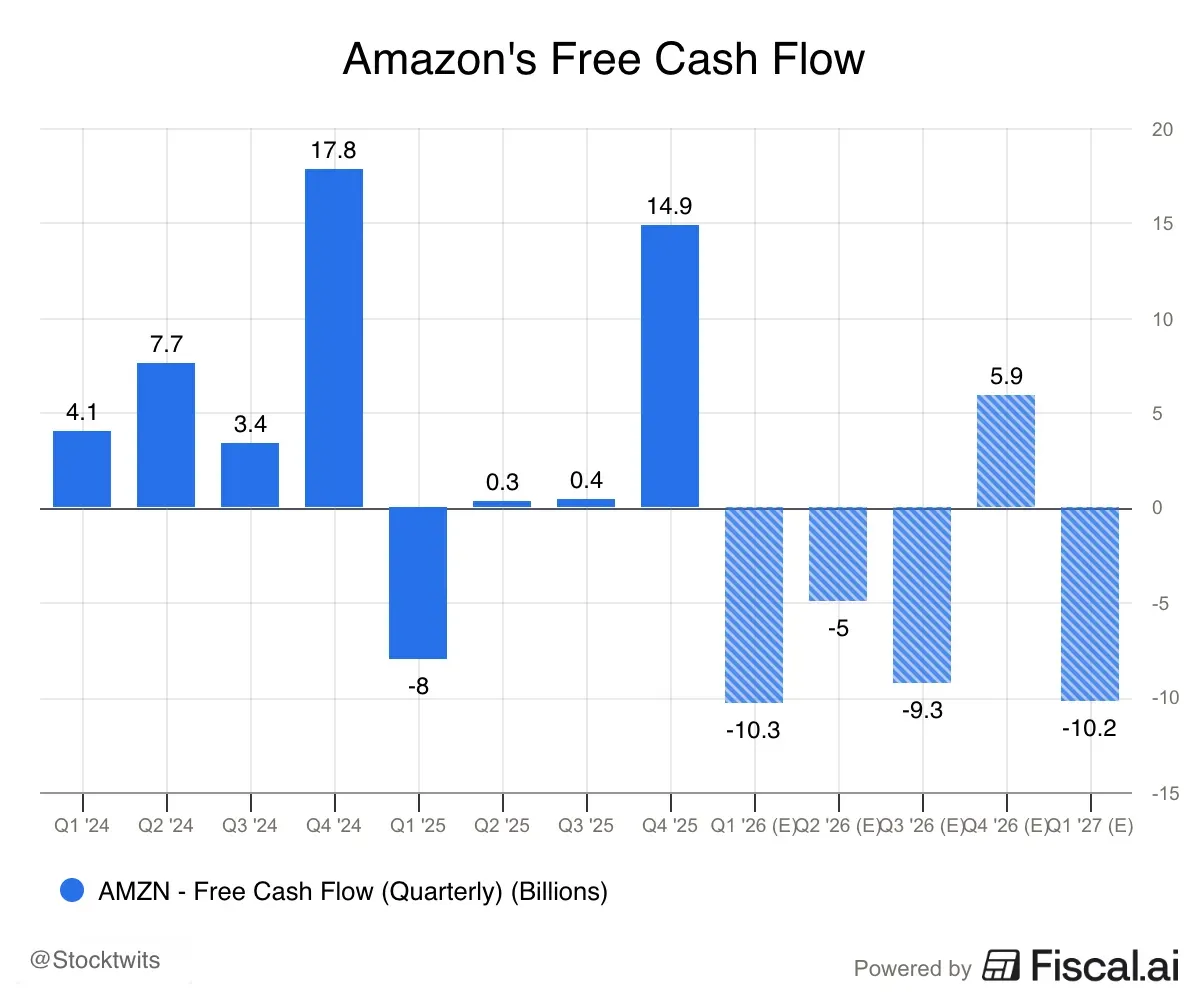
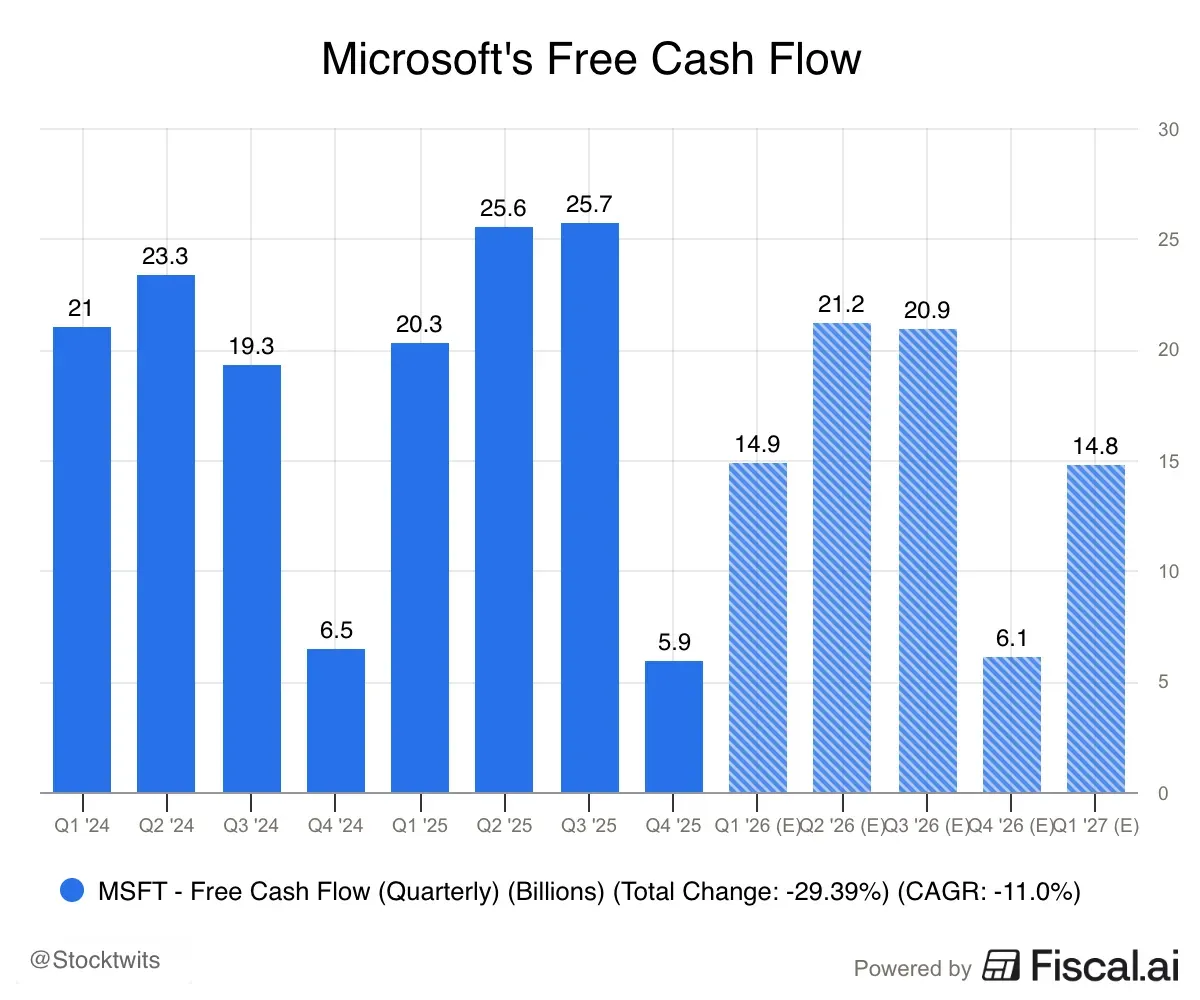
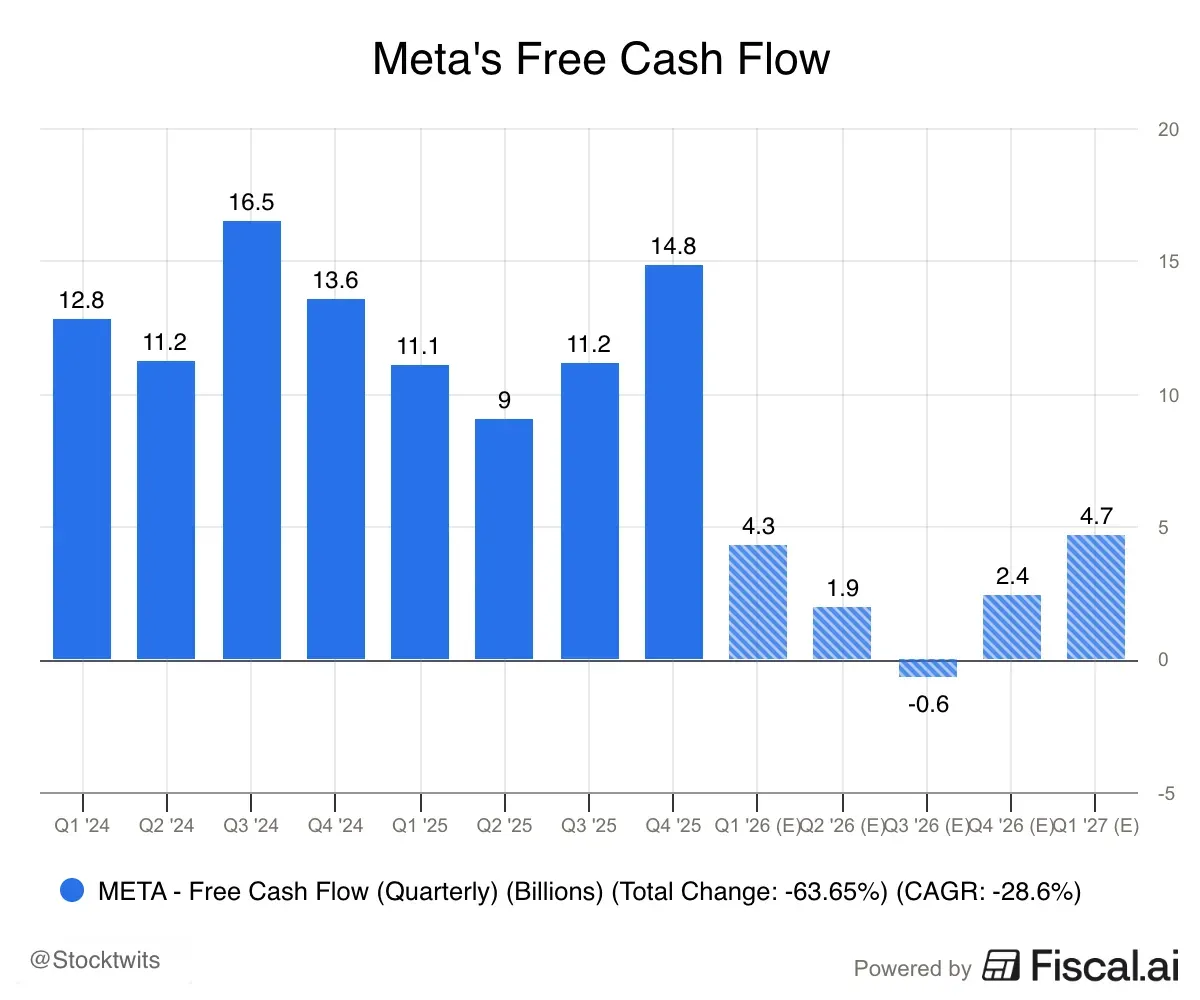
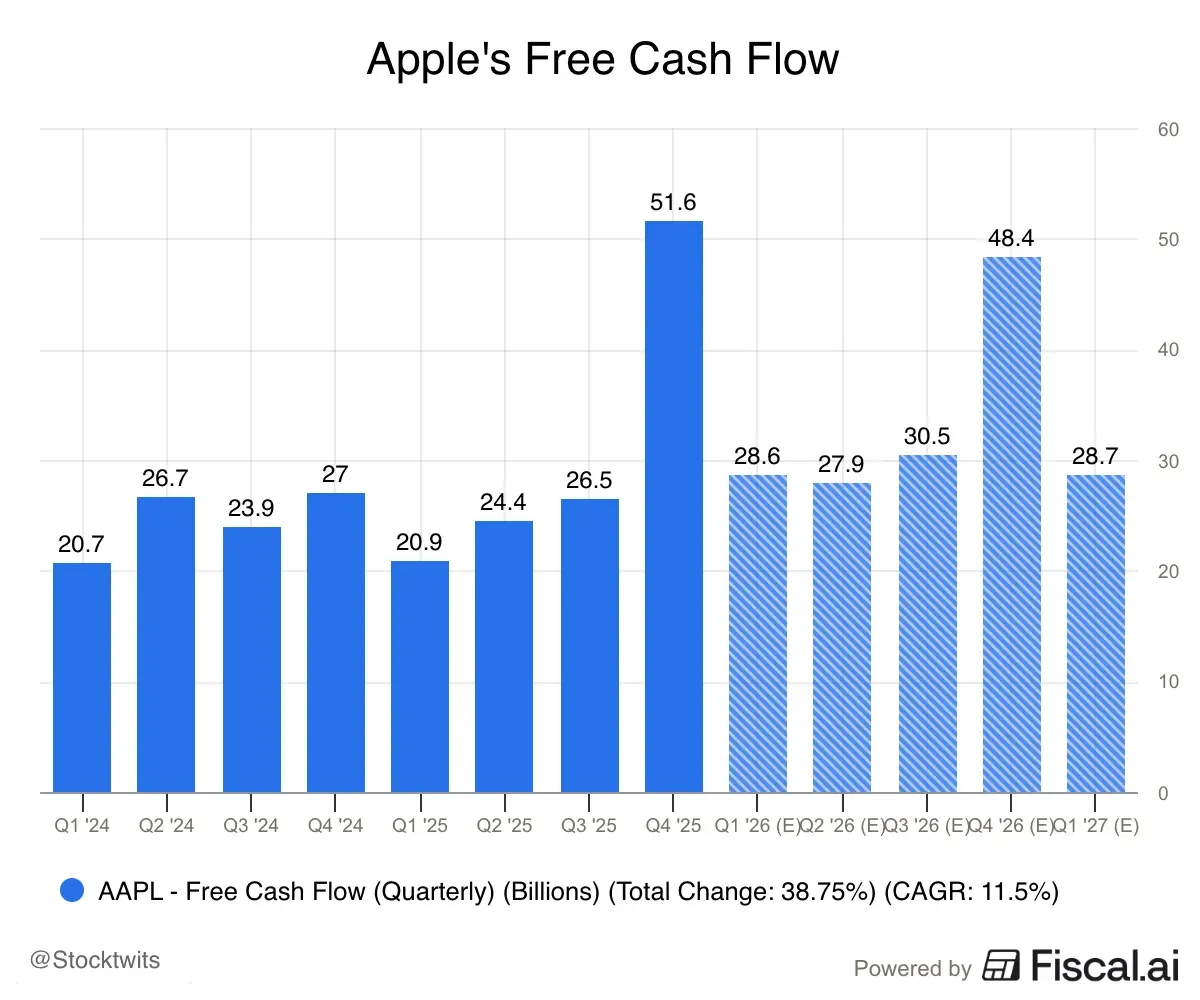
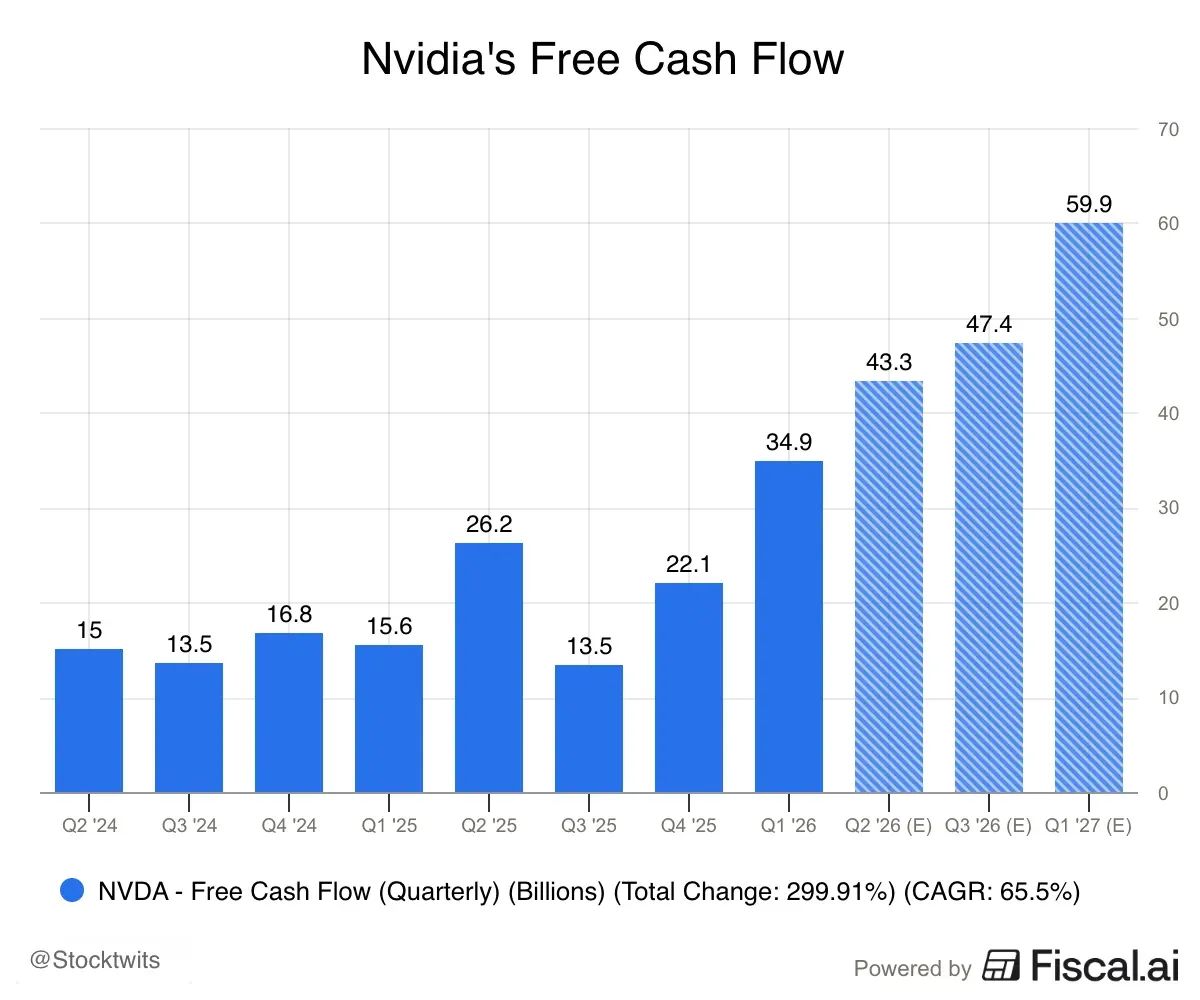
Against that backdrop, analysts are penciling in a sharp decline in FCF for Amazon, Microsoft, Meta Platforms, and Alphabet in the coming quarter. Free cash flows will remain flat for Apple and rise sharply for Nvidia, an outlier in the market, according to analyst projections compiled by Fiscal.ai. The dip is expected to be more pronounced for Amazon and Meta.
Advertisement|Remove ads.
Advertisement|Remove ads.
Advertisement|Remove ads.
Advertisement|Remove ads.
Free cash flow is the cash a company generates from its operations after spending on capital expenditures (like equipment or infrastructure). It represents the money available to pay dividends, reduce debt, or reinvest in the business.
Shrinking free cash flow means less surplus cash on hand — and if that trend persists, it can constrain dividends, debt repayment, and growth spending, a mix that tends to unsettle investors.
Advertisement|Remove ads.
To rein in spending, Meta, Amazon, and Oracle, Snap, and Salesforce, outside of the group in focus, announced massive workforce reductions in recent months, although much of it was blamed on enterprise efficiency brought on by AI.
Amazon, Meta, Alphabet, and Microsoft – all are scheduled to report their quarterly earnings after market hours on Wednesday, followed by Apple a day later.
Advertisement|Remove ads.
After blowout results from Taiwan Semiconductor Manufacturing Co., Intel, and ASML in recent weeks, investors will look to hyperscaler cloud performance as the main signal for AI demand and earnings.
With Big Tech names climbing sharply last month despite the Iran raging on – AMZN leads the pack with 25% growth – the gains will be tested come Wednesday.
“We’re going to learn a lot in a very short period,” a D.A. Davidson analyst told Yahoo Finance in an interview, discussing his thoughts on Big Tech earnings. “AI compute demand has skyrocketed… (with) agentic AI” and cloud growth at all hyperscalers would likely be upbeat.
Advertisement|Remove ads.
For updates and corrections, email newsroom[at]stocktwits[dot]com.
Advertisement|Remove ads.
Comments posted here will also appear on symbol pages.

Latest News
/filters:format(webp)https://news.stocktwits-cdn.com/large_Getty_Images_2161009632_81a55c17a0.jpg)
/filters:format(webp)https://news.stocktwits-cdn.com/Anushka_Basu_make_me_smile_in_the_picture_b92832aa_af59_4141_aacc_4180d2241ba8_1_2_png_1086e0ed8c.webp) Anushka Basu·4h ago
Anushka Basu·4h ago/filters:format(webp)https://news.stocktwits-cdn.com/large_Getty_Images_2286019501_0704608c45.jpg) Anushka Basu·5h ago
Anushka Basu·5h ago/filters:format(webp)https://news.stocktwits-cdn.com/large_Getty_Images_1234739851_1_4e5d1263a0.jpg) Anushka Basu·7h ago
Anushka Basu·7h ago/filters:format(webp)https://news.stocktwits-cdn.com/large_Getty_Images_1317870360_fd65c7f7d0.jpg) Anushka Basu·9h ago
Anushka Basu·9h ago/filters:format(webp)https://news.stocktwits-cdn.com/large_Getty_Images_2245018150_cbf31ea70f.jpg) Anushka Basu·10h ago
Anushka Basu·10h ago/filters:format(webp)https://news.stocktwits-cdn.com/large_circle_logo_original_jpg_93ebf851f7.webp) Anushka Basu·12h ago
Anushka Basu·12h ago