


Advertisement|Remove ads.
Citi's Nathan Sheets Warns Markets Could Misread The Fed — Sees Fiscal, AI Financing Worries Pushing Up Treasury Yields
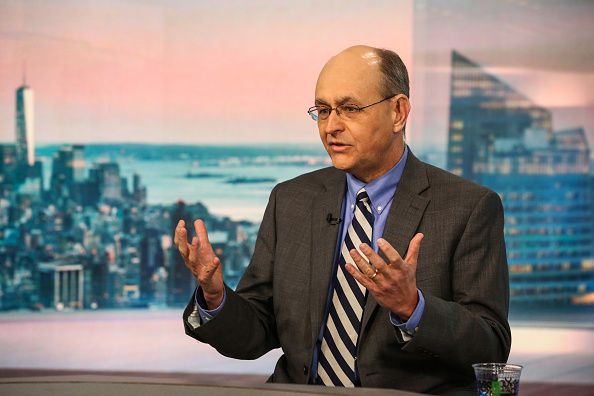


- Sheets identified a potential U.S. debt-ceiling standoff around mid-2027 as a risk investors should monitor
- The economist attributed rising longer-term Treasury yields to market concerns about fiscal demands, AI financing and broader economic uncertainty.
- Sheets estimated that roughly 30 bps of U.S. PCE inflation is associated with AI-related demand.
Advertisement|Remove ads.
Citi Global Chief Economist Nathan Sheets warned Tuesday that markets could misinterpret the Federal Reserve's policy intentions as Chair Kevin Warsh seeks to adopt a different approach to monetary policy than his predecessor amid heightened macroeconomic uncertainty.
Speaking to Bloomberg's The Asia Trade, Sheets acknowledged the risk of a Fed policy error, but said it was “maybe even more likely that the markets will misinterpret where the Fed is headed and its intentions.”

He also identified a potential U.S. debt-ceiling standoff around mid-2027 as a risk investors should monitor, warning that another confrontation could prove particularly challenging.
Advertisement|Remove ads.
Treasury Yields Reflect Fiscal And AI Financing Concerns
Sheets attributed the rise in longer-term U.S. Treasury yields to market concerns about government financing needs, artificial intelligence (AI) investment and broader economic uncertainty.
“We're seeing this just ongoing grind up in longer-term yields,” Sheets told Bloomberg, adding that markets were worried about fiscal demands and AI financing.
The benchmark 10-year Treasury yield hovered around 5.1% Tuesday, after reaching a 24-year high earlier this month.
Advertisement|Remove ads.
Despite these pressures, Sheets said the U.S. and global economies have continued to show resilience. He attributed that partly to greater flexibility and adaptability among businesses, which he believes have become better equipped to withstand economic shocks.
The iShares 20+ Year Treasury Bond ETF (TLT) and the iShares 7-10 Year Treasury Bond ETF (IEF) traded around 1% higher at the time of writing. On Stocktwits, retail investor sentiment toward TLT remained ‘bullish’, while sentiment around IEF was ‘neutral’.
AI Investment Adds To Growth And Inflation
According to the economist, enterprise adoption of AI is driving investment by hyperscalers and supporting global economic growth, particularly through investment in the U.S. and production and exports in Asia.
Advertisement|Remove ads.
However, he estimated that approximately 30 basis points of U.S. core PCE inflation is associated with AI-related demand. The latest data showed annual headline PCE inflation at 3.4% in August, while core PCE inflation stood at 3.0%.
Sheets said Citi's global headline inflation forecast is about one percentage point higher than previously expected, while core inflation could be roughly half a percentage point higher this year amid oil-related pressures and supply chain disruptions, Sheets said.
He also pointed to supply chain pressures affecting aluminum, petrochemicals, and fertilizers, warning they could interact with potential El Niño risks.
Advertisement|Remove ads.
Oil Prices Could Determine Fed's 2027 Rate Path
Sheets described a December Fed rate hike as “essentially a done deal.” He said meaningful progress in resolving the Iran conflict over the next three to six months, along with falling oil prices, could lower U.S. core inflation and let the Fed watch and wait in 2027.
However, if the conflict persists and oil prices remain volatile around $100 to $110 per barrel, Sheets said the Warsh-led Fed may need to raise rates a few more times.
The outlook comes as a Reuters poll showed 94 of 100 economists expect the Fed to hold rates steady at its October 27–28 meeting, while all 100 respondents anticipate a rate hike in December.
Advertisement|Remove ads.
See Also: CRM Stock Falls: Salesforce Strikes $5.66B Braze Deal To Strengthen AI Marketing Push
For updates and corrections, email newsroom[at]stocktwits[dot]com
Comments posted here will also appear on symbol pages.

Latest News

 Anushka Basu·19m ago

 Harshita Tyagi·34m ago

 Heera Hari·54m ago
 Prabhjote Gill·1h ago
 Harshita Tyagi·2h ago
 Anushka Basu·2h ago