


Advertisement|Remove ads.
Elon Musk And Jeff Bezos Escalate Rivalry As SpaceX And Blue Origin Pursue Competing Orbital AI Data Centers: Report
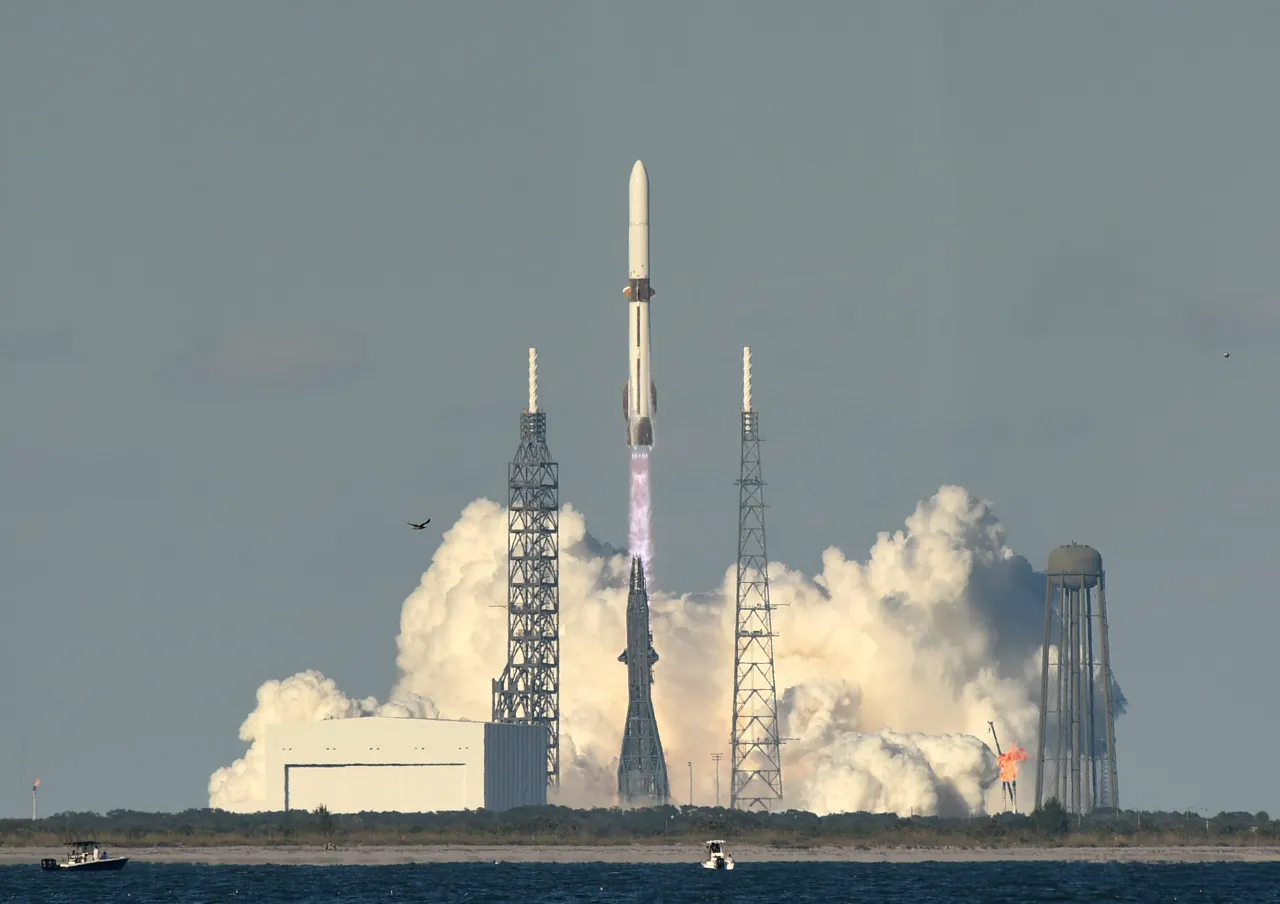


- Blue Origin has reportedly been developing orbital AI data-center technology for over a year.
- SpaceX is pitching AI-capable Starlink satellites in a share sale that could value the company near $800 billion.
- Interest in space-based data centers is rising despite engineering and cost challenges.
Advertisement|Remove ads.
Elon Musk’s SpaceX and Jeff Bezos’s Blue Origin are reportedly moving to extend their rivalry into space-based AI infrastructure.
Blue Origin has been developing technology for orbital AI data centers for more than a year, according to a report by The Wall Street Journal.
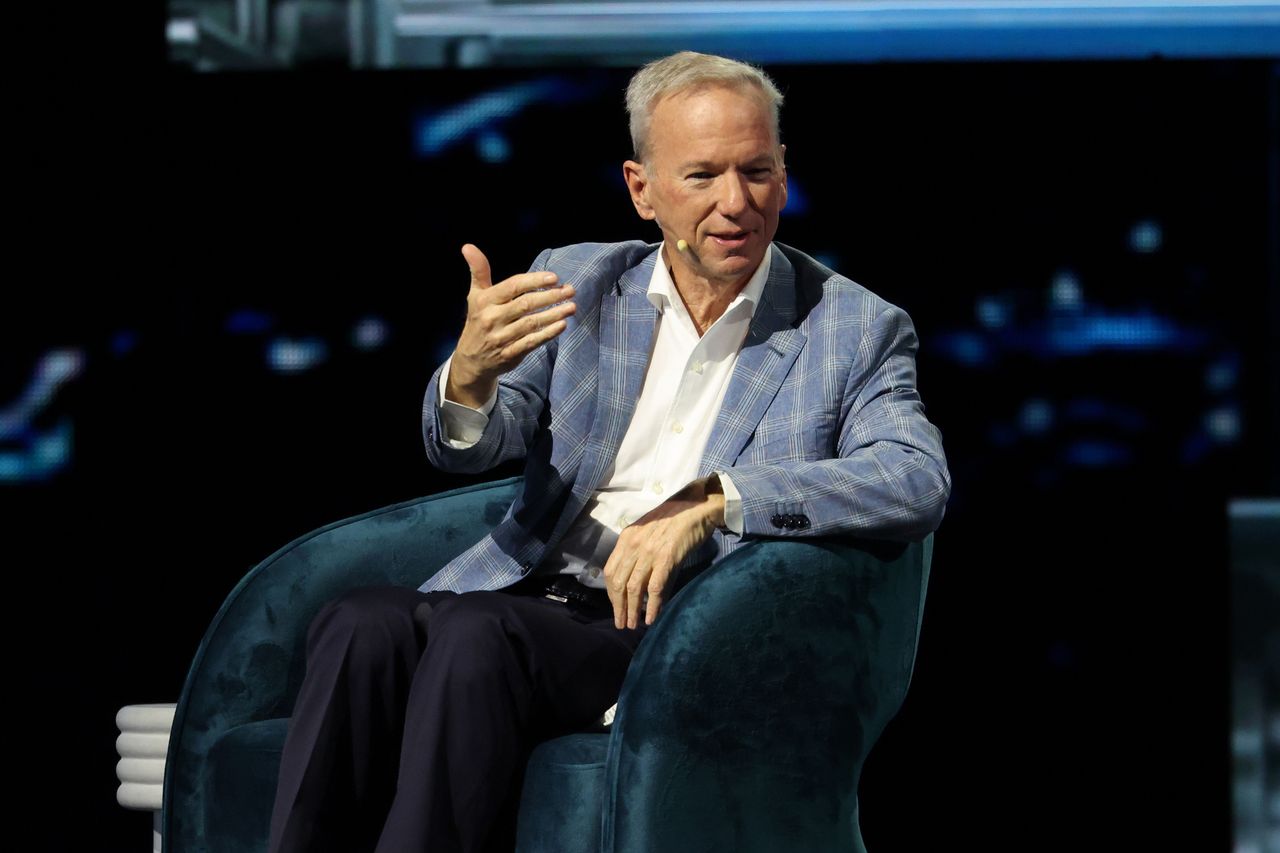
Meanwhile, SpaceX is pitching an upgraded generation of Starlink satellites that would carry AI computing payloads, a proposal included in a share sale that could value the company at around $800 billion, the report said.
Advertisement|Remove ads.
Technical Barriers
However, building satellite networks capable of handling such workloads comes with major engineering obstacles, and the price of placing large constellations in orbit remains a central concern. Those who support the idea said that it is difficult to design systems that can operate reliably in space or perform at a level comparable to today’s massive, chip-laden data centers on the ground, The WSJ report noted.
On the other hand, skeptics apparently warn that the technical risks are being played down and that orbital setups may struggle to compete on cost, particularly if energy or infrastructure constraints ease on Earth.
SpaceX Lines Up Record-Setting IPO Plans
SpaceX is reportedly preparing for an initial public offering that could raise well over $30 billion, potentially overtaking Saudi Aramco’s 2019 debut as the largest listing on record. The company is reportedly targeting a valuation of about $1.5 trillion and working toward a possible mid-to-late 2026 window, though market conditions could push the deal into 2027.
Advertisement|Remove ads.
Industry Leaders Take Interest
The broader industry is increasingly exploring space-based computing. Alphabet CEO Sundar Pichai said Google plans to begin testing small AI racks in orbit in 2027 as part of a longer-term effort to harness solar energy. Investor Gavin Baker has pointed to space’s naturally cold environment and the potential of laser-linked satellites as reasons future orbital data centers could deliver cost advantages.
Musk has also outlined on X how satellites with localized AI data centers could beam back results from low-latency orbits, describing this as the lowest-cost way to generate AI output within a few years and the fastest route to scale. He has also described a future in which satellite factories on the Moon produce AI satellites launched using electromagnetic rail systems.
Rising Competition In Orbital AI Infrastructure
Google’s Project Suncatcher aims to deploy solar-powered satellite constellations equipped with its Tensor Processing Units and free-space optical links. Starcloud has launched Nvidia H100 hardware into orbit and plans to operate a GPU-based satellite system by 2026. Axiom Space has outlined plans to deploy orbital data-center nodes by the end of 2025.
Advertisement|Remove ads.
How Did Stocktwits Users React?
On Stocktwits, retail sentiment for SpaceX was ‘extremely bullish’ amid ‘extremely high’ message volume, while sentiment toward Alphabet Inc. was ‘bearish’ amid ‘low’ message volume.
SpaceX is currently not listed, while Alphabet’s (GOOG) stock has risen 67% so far this year.
For updates and corrections, email newsroom[at]stocktwits[dot]com.
Advertisement|Remove ads.
Comments posted here will also appear on symbol pages.

Latest News
/filters:format(webp)https://news.stocktwits-cdn.com/large_Getty_Images_2245341683_0cb2bc89f5.jpg)
/filters:format(webp)https://news.stocktwits-cdn.com/1707726834303_jpg_11f20a9aa9.webp) Shashank Nayar·24m ago
Shashank Nayar·24m ago/filters:format(webp)https://news.stocktwits-cdn.com/large_Getty_Images_2269282844_jpg_933bcaa49e.webp) Shashank Nayar·52m ago
Shashank Nayar·52m ago/filters:format(webp)https://news.stocktwits-cdn.com/large_chips_ai_4770ebc76c.jpg) Shashank Nayar·2h ago
Shashank Nayar·2h ago/filters:format(webp)https://news.stocktwits-cdn.com/large_Anthropic_ec1c7b5ee9.jpg) Shashank Nayar·3h ago
Shashank Nayar·3h ago/filters:format(webp)https://st-everywhere-cms-prod.s3.us-east-1.amazonaws.com/large_bloom_energy_resized_d69c98fd7a.jpg) Shashank Nayar·4h ago
Shashank Nayar·4h ago/filters:format(webp)https://news.stocktwits-cdn.com/gettyimages_2257971883_594x594_1606ccd0ba.jpg)
/filters:format(webp)https://news.stocktwits-cdn.com/Heera_1_1c30cb0170.PNG) Heera Hari·6h ago
Heera Hari·6h ago