


Advertisement|Remove ads.
Gary Gensler Says Key Question In Nvidia Probe Is Whether Huang Misled Shareholders, Sees AI ‘Repricing’ Ahead
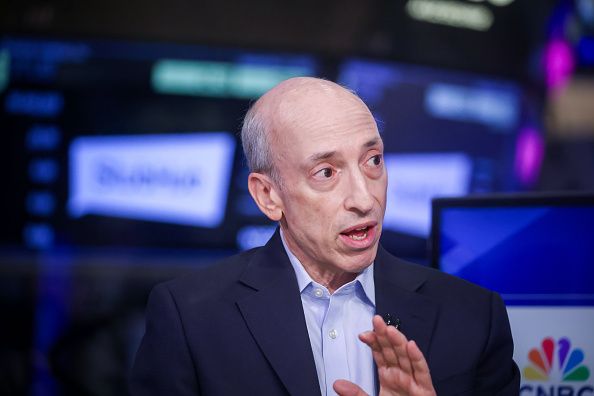


- Gensler stated that he expects a broader repricing of the AI market sometime in the next year or so.
- He added that Nvidia’s board could face “tough decisions” once its independent investigation is complete, particularly if it finds that Huang misled directors.
- The former SEC chair said regulators should not give Nvidia special treatment because of its importance to the U.S. economy and the AI industry.
Advertisement|Remove ads.
Former Securities and Exchange Commission (SEC) Chair Gary Gensler said on Monday that the central question in Nvidia’s (NVDA) investigation of CEO Jensen Huang is whether investors were misled.
“The question to answer is whether they’ve misled any of their shareholders,” Gensler, now a professor at the Massachusetts Institute of Technology (MIT), told CNBC.

According to him, the case turns on materiality, the legal test of whether information would matter to a reasonable investor. Companies are required to disclose “material information” to shareholders. “I think we’ve passed that threshold,” Gensler said, pointing to the stock’s pre-market decline.
Advertisement|Remove ads.
NVDA stock dropped over 5% in early morning trade on Monday, on track to hit a fresh five-month low and wipe out over $200 billion of its market capitalization.
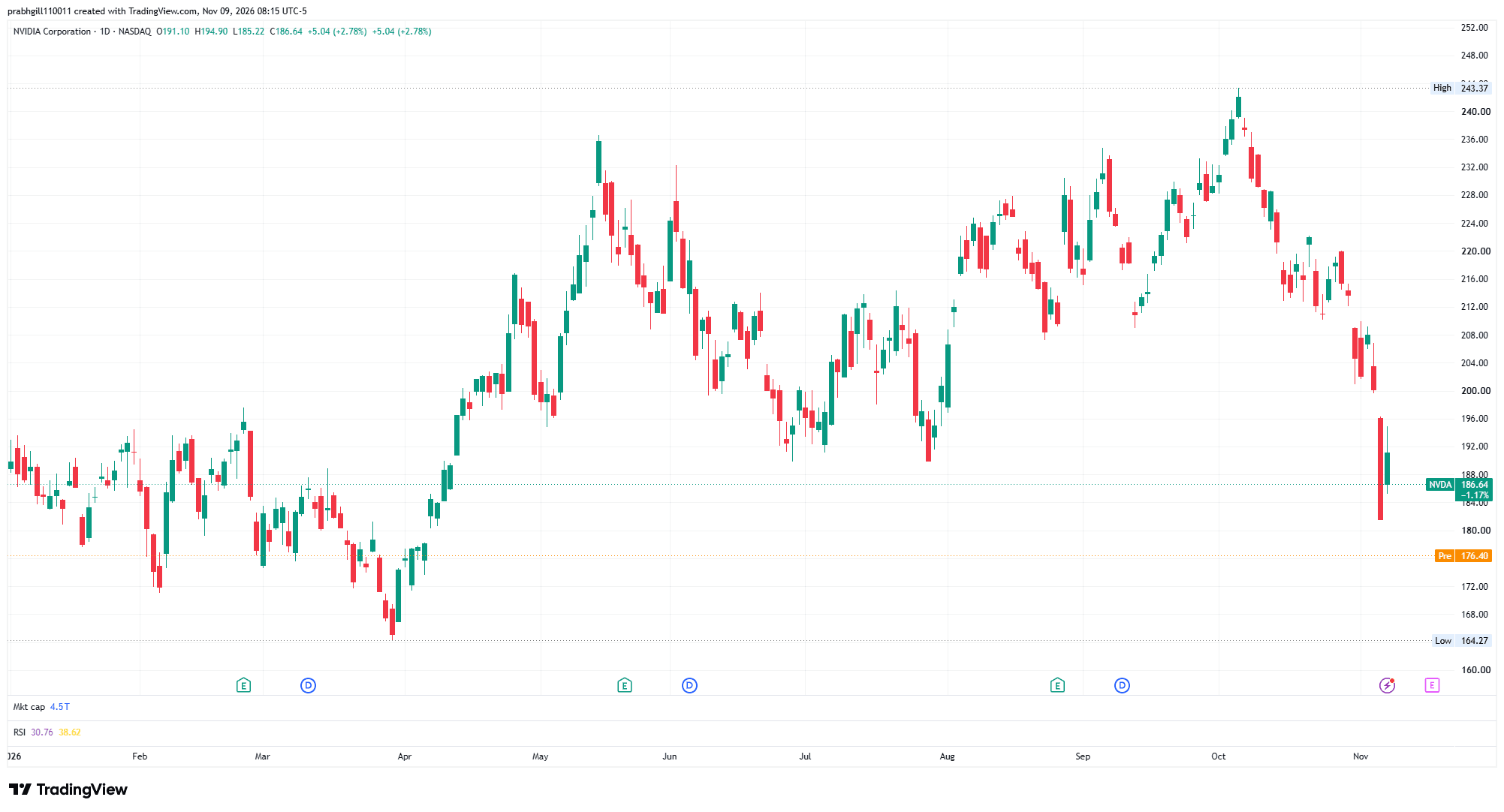
Nvidia shares were among the top trending tickers on Stocktwits at the time of writing. Retail sentiment on the platform around the company remained in ‘extremely bullish’ territory over the past day.
Gensler Sees Risk Of AI Market Repricing Amid Nvidia Probe
Gensler said the investigation comes at a sensitive time for financial markets, given Nvidia’s central role in the artificial intelligence industry. He noted that the company is the leading supplier of chips used to develop and run AI models, and its business has become a key driver of the broader technology trade.
Advertisement|Remove ads.
“Nvidia is at the center of all this. It’s propping up the whole AI trade right now, and I think we will have a repricing in the market sometime in the next year or so,” Gensler said.
While the former SEC chair said he could not predict when such a repricing might occur, he added that the investigation could become a distraction for a company with an influential position in the AI supply chain. “Here the principal player at the principal supplier in the middle that has 75% gross margins is going to be very distracted,” Gensler noted.
Gensler Says Nvidia Directors Face ‘Tough Decisions’
Gensler said the investigation must also establish whether Huang met his obligations to Nvidia’s board and whether the company’s public communications gave investors an accurate picture of the situation.
Advertisement|Remove ads.
“Did he mislead his board?” Gensler asked. He said the SEC brought “a number of cases like this” during his tenure, involving senior executives who misled their boards or the investing public.
He also highlighted Huang’s unusually central role in Nvidia’s operations. “He doesn’t have the usual five to seven direct reports. Some say he’s got 60 direct reports. He’s got his hand in every consequential piece of Nvidia,” Gensler said. “Once they get the results of the investigation, they’ll have some tough choices.”
Gensler also stated that Nvidia’s importance to the U.S. economy should not shield it from scrutiny. “I don’t think that the governmental entities should look the other way,” he said. “I think they should do their daily job and stay unemotional about it.”
Advertisement|Remove ads.
Nvidia Launches Independent Investigation Into CEO
Gensler’s comments come after Nvidia’s board said on Sunday that a committee of independent directors, assisted by outside legal counsel, would investigate the matter.
The probe follows Huang’s admission in an email to employees that he had an extramarital affair. The New York Times reported last month that U.S. intelligence officials believed the woman, Alicia Huang – a former executive at Nvidia customer Megaspeed – may have acted as an intelligence asset for China.
The board said it has no reason to believe national security or Nvidia’s secrets were compromised.
Advertisement|Remove ads.
Read also: From Musk’s Tesla Cybertruck To Ternus’ Memory Warning: MAG 7 Voices In Midterm Election Week
For updates and corrections, email newsroom[at]stocktwits[dot]com.
Comments posted here will also appear on symbol pages.

Latest News

 Heera Hari·5m ago
 Prabhjote Gill·12m ago

 Arnab Paul·39m ago

 Harshita Tyagi·1h ago
 Heera Hari·1h ago
 Prabhjote Gill·1h ago