


Advertisement|Remove ads.
IBRX Stock Extends 3-Day Slide — Founder Teases New Trial In ‘Unstoppable’ Cancer-Treatment Push


- It remains unclear whether the planned trial will use Anktiva, and its timing and design are undisclosed.
- NantWorks led Shine’s $240 million funding round and gained priority access to its Lu-177 supply.
- The FDA expects to decide on a broader U.S. bladder-cancer label by Jan.6, 2027.
Advertisement|Remove ads.
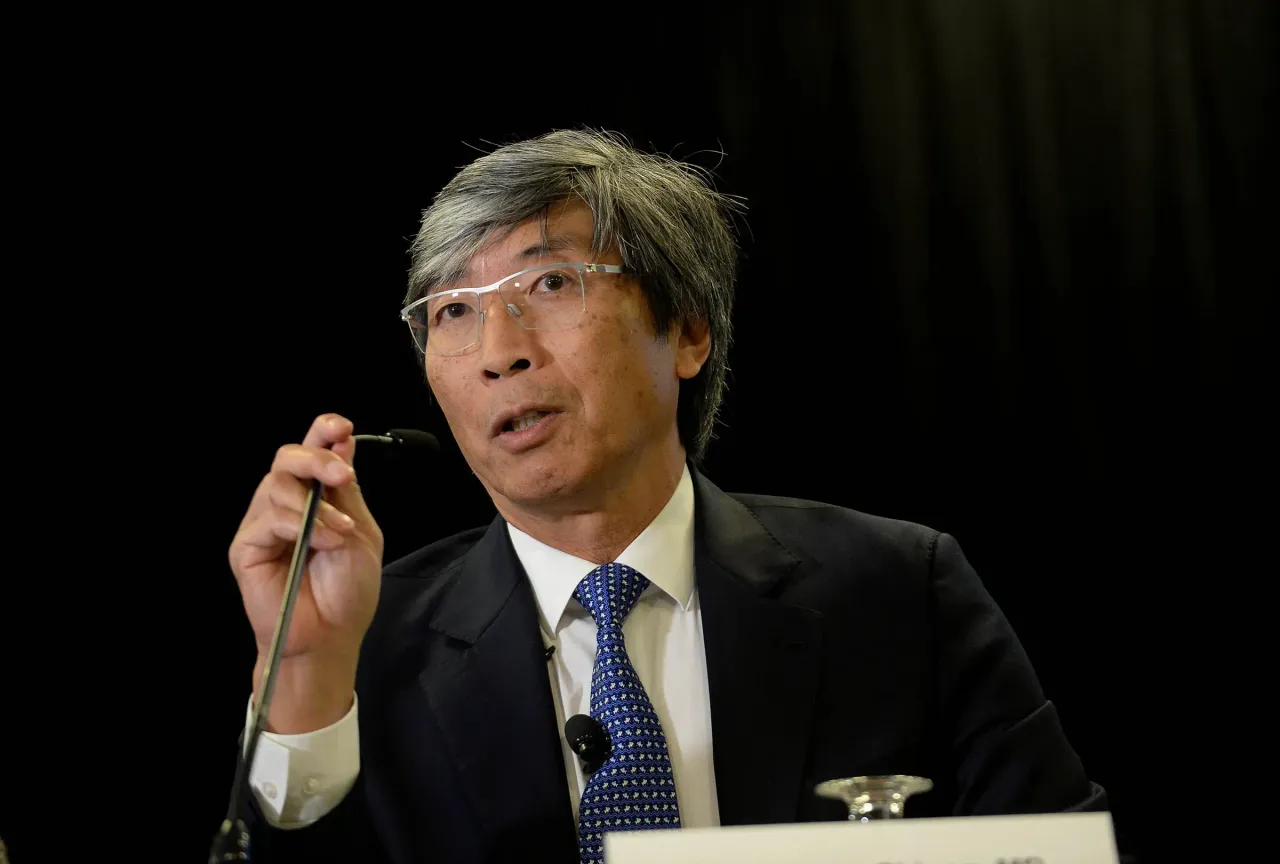
ImmunityBio founder Patrick Soon-Shiong has teased a trial pairing targeted radiation with an immune-boosting treatment, aiming to hit tumors more precisely without leaving the body’s natural defenses on the sidelines.
IBRX stock fell 3% on Monday in its third straight session of losses and slipped further in after-hours trading, but remains up 6% this month, leaving it on track to finish August in the green.

ImmunityBio Plans Pluvicto-IL-15 Trial
Soon-Shiong said on X that a trial combining Novartis’ Pluvicto with an IL-15-based treatment is being planned, outlining the idea after Shine Technologies highlighted its production of cancer-fighting radioisotopes. Pluvicto delivers radiation directly to cancer cells, allowing it to target tumors more precisely than conventional radiation therapy.
Advertisement|Remove ads.
Even targeted radiation, however, can reduce lymphocytes, which are natural killer and T cells that help the immune system fight cancer. Soon-Shiong believes IL-15 could help support those cells during treatment, saying that radioisotope cancer therapy is “about to explode.”
Anktiva, ImmunityBio’s flagship drug, is an IL-15-based immune activator that stimulates natural killer and T cells. Soon-Shiong did not say whether the planned study would use Anktiva or another IL-15 treatment, and it has not disclosed the timing or design.
Soon-Shiong Deepens Shine Connection
Shine produces medical radioisotopes including lutetium-177, or Lu-177. Pluvicto uses Lu-177 to carry radiation directly to cancer cells, limiting exposure to surrounding healthy tissue.
Advertisement|Remove ads.
Shine and ImmunityBio are both closely connected to Soon-Shiong. His NantWorks organization led a $240 million Shine funding round in February, with Soon-Shiong investing about $150 million and joining its board. The investment included a partnership granting NantWorks and affiliated programs priority access to Shine’s Lu-177 supply.
FDA Reviews Anktiva Label Expansion
In July, the UAE authorized Anktiva for a broader group of bladder cancer patients, including those with papillary-only tumors, and with checkpoint inhibitors for advanced lung cancer that had progressed despite standard treatment. The drug is now approved or authorized across 34 countries.
Papillary-only patients remain outside Anktiva’s U.S. label, but the FDA is reviewing an expansion application and expects to decide by Jan.6, 2027. Supporting data showed that 58% of 80 such patients remained disease-free after one year, while 83% avoided bladder-removal surgery at three years.
Advertisement|Remove ads.
“For patients with BCG-unresponsive bladder cancer, the choice has too often been between losing the bladder and running out of options,” Soon-Shiong previously said.
Anktiva Growth Boosts ImmunityBio Sales
Anktiva’s expanding reach is lifting sales. Second-quarter net product revenue hit a record $50.7 million, up 92% from a year ago and 15% sequentially, marking an eighth straight quarter of growth. First-half revenue jumped 121% to $94.8 million, while ImmunityBio ended June with $357.4 million in cash and marketable securities.
However, losses remain heavy. The quarterly net loss widened to $230.4 million from $92.6 million, largely due to non-cash liability adjustments and higher expenses, although adjusted net loss improved to $81 million from $89.9 million.
Advertisement|Remove ads.
How Do Retail Traders Feel About IBRX?
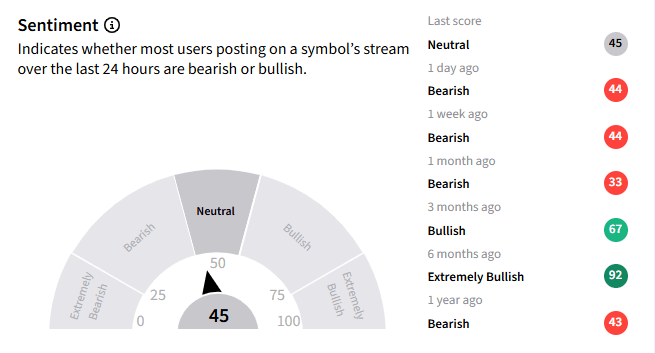
On Stocktwits, retail sentiment for IBRX improved to ‘neutral’ from ‘bearish’ levels a day ago amid a 3% rise in 24-hour message volumes.
One user said, “$IBRX it’s been a disappointing 7 months. The beginning of the year had so much promise.”
Advertisement|Remove ads.
Another user said, “$IBRX come on! Break $7.50 already. You know you want to see $6.XX again”
IBRX stock has surged 228% over the past year.
Advertisement|Remove ads.
For updates and corrections, email newsroom[at]stocktwits[dot]com.
Comments posted here will also appear on symbol pages.

Latest News
/filters:format(webp)https://news.stocktwits-cdn.com/large_Getty_Images_2184298752_597d0bfcd2.jpg)
/filters:format(webp)https://news.stocktwits-cdn.com/Anushka_Basu_make_me_smile_in_the_picture_b92832aa_af59_4141_aacc_4180d2241ba8_1_2_png_1086e0ed8c.webp) Anushka Basu·1h ago
Anushka Basu·1h ago/filters:format(webp)https://news.stocktwits-cdn.com/large_Getty_Images_2245018150_cbf31ea70f.jpg)
/filters:format(webp)https://news.stocktwits-cdn.com/IMG_9209_1_d9c1acde92.jpeg) Yuvraj Malik·3h ago
Yuvraj Malik·3h ago/filters:format(webp)https://news.stocktwits-cdn.com/large_Getty_Images_2227884315_1_jpg_92813ae655.webp)
/filters:format(webp)https://news.stocktwits-cdn.com/shivani_photo_jpg_dd6e01afa4.webp) Shivani Kumaresan·3h ago
Shivani Kumaresan·3h ago/filters:format(webp)https://news.stocktwits-cdn.com/large_Getty_Images_2257883988_c8980d3f76.jpg)
/filters:format(webp)https://news.stocktwits-cdn.com/IMG_8805_JPG_6768aaedc3.webp) Deepti Sri·3h ago
Deepti Sri·3h ago/filters:format(webp)https://news.stocktwits-cdn.com/large_lufax_59d7e9e7ef.jpg) Deepti Sri·4h ago
Deepti Sri·4h ago/filters:format(webp)https://news.stocktwits-cdn.com/large_Salesforce_resized_jpg_f6c36dbac3.webp)
/filters:format(webp)https://news.stocktwits-cdn.com/Aashika_Suresh_Profile_Picture_jpg_2acd6f446c.webp) Aashika Suresh·4h ago
Aashika Suresh·4h ago