


Advertisement|Remove ads.
iRobot Vacuumed Up The Market With Its Roomba — But Quickly Ran Out Of Power After A Failed Amazon Deal
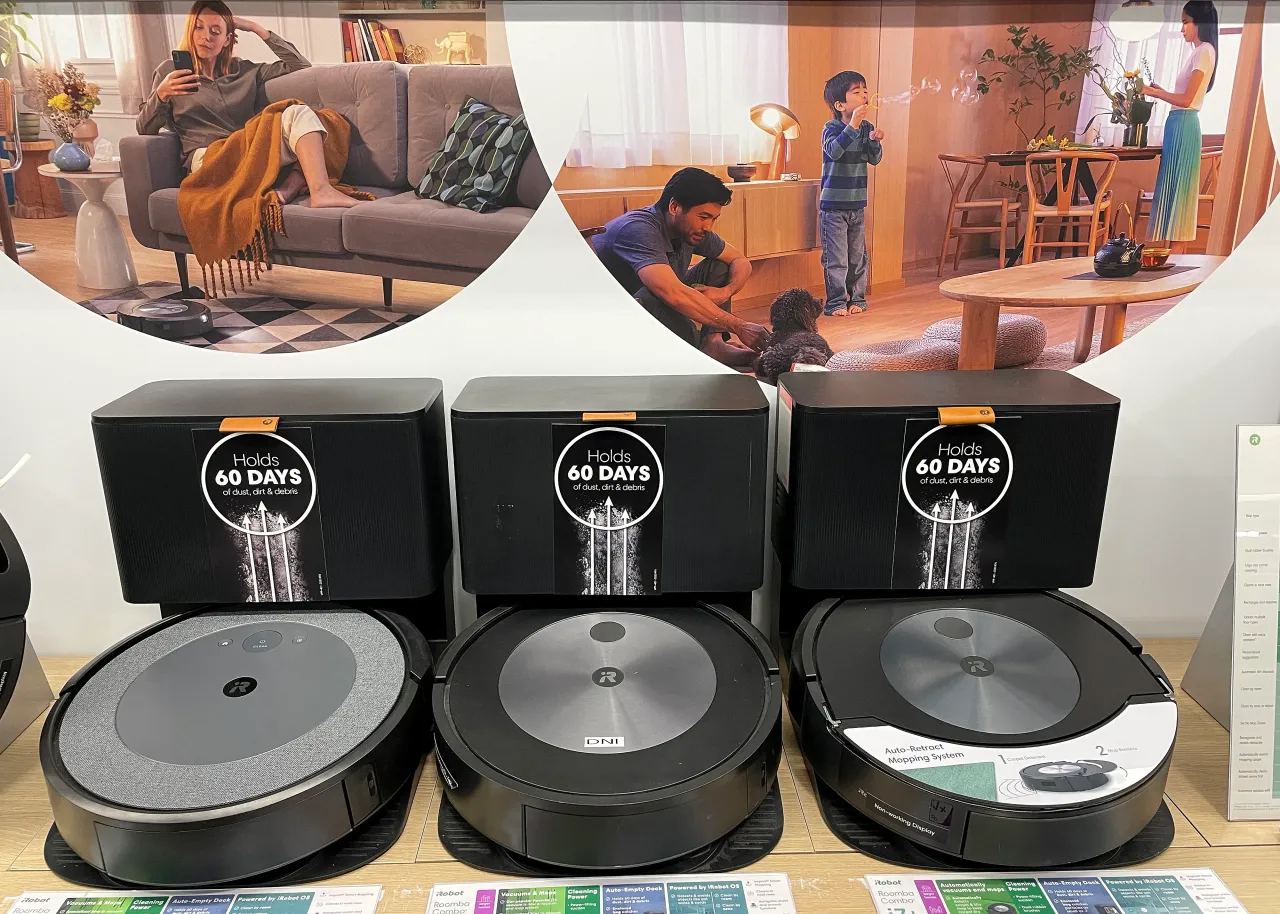


- iRobot said over the weekend that it has filed for bankruptcy and will be acquired by its Chinese contract manufacturer and lender, Shenzhen Picea Robotics.
- iRobot’s Roomba became synonymous with robot vacuums, but a failed Amazon deal and intensifying competition from Chinese rivals proved a death knell for the company.
- The company would continue regular operation under Picea’s ownership; there would be no disruption to consumers’ Roombas.
Advertisement|Remove ads.
An intermittent rally in recent weeks briefly fueled hopes of iRobot’s comeback, but it wasn’t meant to be.
The company, known for its “Roomba” robot vacuum cleaners, said on Sunday that it had filed for bankruptcy and that it would be acquired by its contract manufacturer and lender, Shenzhen Picea Robotics.
That marks the end of a 35-year run of a category-defining company. iRobot was founded in 1990 by MIT robotics professor Rodney Brooks and his former students, Colin Angle and Helen Greiner, and launched its famous Roomba in 2002.
Advertisement|Remove ads.
The Carlyle-backed company listed on Nasdaq in 2005 and went on to sell around 50 million robots, with its flagship Roomba achieving the rare distinction of becoming shorthand for the entire category.
How Things Went South
At the height of its momentum in 2022, Amazon came knocking with an acquisition offer, and the two sides agreed to a $1.7 billion buyout of iRobot. Still, European regulators blocked the deal, arguing that Amazon would restrict its marketplace for competing robot vacuum cleaners. The two sides ultimately dropped the deal in 2024, with Amazon paying iRobot a $94 million breakup fee.
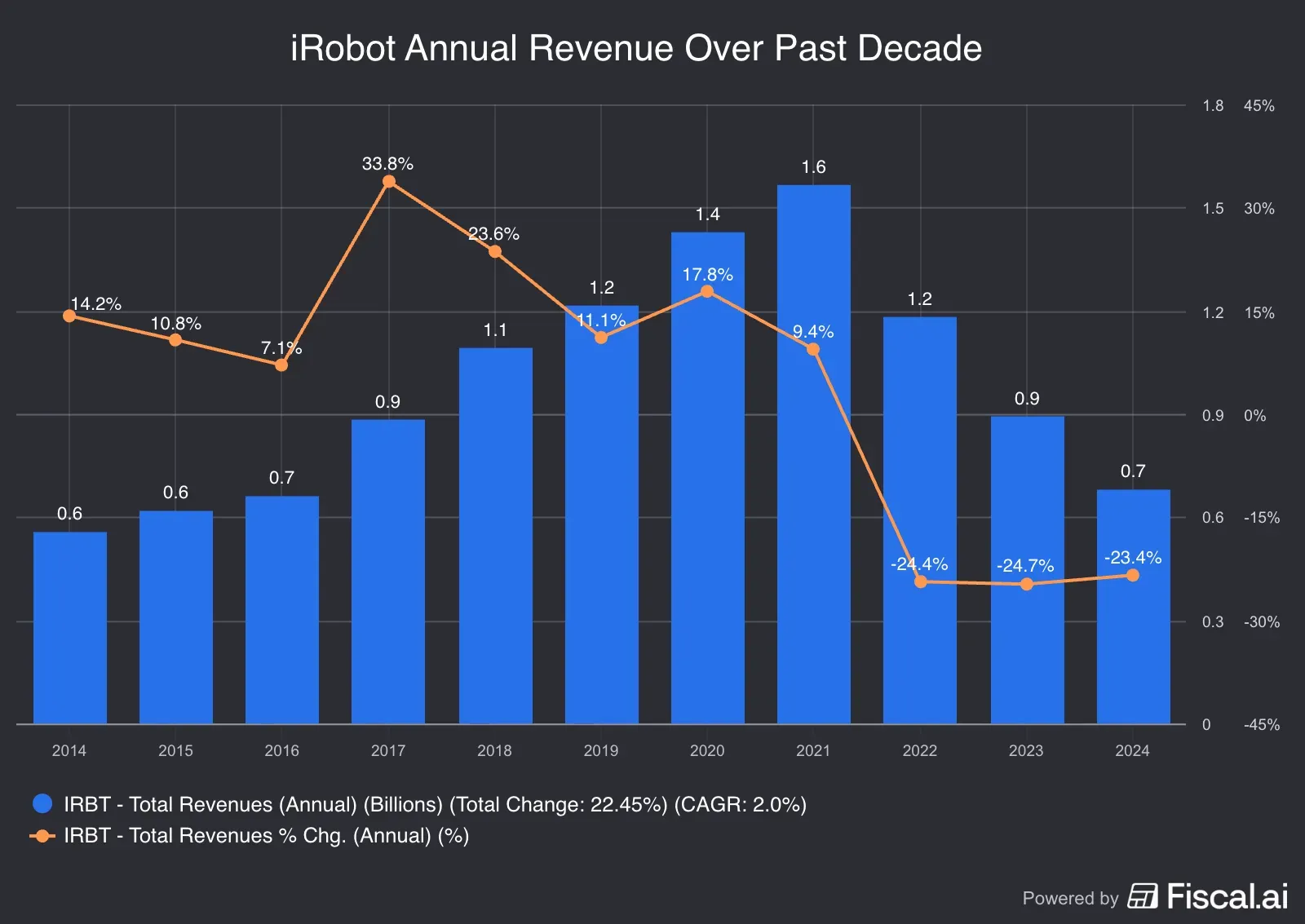
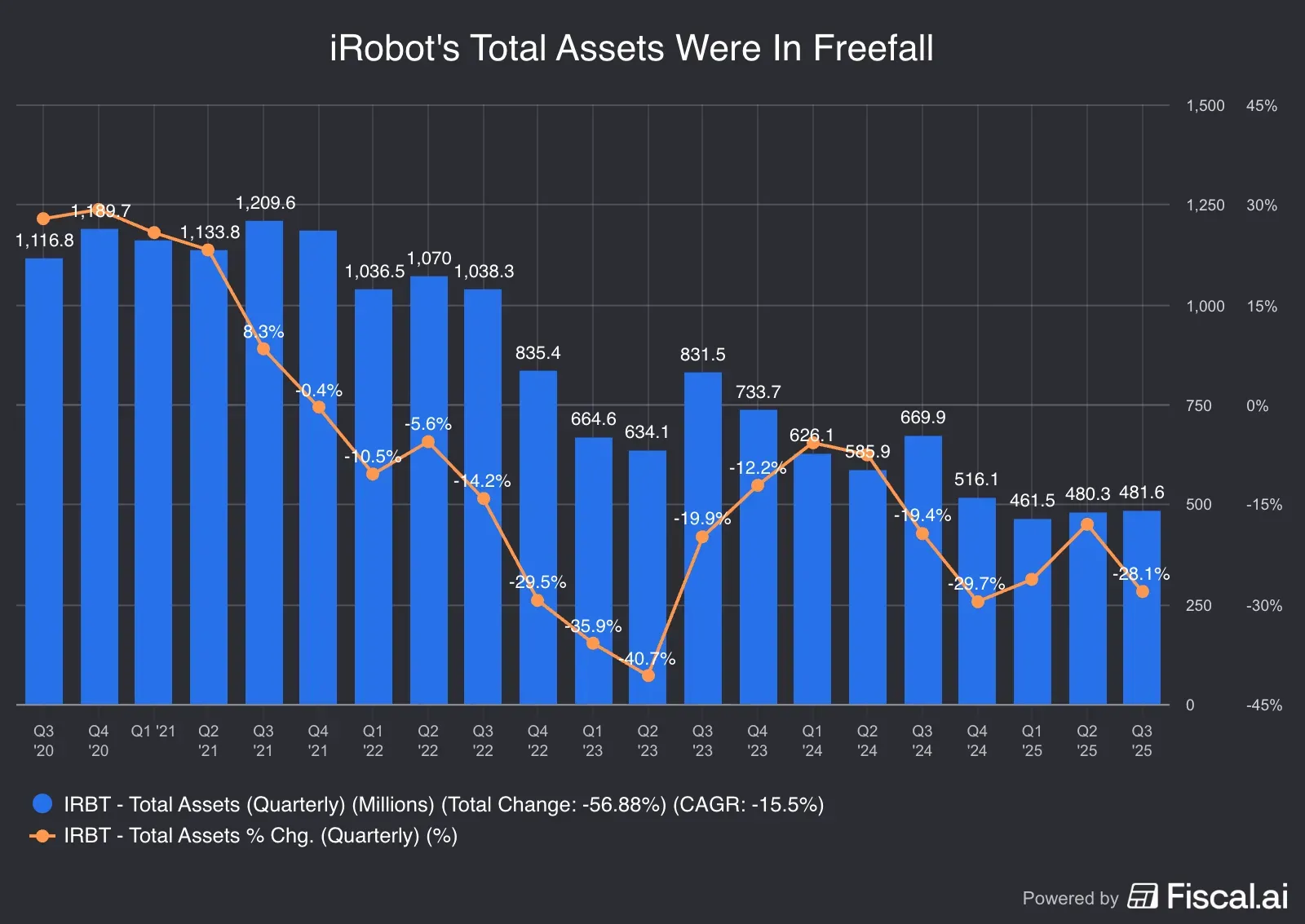
Just before the termination, iRobot took out a $200 million bridge loan from Carlyle to ride out the regulatory review period. Meanwhile, as the deal dragged on, iRobot’s financial position worsened due to supply chain issues following the COVID-19 pandemic and Chinese competitors flooding the market with cheaper robot vacuums.
Advertisement|Remove ads.
Advertisement|Remove ads.
As the deal fell through, iRobot was left in a dire state, with hefty debt, and even issued a going-concern warning in March this year. Carlyle sold its $191 million outstanding iRobot debt to Picea Robotics' subsidiary, Santrum, earlier this month – signaling an impending takeover.
What Happens Now?
Picea will acquire 100% of iRobot, and the company will continue its regular operations. The development comes as iRobot said last month that advanced buyout talks with a potential acquirer had fallen through.
“The transaction (with Picea) will strengthen our financial position and will help deliver continuity for our consumers, customers, and partners,” iRobot CEO Gary Cohen said, adding that the combination with Picea would enable iRobot to deliver products that “shape the next era of smart home robotics."
Advertisement|Remove ads.
Picea is a manufacturer and service provider of robot vacuum cleaners, with research and development and manufacturing facilities in China and Vietnam.
Consumers would not face any disruption with their Roombas and the companion app, the statement added. Upon completion of the transaction, iRobot will be a private company.
Stock Move And Retail Sentiment
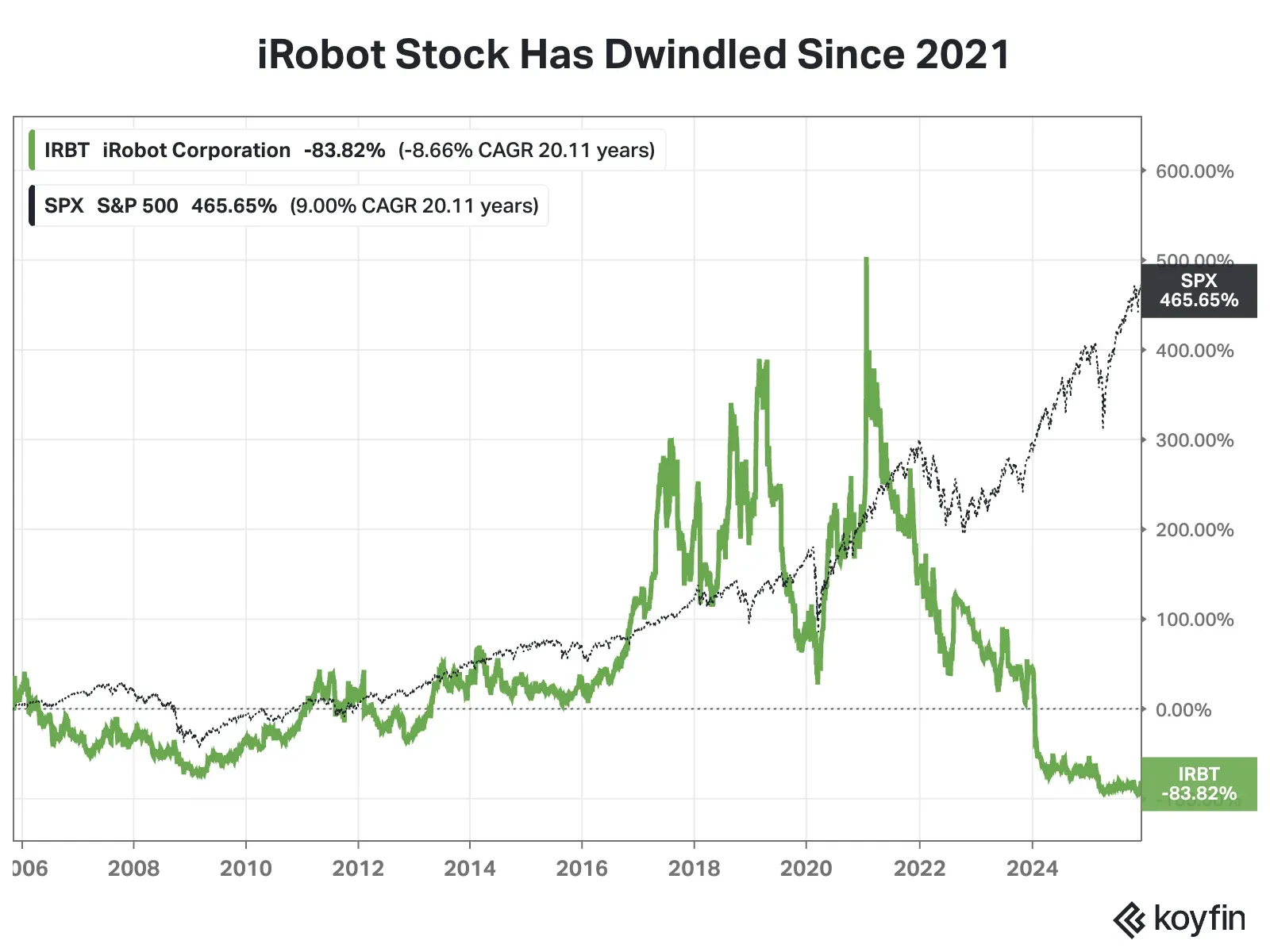
Even as bankruptcy fears loomed, iRobot’s recent rally – partly driven by a government proposal for an aid package for the robotics sector – piqued the attention of investors in attendance. From Nov. 20 to Dec. 10, IRBT surged a whopping 267%.
Advertisement|Remove ads.
On Stocktwits, the retail sentiment for the stock has been ‘extremely bullish’ since Friday, with extremely high message volume.
For updates and corrections, email newsroom[at]stocktwits[dot]com.
Comments posted here will also appear on symbol pages.

Latest News
/filters:format(webp)https://news.stocktwits-cdn.com/large_chips_ai_4770ebc76c.jpg)
/filters:format(webp)https://news.stocktwits-cdn.com/Harshita_3cfe02022c.jpg) Harshita Tyagi·19m ago
Harshita Tyagi·19m ago/filters:format(webp)https://news.stocktwits-cdn.com/large_Getty_Images_2257634525_jpg_70d8be06e9.webp)
/filters:format(webp)https://news.stocktwits-cdn.com/Whats_App_Image_2026_05_11_at_09_45_43_1_jpeg_a08c0cf251.webp) Aveek Bhowmik·38m ago
Aveek Bhowmik·38m ago/filters:format(webp)https://st-everywhere-cms-prod.s3.us-east-1.amazonaws.com/large_fda_logo_resized_3a7ecf9aab.jpg)
/filters:format(webp)https://news.stocktwits-cdn.com/vivekkrishnanphotography_58_jpg_0e45f66a62.webp) Arnab Paul·1h ago
Arnab Paul·1h ago/filters:format(webp)https://news.stocktwits-cdn.com/large_Getty_Images_2295226888_dcdb8e346d.jpg)
/filters:format(webp)https://news.stocktwits-cdn.com/IMG_9209_1_d9c1acde92.jpeg) Yuvraj Malik·2h ago
Yuvraj Malik·2h ago/filters:format(webp)https://news.stocktwits-cdn.com/large_Getty_Images_1343317005_jpg_11b71083c5.webp)
/filters:format(webp)https://news.stocktwits-cdn.com/shivani_photo_jpg_dd6e01afa4.webp) Shivani Kumaresan·2h ago
Shivani Kumaresan·2h ago/filters:format(webp)https://news.stocktwits-cdn.com/large_Getty_Images_2290038559_c6f6528203.jpg)
/filters:format(webp)https://news.stocktwits-cdn.com/Revised_Profile_JPG_0e0afdf5e2.webp) Preeti Ayyathurai·3h ago
Preeti Ayyathurai·3h ago