


Advertisement|Remove ads.
Michael Burry Warns Hyperscalers Are Hiding $3 Trillion In AI Liabilities — And Wall Street Isn’t Looking: ‘When The Music’s Over…’
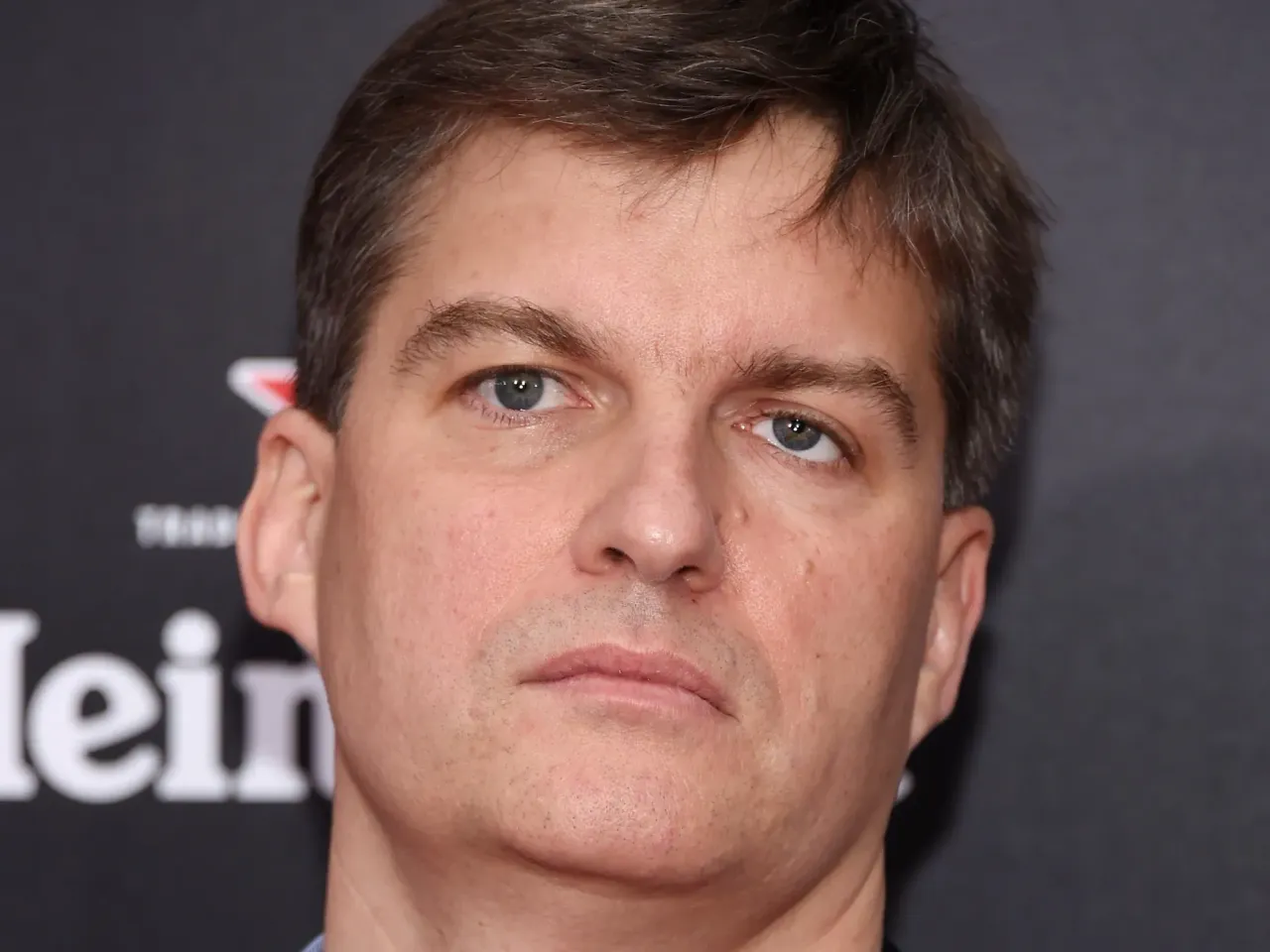


- Burry estimates the five hyperscalers have nearly $1.2 trillion in uncommenced lease commitments and more than $1.5 trillion in purchase commitments
- Rapid AI hardware cycles could leave specialized data centers costly to repurpose, and Wall Street is not adequately modeling the risks in the stock projections, he argued.
- Wall Street’s bullish outlook faces scrutiny as Big Tech’s AI infrastructure spending heads toward $1 trillion.
Advertisement|Remove ads.
“The Big Short” investor Michael Burry has renewed his warnings on artificial intelligence, arguing in a new blog post this week that Amazon, Meta Platforms, Alphabet, Microsoft and Oracle have quietly amassed more than $3 trillion in largely off-balance-sheet commitments, risks he says the market has broadly overlooked.
Burry estimated the five hyperscalers have nearly $1.2 trillion in uncommenced lease commitments and more than $1.5 trillion in purchase commitments. Including special-purpose vehicles, guarantees, contingent backstops and other obligations, he estimates the total exceeds $3 trillion.
“These liabilities, I say, are, in essence, in hypergrowth mode,” Burry wrote, arguing that they are growing much faster than the companies themselves.
Advertisement|Remove ads.
Data Center Buildout Faces Hardware Risk
Burry’s central concern is the mismatch between the long lifespan of data-center infrastructure and the rapid pace of AI chip development.
Data centers can take three to five years to build and often involve lease terms stretching 13 to 20 years, while AI accelerators can see major changes in power density and cooling requirements within 12 to 18 months.
Burry pointed to comments from Microsoft CEO Satya Nadella, who previously warned that the company did not want to build massive amounts of infrastructure for a single generation of hardware.
Advertisement|Remove ads.
“I didn’t want to get stuck with massive scale of one generation,” Nadella had reportedly said.
Burry argued that rapidly changing hardware could leave hyperscalers with expensive, highly specialized facilities that are difficult to repurpose if AI demand slows or chip architectures change.
He also highlighted more than $400 billion in construction-in-progress assets across the five companies. Because those assets have not yet entered service, they currently generate no depreciation under GAAP.
Advertisement|Remove ads.
“Nvidia chips may be economically depreciating waiting in warehouses while GAAP depreciation remains at zero,” Burry wrote.
Burry Questions Wall Street Optimism
Burry also took aim at Wall Street’s approach to valuing the hyperscalers, arguing that many analysts have not adequately modeled maintenance capital expenditure or the economic depreciation of AI infrastructure.
He singled out Oracle, noting that analysts’ average price target was substantially above the stock’s market price, which he views as a potential sign of excessive optimism.
Advertisement|Remove ads.
Burry stressed that he was not alleging fraud, but warned that the current AI buildout carries significant downside if demand weakens.
“When the music’s over, these off-balance sheet commitments become real liabilities very quickly,” he wrote.
He added that the resulting impairments, termination costs and unused capacity could create significant financial pressure if the current AI spending cycle loses momentum.
Advertisement|Remove ads.
Strong Cloud Growth Fuels Big Tech
Burry’s warnings come as cloud growth remained strong last quarter, supporting investor enthusiasm around AI infrastructure and helping lift Big Tech stocks in recent weeks.
Microsoft, Alphabet, Amazon and Oracle have continued to report robust demand for cloud and AI infrastructure, reinforcing expectations that sustained spending on data centers, GPUs and networking equipment would bring higher revenue returns.
That strength, however, has also intensified debate over the sheer scale of planned Big Tech capital expenditures. The companies have said expenditures would rise next year, and analysts estimate the figure will cross $1 trillion.
Advertisement|Remove ads.
Trends show that those worries are contained for now. The Roundhill Magnificent Seven ETF (MAGS), which tracks Big Tech stocks, is heading for a third straight month of gains.
For updates and corrections, email newsroom[at]stocktwits[dot]com.
Advertisement|Remove ads.
Comments posted here will also appear on symbol pages.

Latest News
/filters:format(webp)https://news.stocktwits-cdn.com/large_Getty_Images_1140163617_f532763e0e.jpg)
/filters:format(webp)https://news.stocktwits-cdn.com/Anushka_Basu_make_me_smile_in_the_picture_b92832aa_af59_4141_aacc_4180d2241ba8_1_2_png_1086e0ed8c.webp) Anushka Basu·4h ago
Anushka Basu·4h ago/filters:format(webp)https://news.stocktwits-cdn.com/large_Getty_Images_1241727187_186fa8e2c2.jpg) Anushka Basu·5h ago
Anushka Basu·5h ago/filters:format(webp)https://news.stocktwits-cdn.com/large_Grant_Cardone_e02d86f642.webp) Anushka Basu·7h ago
Anushka Basu·7h ago/filters:format(webp)https://news.stocktwits-cdn.com/large_Getty_Images_2291403399_8dbede0ce6.jpg) Anushka Basu·8h ago
Anushka Basu·8h ago/filters:format(webp)https://news.stocktwits-cdn.com/large_us_treasury_yields_jpg_074c6369d6.webp)
/filters:format(webp)https://st-everywhere-cms-prod.s3.us-east-1.amazonaws.com/i_OS_App_Icon_1_8054f2a2fe.png) Stocktwits News Desk·9h ago
Stocktwits News Desk·9h ago/filters:format(webp)https://news.stocktwits-cdn.com/large_Getty_Images_2203983775_jpg_74bdd5dd43.webp) Stocktwits News Desk·10h ago
Stocktwits News Desk·10h ago