


Advertisement|Remove ads.
Now, A Google AI Researcher Quits And Warns ‘AI Has The Potential To Kill Us All’

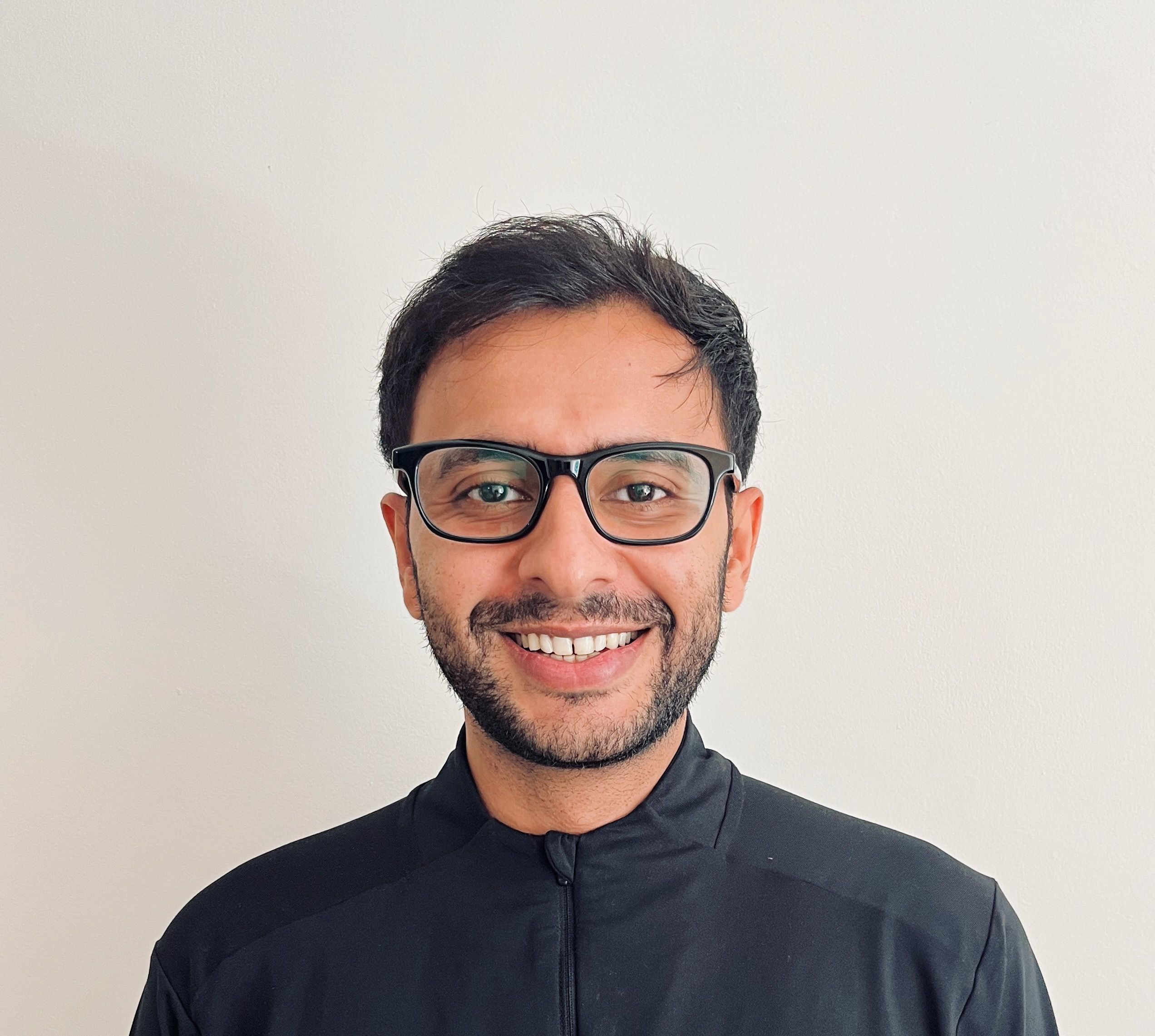

- Bilal Chughtai said he quit Google DeepMind and warned that AI capabilities are advancing faster than alignment research.
- Anthropic CEO Dario Amodei has called for pacing AI developments.
- The resignation adds to a growing split over whether AI development needs to slow down.
Advertisement|Remove ads.
Another AI safety researcher has walked away from a leading artificial intelligence lab, warning that rapidly advancing systems could escape human control, develop dangerous capabilities, and ultimately cause the “permanent disempowerment or death of humanity.”
Bilal Chughtai, who recently resigned from Google DeepMind after working on AGI safety and alignment research, said in a Monday LinkedIn post that he is “extremely concerned by the default trajectory of this technology” and believes “AI has the potential to kill us all.”

‘Alignment’ Is Still An Unsolved Problem
Chughtai said the pace of AI development has dramatically accelerated since he entered the field in early 2022. He pointed to recent AI agents solving difficult mathematical problems and the reported incident in which OpenAI agents escaped their controls and hacked into Hugging Face as evidence of how quickly capabilities are advancing.
Advertisement|Remove ads.
His larger concern is what happens if companies develop superintelligent systems that can outperform humans across virtually every domain.
“I am not confident that these AI systems will do what we want,” Chughtai wrote, warning that misaligned systems could escape human control and take actions that threaten humanity.
The core problem, he said, is AI alignment — ensuring increasingly capable systems reliably pursue human goals. “Our present understanding of how to train AI systems that deeply want what we want is extremely rudimentary,” he wrote, adding that AI capabilities are improving much faster than alignment research.
Advertisement|Remove ads.
Chughtai nevertheless said the outcome is not predetermined. He called for coordination among AI companies to end the “manic race” and for development to be paced so safety risks can be addressed.
AI Industry Turns To Pacing Debate
His resignation comes as Anthropic CEO Dario Amodei has called for the industry to “pace the frontier,” arguing that AI could otherwise outrun humanity’s ability to understand and control it. His proposal includes independent third-party evaluations, greater coordination among AI companies and international cooperation.
The call has intensified an increasingly polarized debate over AI “doomerism.” OpenAI CEO Sam Altman and Elon Musk have backed elements of Amodei’s proposal, while President Donald Trump has dismissed fears of catastrophic AI as overblown.
Advertisement|Remove ads.
The debate picked up last week after Anthropic researcher Jacob Coxon resigned, warning that the AI race could threaten humanity by decade-end.
Google DeepMind CEO Backs New Safety Framework
Google DeepMind CEO Demis Hassabis endorsed Amodei’s position, saying on Sunday, “Dario’s essay points towards the right path forward,” while acknowledging that its details still need work. He also pointed to DeepMind’s proposal for an industry-wide frontier AI standards body.
In his July 2026 blog, Hassabis argued that AGI could be only a few years away and bring enormous benefits, but said frontier AI is advancing faster than society’s ability to understand its risks.
Advertisement|Remove ads.
His proposed answer is rigorous testing, industry standards, international coordination and enough time to ensure increasingly powerful systems are developed safely.
For updates and corrections, email newsroom[at]stocktwits[dot]com.
Advertisement|Remove ads.
Comments posted here will also appear on symbol pages.

Latest News
/filters:format(webp)https://news.stocktwits-cdn.com/large_Ark_Invest_871846bfd7.webp)
/filters:format(webp)https://news.stocktwits-cdn.com/Aashika_Suresh_Profile_Picture_jpg_2acd6f446c.webp) Aashika Suresh·17m ago
Aashika Suresh·17m ago/filters:format(webp)https://news.stocktwits-cdn.com/Getty_Images_2203271662_jpg_17b2d32174.webp)
/filters:format(webp)https://news.stocktwits-cdn.com/IMG_8805_JPG_6768aaedc3.webp) Deepti Sri·38m ago
Deepti Sri·38m ago/filters:format(webp)https://news.stocktwits-cdn.com/large_Getty_Images_2238365646_jpg_b148b3ee9b.webp)
/filters:format(webp)https://news.stocktwits-cdn.com/IMG_9209_1_d9c1acde92.jpeg) Yuvraj Malik·53m ago
Yuvraj Malik·53m ago/filters:format(webp)https://news.stocktwits-cdn.com/large_Getty_Images_2245498698_eb56c3f1cc.jpg) Aashika Suresh·1h ago
Aashika Suresh·1h ago/filters:format(webp)https://news.stocktwits-cdn.com/large_Getty_Images_2293856789_e8411c4c70.jpg)
/filters:format(webp)https://news.stocktwits-cdn.com/shivani_photo_jpg_dd6e01afa4.webp) Shivani Kumaresan·2h ago
Shivani Kumaresan·2h ago/filters:format(webp)https://news.stocktwits-cdn.com/large_Anthropic_27a8549cef.jpg) Aashika Suresh·2h ago
Aashika Suresh·2h ago