


Advertisement|Remove ads.
NY Fed President Says Increase In Energy Prices From Middle East War To Boost Inflation: Report
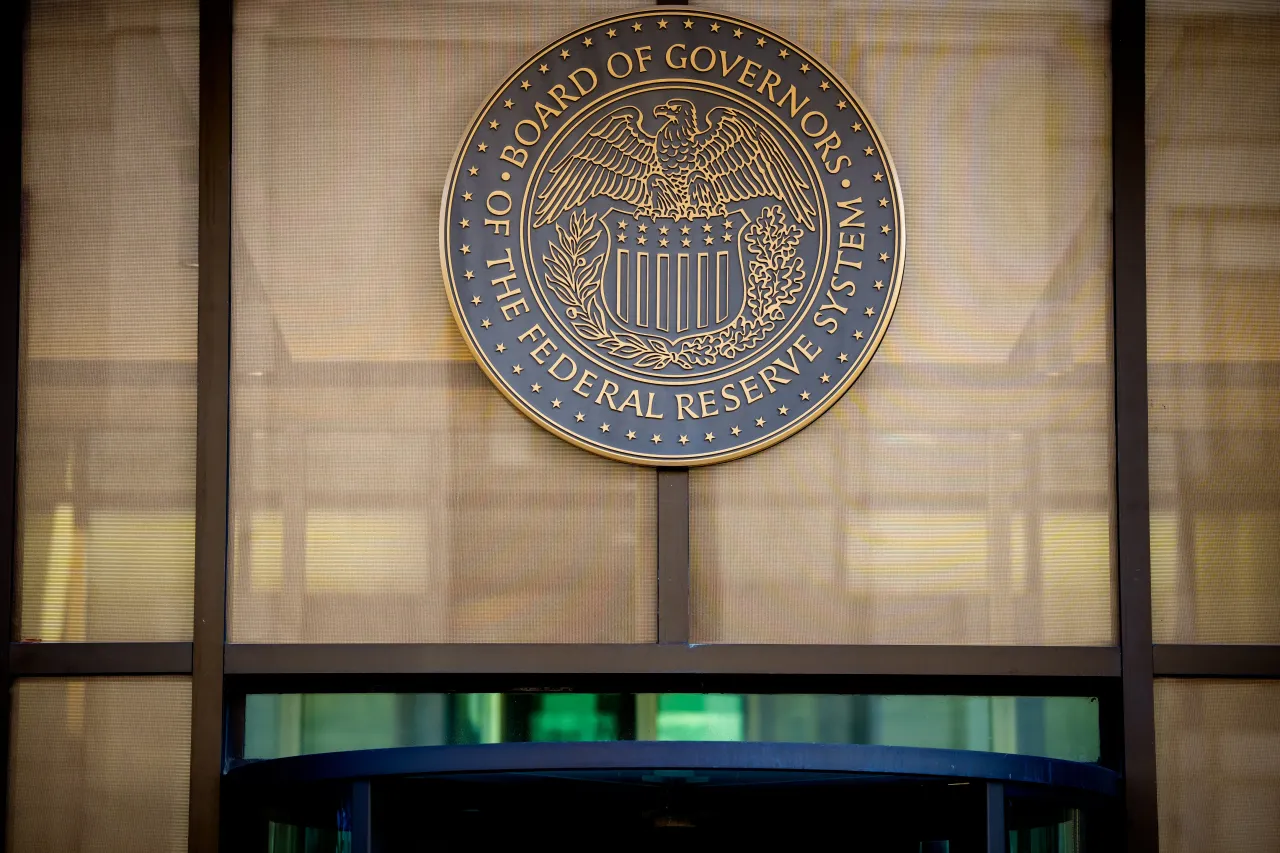


- Williams said that the war in the Middle East could trigger a large supply shock that could simultaneously raise inflation via an increase in mid-term costs and commodity prices, as well as dampen economic activity.
- Earlier on Monday, Fed Chair Jerome Powell said that while the central bank anticipated inflation to be in control over the long run, the surge in oil prices due to a supply crunch would impact inflation expectations.
- Earlier this month, the OECD projected U.S. inflation to rise to 4.2% in 2026, driven up by energy price hikes due to the impact of the war in Iran and Trump’s tariffs.
Federal Reserve Bank of New York President John Williams reportedly said on Monday that the U.S. and Israel’s war against Iran in the Middle East would boost overall inflation in the near term.
According to a report from Reuters, Williams however added that some of those effects would reverse later as long as oil prices retreated after the end of the war.
Williams said in the remarks prepared for an event by the Staten Island Economic Development Corporation that despite these forecasts, the current monetary policy was in a good place to deal with the range of challenges.
The Fed president’s remarks come amid rising oil prices and inflation levels steadily above the central bank’s 2% target.
“This is an unusual set of circumstances,” Williams reportedly said, adding, “But the current stance of monetary policy is well positioned to balance the risks to our maximum employment and price stability goals.”
Inflation Risks
Williams said that the war in the Middle East could trigger a large supply shock that could simultaneously raise inflation via an increase in mid-term costs and commodity prices, as well as dampen economic activity. The NY Fed president also noted that this had already begun to play out, with early signs of supply chain disruptions already emerging.
Meanwhile, earlier on Monday, Federal Reserve Chair Jerome Powell said that while the central bank anticipated inflation to be in control over the long run, the surge in oil prices due to a supply crunch would impact inflation expectations.
Powell also said that the Fed was not yet faced with the impact of the Iran war oil supply shock because it was too soon to know how the Iran war and related oil price increase would impact the U.S. economy.
Inflation Expectations
Earlier this month, the Organization for Economic Co-operation and Development (OECD) projected U.S. inflation to rise to 4.2% in 2026, driven up by energy price hikes due to the impact of the war in Iran and Trump’s tariffs. This was among the highest among the G7 countries.
OECD said that it expects core inflation to be at 3% in 2026 and 2.4% in 2027.
Market State
Meanwhile, crude oil prices continued to climb on Monday. The U.S. West Texas Intermediate (WTI) crude futures maturing in May was up around 2% to reach about $105 per barrel. Brent crude futures expiring in June climbed about 1.6% to go above $114 per barrel.
The United States Oil Fund ETF (USO) closed up about 4.5% and continued to climb higher in post-market hours.
On the other hand, U.S. equities were in red in Monday’s extended trading hours. At the time of writing, the SPDR S&P 500 ETF (SPY), which tracks the S&P 500 index, was down 0.03%; the Invesco QQQ Trust ETF (QQQ) declined 0.08%; and the SPDR Dow Jones Industrial Average ETF Trust (DIA) was down 0.01%.
Retail sentiment on Stocktwits regarding the S&P 500 ETF was in the ‘extremely bearish’ territory.
For updates and corrections, email newsroom[at]stocktwits[dot]com.

Latest News
/filters:format(webp)https://news.stocktwits-cdn.com/Getty_Images_1238576948_jpg_125919428e.webp)
/filters:format(webp)https://news.stocktwits-cdn.com/vivekkrishnanphotography_58_jpg_0e45f66a62.webp) Arnab Paul·37 seconds ago
Arnab Paul·37 seconds ago/filters:format(webp)https://news.stocktwits-cdn.com/large_bitcoin_exchange_original_2_jpg_cf429881e7.webp)
/filters:format(webp)https://st-everywhere-cms-prod.s3.us-east-1.amazonaws.com/Prabhjote_DP_67623a9828.jpg) Prabhjote Gill·21m ago
Prabhjote Gill·21m ago/filters:format(webp)https://news.stocktwits-cdn.com/Getty_Images_2227347233_jpg_00e33be418.webp)
/filters:format(webp)https://news.stocktwits-cdn.com/Chinmay_Rautmare_Photo_jpeg_96dd37efd0.webp) Chinmay Rautmare·26m ago
Chinmay Rautmare·26m ago/filters:format(webp)https://news.stocktwits-cdn.com/Getty_Images_2213582854_jpg_830e44a354.webp) Arnab Paul·1h ago
Arnab Paul·1h ago/filters:format(webp)https://news.stocktwits-cdn.com/large_Getty_Images_2238839919_jpg_2bb427c687.webp)
/filters:format(webp)https://st-everywhere-cms-prod.s3.us-east-1.amazonaws.com/Rounak_Author_Image_7607005b05.png) Rounak Jain·1h ago
Rounak Jain·1h ago/filters:format(webp)https://news.stocktwits-cdn.com/large_Getty_Images_2264081055_jpg_059f708f45.webp)
/filters:format(webp)https://news.stocktwits-cdn.com/IMG_6979_jpg_a2a1032fdc.webp) Ahmed Farhath·1h ago
Ahmed Farhath·1h ago