


Advertisement|Remove ads.
Oil Market Midweek Wrap: Brent Holds Near $90 Despite Iran Tensions – OPEC Meeting, ConocoPhillips Sale In Focus
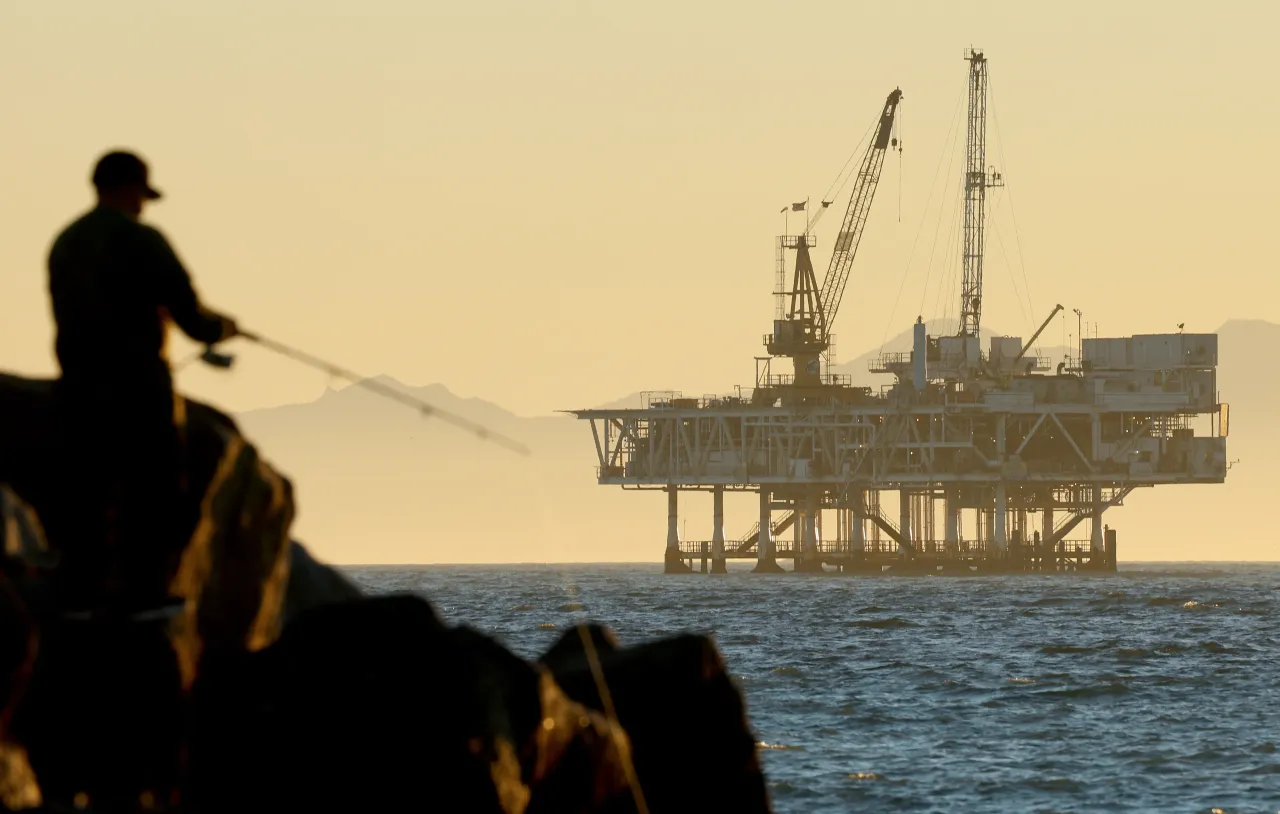


- The Trump administration is reportedly considering whether the U.S. military should target top Iranian leaders.
- The commander of Iran's army said once again on Tuesday that the waterway is closed to all unauthorized traffic and will remain closed until the country’s conditions are met.
- The Organization of Petroleum Exporting Countries and its allies will meet virtually on Sunday to decide on crude supply for 2027.
Advertisement|Remove ads.
Crude oil prices are facing a tug of war between geopolitical risk and growing concerns about supply surplus. Despite escalating tensions in the middle east, benchmark crude prices have retreated, with Brent trading near $90 a barrel and WTI crude futures trading at $80.71 per barrel at the time of writing.
The market is now looking forward to Sundays' OPEC meeting, where producers are expected to discuss 2027 output targets. Meanwhile, portfolio changes ExxonMobil (XOM) and ConocoPhillips (COP) offer a glimpse into how energy majors are positioning themselves.

Why Oil Prices Are Falling Despite Escalating Tensions In Middle East
Even as growing oil supply has kept a lid on oil prices in recent weeks, the conflict between the U.S. and Iran is simmering in the Middle East.
Advertisement|Remove ads.
The Trump administration is reportedly considering whether the U.S. military should target top Iranian leaders, according to a U.S. official and a person with knowledge of the discussions, NBC News reported on Tuesday.
In the critical Strait of Hormuz, attacks on shipping containers continue to escalate, with reports that Iran-backed Houthis attacked a Saudi-led coalition in Yemen’s Hodeidah port.
The commander of Iran's army said once again on Tuesday that the waterway is closed to all unauthorized traffic and will remain closed until the country’s conditions are met. Some reports suggested that he had ramped up the call for Iranian forces to step up their attacks on commercial ships in the Strait.
Advertisement|Remove ads.
“The reality on the ground is more a ‘war but no war’ situation, with spasms of violence,” Robert Yawger, director of the energy futures division at Mizuho Securities USA LLC, told Bloomberg. Under those circumstances, “look for the supply surplus to become the dominant theme in coming weeks,” he said.
OPEC+ Faces Critical Production Decision
The oil and petroleum consortium and its allies face one of the most consequential decisions of the year on Sunday, when an online meeting will be held to set 2027 production targets for member countries.
Reports citing people familiar with the matter suggest the independent assessment will be led by Dallas-based energy consultancy DeGolyer and MacNaughton, which has provided suggestions for the maximum sustainable crude production capacity for most member countries, while Russia, Iran and Venezuela were covered under other evaluation arrangements.
Advertisement|Remove ads.
Iraq is reportedly trying to negotiate for a higher capacity assessment before the talks, with some sources saying the independent assessor had put its crude capacity at about 4.9 million barrels per day, but Baghdad says it is capable of reaching 5.2 million bpd.
Jorge Leon, head of geopolitical analysis at Rystad Energy, who previously worked at the OPEC secretariat, told Bloomberg that the organization faces an “extremely difficult call” for 2027.
“The group has to plan around huge uncertainty over the US-Iran war, the pace of recovery through the Strait of Hormuz, and the size of the surplus that could emerge once disrupted barrels return,” he said.
Advertisement|Remove ads.
ConocoPhillips Sells Norway Assets In $3.9B Deal
Meanwhile, ConocoPhillips said in a statement on Monday that it had sold its Norway business and its 40.25% interest in the U.K. Teesside oil terminal to Vår Energi for $4.425 billion, less agreed-upon adjustments of approximately $0.5 billion as of the Jan. 1, 2026.
The transaction is expected to close by the end of 2027’s first quarter, subject to approval by the Norwegian Ministry of Energy and regulatory conditions. At closing, Vår Energi will assume the post-effective date balance sheets of the properties.
Total deal value is expected to be $3.9 billion, including the remaining 2026 tax liability of approximately $1.4 billion, payable in the first half of 2027, and net cash proceeds of approximately $2.5 billion.
Advertisement|Remove ads.
The transaction includes ConocoPhillips' interests in producing assets on the Norwegian continental shelf, anchored by the operated Greater Ekofisk Area in the North Sea, as well as interests in eight partner-operated fields across the Norwegian Sea and northern North Sea. It also includes the company's interest in the Norpipe oil pipeline and certain non-operated infrastructure. The Teesside business includes the Teesside oil terminal and related pipeline infrastructure.
ExxonMobil Completes $3B Debt Tender Offers
In other updates, ExxonMobil announced the pricing, expiration, and results of tender offers by its subsidiaries Pioneer and Exxon to purchase up to $3 billion in aggregate principal amount of their respective outstanding notes due 2030, 2031 and 2040.
Oil ETFs Performance
The United States Oil Fund (USO), which tracks the daily price movements of light, sweet crude oil, was down over 1% overnight at the time of writing amid ‘neutral’ sentiment.
Advertisement|Remove ads.
One said, “$USO This will be the biggest rug pull in history.”
However, another user noted, “$USO Oil going up, maybe due to targets attacks on Iran being planned, escalation.”
Meanwhile, the ProShares Ultra Bloomberg Crude Oil (UCO) was down 1.44% at the time of writing amid ‘bearish’ sentiment.
Advertisement|Remove ads.
USO has surged nearly 96% in 2026, while UCO has gained over 144%.
For updates and corrections, email newsroom[at]stocktwits[dot]com.

Latest News

 Shivani Kumaresan·3m ago
 Aashika Suresh·10m ago
 Yuvraj Malik·38m ago
 Aashika Suresh·1h ago

 Deepti Sri·1h ago
 Shivani Kumaresan·1h ago
Comments posted here will also appear on symbol pages.