


Advertisement|Remove ads.
Scott Bessent Says Trump-Xi Talks Did Not Address Jensen Huang, Left Nvidia H200 Policy Unchanged
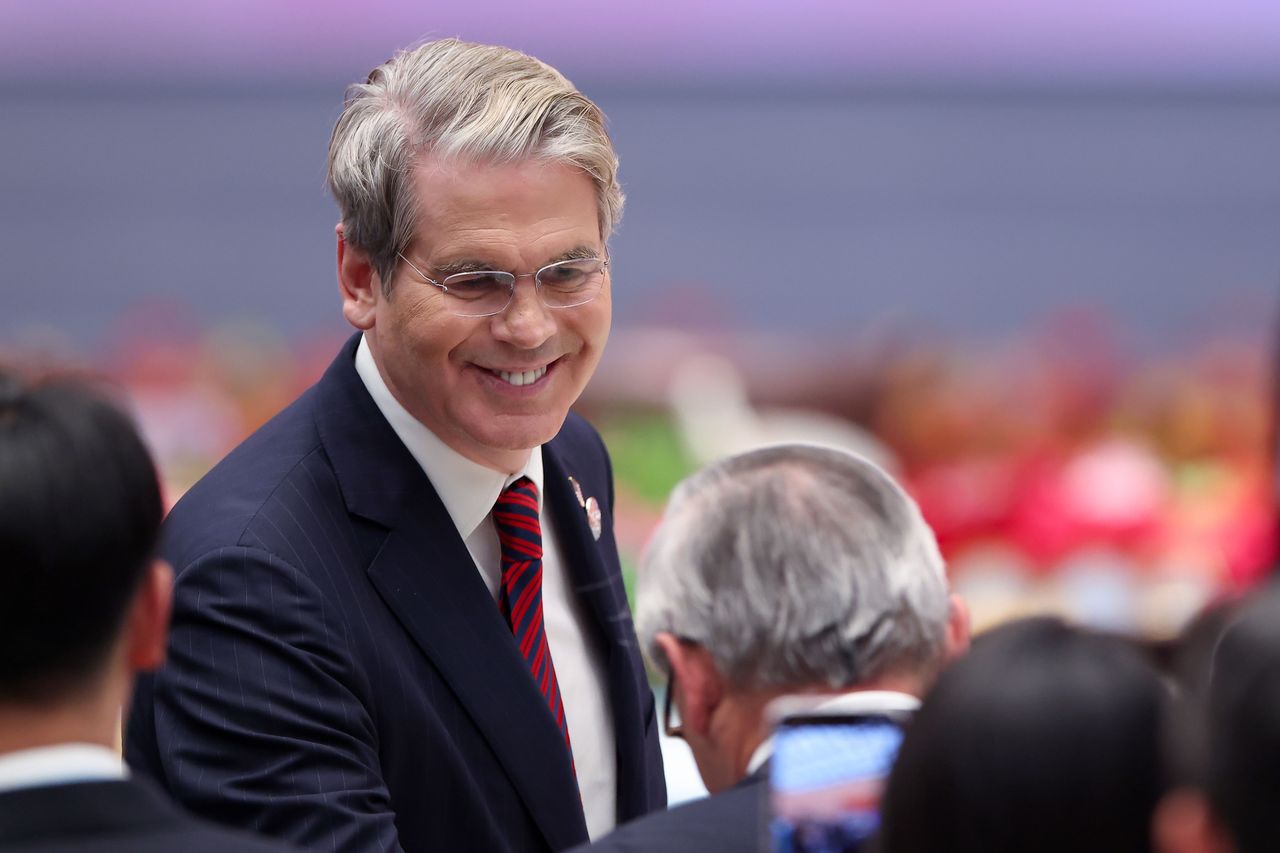


- Bessent said the administration was also addressing remote access to computing power through overseas data centers.
- According to him, limited demand from Chinese buyers, rather than a change in U.S. policy, explained Nvidia’s decision to stop shipping H200 chips to China.
- Nvidia’s market capitalization dropped below Alphabet on Friday.
Advertisement|Remove ads.
Nvidia (NVDA) CEO Jensen Huang did not come up during discussions between President Donald Trump and Chinese President Xi Jinping, Treasury Secretary Scott Bessent said on Friday.
“No, not at all,” Bessent said in a CNBC interview Friday when asked whether Huang or the spy allegations surrounding Nvidia had been raised during the meeting.

Bessent also stated that the administration’s existing policy around chip exports remained unchanged, with the H200 representing the threshold level of chip technology that can be sold to Chinese buyers.
Advertisement|Remove ads.
“I wouldn't anticipate any change in the policy,” Bessent said, adding that Trump had drawn a “very firm line” at the H200.
NVDA stock fell over 6% in morning trade on Friday, on track to hit a fresh 16-month low and mark a seven-day losing streak. On Stocktwits, retail sentiment around Nvidia remained in ‘extremely bullish’ territory over the past day, accompanied by ‘extremely high’ levels of chatter.
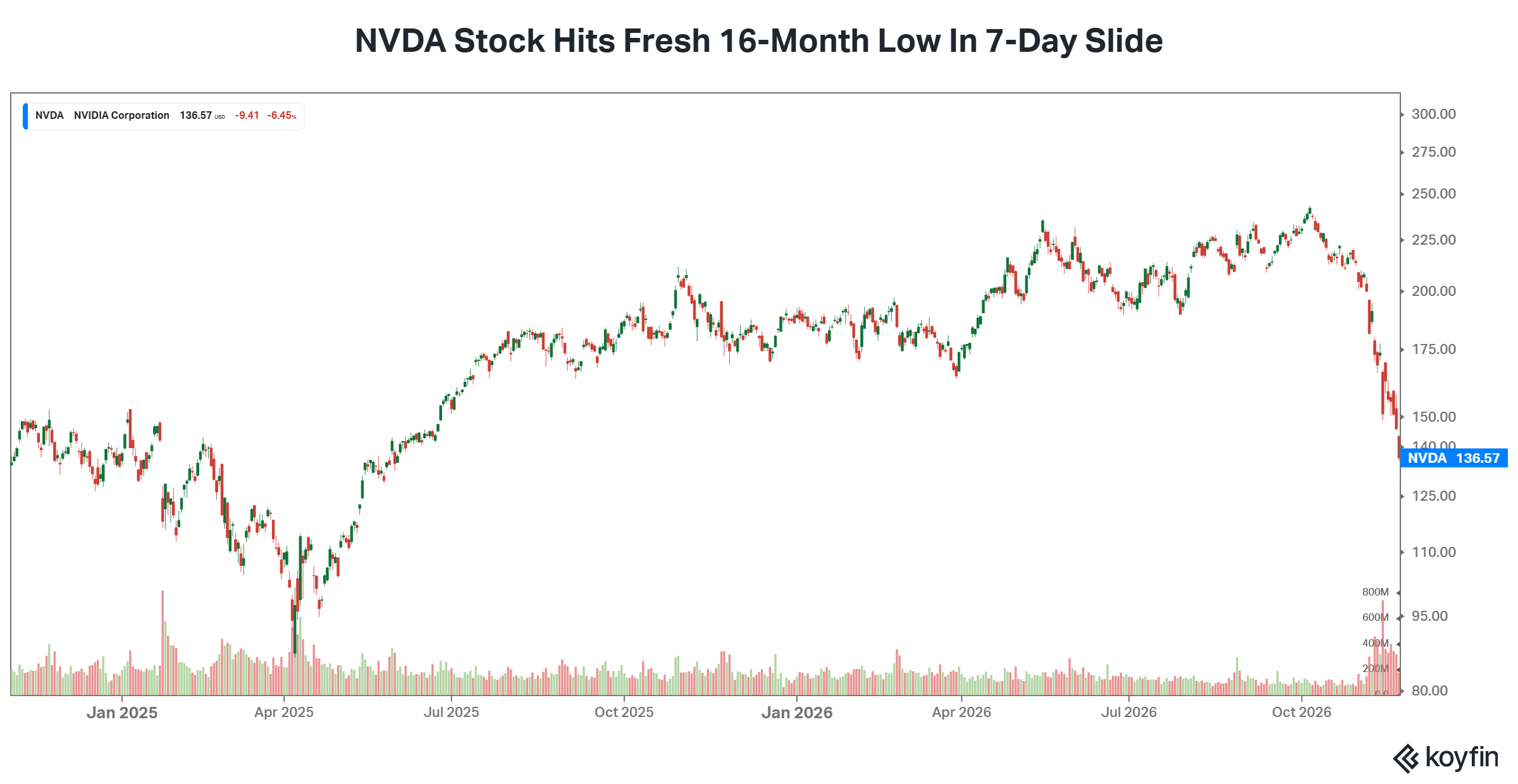
Nvidia’s market capitalization also slipped below Alphabet’s during Friday’s trading session, pushing the chipmaker to fourth place among the most valuable U.S. companies.
Advertisement|Remove ads.
Bessent Says China Has Placed Few Orders For H200 Chips
Bessent suggested that limited demand from Chinese buyers, rather than a change in U.S. policy, explained Nvidia’s decision to stop shipping H200 chips to China despite having U.S. licenses and approval to do so.
“I think what we have seen is a paucity of orders from the Chinese on the H200s as they try to build out their own chip stack,” he said. Bessent added that China was likely “many years behind” in developing its own semiconductor capabilities.
His comments follow Nvidia’s disclosure this week that it had stopped shipping H200 chips to China, despite receiving U.S. approval.
Advertisement|Remove ads.
The Treasury secretary also addressed concerns about overseas data centers providing computing capacity to Chinese customers without physically shipping restricted chips into the country.
He said the administration was taking a “more common sense approach” to remote access, arguing that it made little sense to prohibit direct chip sales if Chinese companies could simply lease computing power from facilities abroad.
Bessent Says Administration Is Aligned On China Policy
“I think we're all committed to following President Trump's instructions,” Bessent said.
Advertisement|Remove ads.
He added that the administration was working to ensure that appropriate chip restrictions were in place and that remote access to computing capacity had been curtailed.
He also said the U.S. was seeking to maintain its lead in semiconductor technology and artificial intelligence.
“We don't want to decouple. We just need to de-risk,” Bessent said, describing the administration's approach to the U.S.-China relationship.
Advertisement|Remove ads.
Both leading ETFs covering semiconductors, the iShares Semiconductor ETF (SOXX) and the VanEck Semiconductor ETF (SMH), were down over 6% in morning trade on Friday. On Stocktwits, retail sentiment around both trended in ‘bearish’ territory over the past day.
Read also: House Democrats Reportedly Probe Whether Nvidia Tried To Influence US Investigation Into Megaspeed
For updates and corrections, email newsroom[at]stocktwits[dot]com.
Advertisement|Remove ads.
Comments posted here will also appear on symbol pages.

Latest News
 Prabhjote Gill·10m ago

 Heera Hari·18m ago

 Harshita Tyagi·31m ago
 Prabhjote Gill·51m ago

 Arnab Paul·1h ago
 Prabhjote Gill·1h ago