


Advertisement|Remove ads.
TSM Stock Is Gaining Today, And There’s An Nvidia Angle To It


Taiwan Semiconductor Manufacturing Co. (TSM) gained investor attention on Tuesday due to momentum surrounding artificial intelligence infrastructure, following Nvidia’s $100 billion investment in OpenAI. TSM shares traded higher by over 3% at the time of writing.
On Monday, Nvidia said the investment will supply and finance at least 10 gigawatts of advanced computing systems for OpenAI’s next-generation models.
Nvidia is a client of TSM, which is a chip manufacturing contractor. TSM is currently developing six new products for Nvidia, including advanced CPUs (central processing units) and GPUs (graphics processing units), foundational technologies supporting AI applications.
Advertisement|Remove ads.
Wedbush analyst Dan Ives on Tuesday called the recently announced Nvidia-OpenAI partnership a “validation moment” for the ongoing AI revolution.
TSM stock traded over 3% higher by mid-morning on Tuesday. On Stocktwits, retail sentiment around the stock remained in ‘bullish’ territory amid ‘high’ message volume levels. The stock experienced a 386% increase in user message count in 24 hours. A Stocktwits user called the stock ‘the most undervalued tech play in the hot AI trend’.
Advertisement|Remove ads.
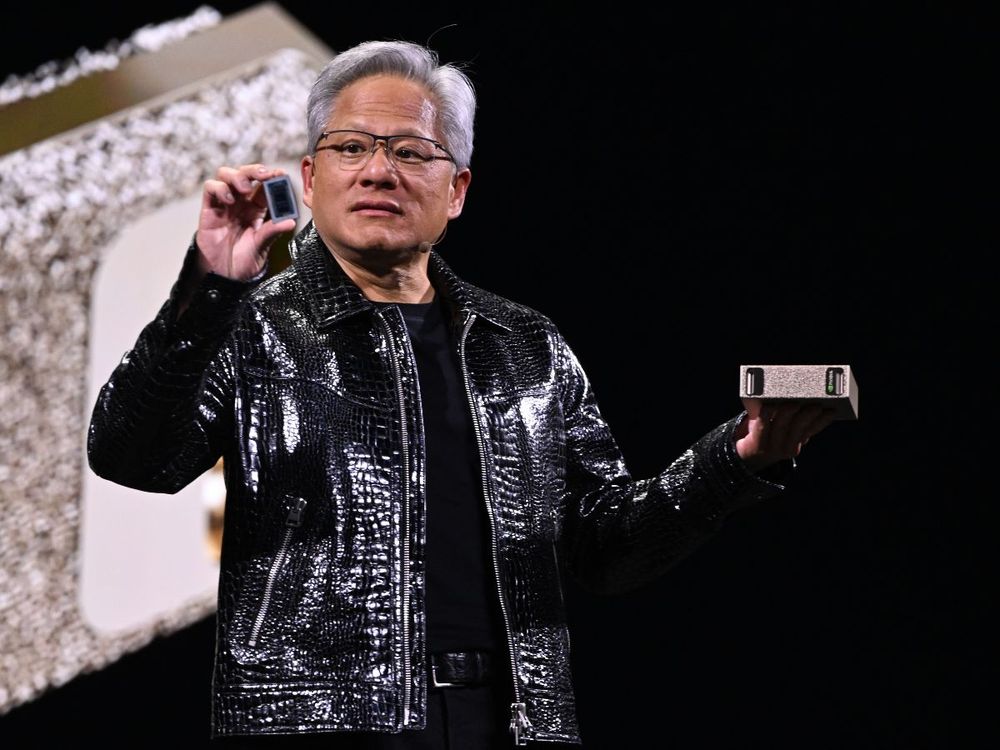
Another bullish user highlighted Nvidia CEO Jensen Huang’s recent comments on TSM.
In August, Huang said that any investor aiming to take a stake in the Taiwanese chipmaker is ‘very smart.’ He also emphasized TSMC’s critical role in Nvidia’s operations and global tech development, especially around its upcoming AI chip platform, Rubin.
Advertisement|Remove ads.
The contract chipmaker’s August revenue increased 3.9% year-on-year to NT$335.77 billion ($11.09 billion). Taiwan Semiconductor stock has gained over 42% year-to-date and over 61% in the last 12 months.
Also See: SoundHound AI Stock Gained 6% Today – Find Out More On The Red Lobster Partnership
For updates and corrections, email newsroom[at]stocktwits[dot]com.
Advertisement|Remove ads.
Comments posted here will also appear on symbol pages.

Latest News
/filters:format(webp)https://st-everywhere-cms-prod.s3.us-east-1.amazonaws.com/large_nvidia_jensen_huang_ces_2025_resized2_406c6b4943.jpg)
/filters:format(webp)https://news.stocktwits-cdn.com/IMG_8805_JPG_6768aaedc3.webp) Deepti Sri·17m ago
Deepti Sri·17m ago/filters:format(webp)https://news.stocktwits-cdn.com/large_Getty_Images_2263970718_jpg_6eee003c20.webp)
/filters:format(webp)https://news.stocktwits-cdn.com/Aashika_Suresh_Profile_Picture_jpg_2acd6f446c.webp) Aashika Suresh·53m ago
Aashika Suresh·53m ago/filters:format(webp)https://news.stocktwits-cdn.com/large_elon_musk_f04806b648.jpg) Deepti Sri·55m ago
Deepti Sri·55m ago/filters:format(webp)https://news.stocktwits-cdn.com/large_Getty_Images_2295800057_fd745de575.jpg)
/filters:format(webp)https://news.stocktwits-cdn.com/shivani_photo_jpg_dd6e01afa4.webp) Shivani Kumaresan·2h ago
Shivani Kumaresan·2h ago/filters:format(webp)https://news.stocktwits-cdn.com/large_Bloom_Energy_jpg_de9372f92d.webp) Aashika Suresh·2h ago
Aashika Suresh·2h ago/filters:format(webp)https://news.stocktwits-cdn.com/moderna_hq_resized_jpg_97563ed423.webp) Aashika Suresh·2h ago
Aashika Suresh·2h ago