


Advertisement|Remove ads.
TSMC, Samsung Reportedly Suspend Some Chip Deliveries To Chinese Customers Amid New US Export Rules


- Deliveries are paused while the chipmakers apply for licenses from the US Commerce Department, FT reported.
- The new U.S. rules close a route that let Chinese chip designers obtain high-performance processors through independent packaging and testing firms.
- Smartphone chip licenses would likely be approved, though the process could cause manufacturing delays, the report said.
Advertisement|Remove ads.
Taiwan Semiconductor Manufacturing Co. (TSM) and Samsung Electronics have reportedly suspended shipments of certain semiconductors to Chinese customers following new U.S. export restrictions aimed at limiting Beijing’s access to advanced artificial intelligence chips,
The chipmakers informed Chinese customers in recent days that deliveries would be paused while they apply for licenses from the US Commerce Department, the Financial Times reported Thursday, citing multiple people briefed on the matter.

Stocktwits reached out to both Samsung and TSMC for comment but had not received a response from either company at the time of publication.
Advertisement|Remove ads.
New Rules Close Chip Supply Route
The US Commerce Department’s Bureau of Industry and Security (BIS) introduced new licensing requirements on Monday for certain advanced chips produced using American technology.
According to the publication, the changes close a pathway that allowed Chinese chip designers to obtain high-performance processors through independent packaging and testing companies.
Previously, these companies could verify that chip designs fell outside US export restrictions, enabling shipments without direct government approval. The new requirements remove that route for affected Chinese customers, the report said.
Advertisement|Remove ads.
The restrictions add pressure to China’s technology sector, which is already facing rising memory chip prices and capacity constraints at domestic suppliers such as Semiconductor Manufacturing International Corporation.
Smartphone Chip Deliveries Also Affected
TSMC and Samsung have also notified consumer electronics customers of shipment suspensions, per the report. The new regulations eliminate exemptions previously used to establish that certain advanced chips were intended for non-AI applications, including smartphones.
Samsung’s Chinese customers include Baidu’s AI data-center chip unit Kunlun and TikTok parent ByteDance, both of which have sought alternative chip supplies amid shortages of Nvidia processors in China, the FT reported, but it did not establish that shipments to either company were specifically suspended.
Advertisement|Remove ads.
Meanwhile, TSMC manufactures smartphone processors for Chinese companies including Xiaomi, Oppo and Vivo.
An indutry insider told the FT that US authorities would likely approve licenses for consumer smartphone chips, but the licensing process could cause significant manufacturing delays. The timing of regulatory approvals remains uncertain, leaving manufacturers without clarity on when affected shipments can resume.
Retail Sentiment Around TSM Stock
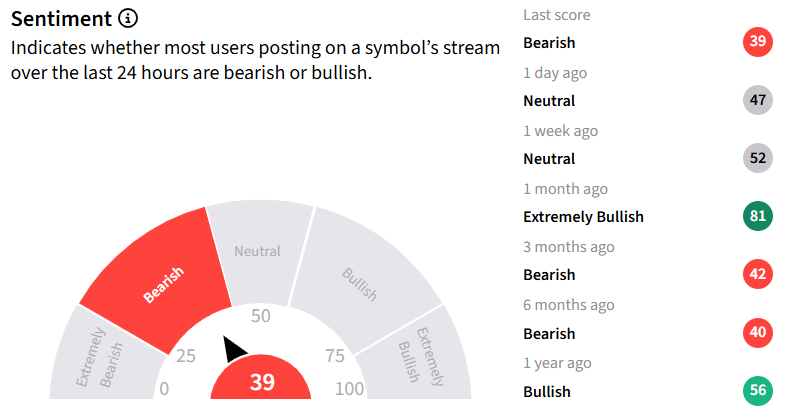
On Stocktwits, retail investors’ sentiment around TSM stock flipped to ‘bearish’ from ‘neutral’ a day ago.
Advertisement|Remove ads.
So far in 2026, TSM shares have gained more than 13%, while Samsung’s South Korea-listed shares have surged over 53%.
In comparison, the Direxion Daily Semiconductor Bull 3X ETF (SOXL), which holds TSMC shares, and the Roundhill Memory ETF (DRAM), which holds Samsung shares, have risen more than 4% and 41% year-to-date, respectively.
See Also: Palo Alto’s AI Ambitions Come With A Catch — Why Morningstar Calls PANW’s $4.5B Deal 'Risky'
Advertisement|Remove ads.
For updates and corrections, email newsroom[at]stocktwits[dot]com.
Comments posted here will also appear on symbol pages.

Latest News

 Heera Hari·5m ago

 Harshita Tyagi·17m ago

 Arnab Paul·24m ago
 Heera Hari·48m ago
 Arnab Paul·1h ago

 Prabhjote Gill·1h ago