


Advertisement|Remove ads.
USO, BATL, EONR Slide Premarket After Record Quarter As Trump Signals Iran Exit Timeline: Analysts Say Oil Risks Still Linger
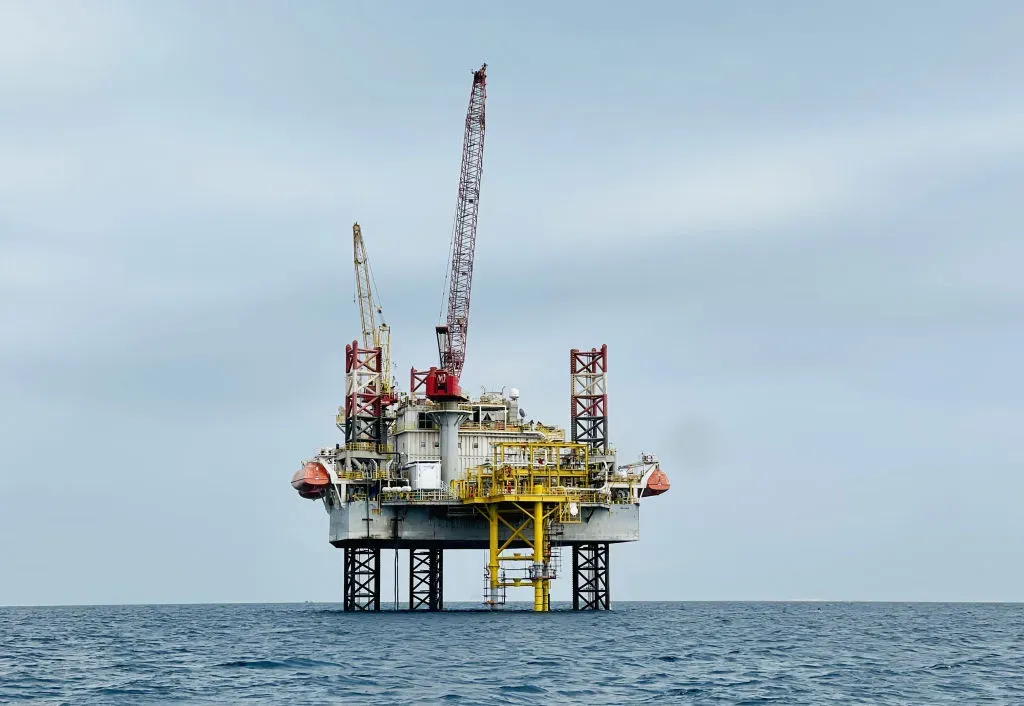


- BATL surged 245%, EONR 116% and USO 84% in the latest quarter, each posting record quarterly gains.
- Brent crude slipped below $100 and WTI traded near $97 after Trump signaled the U.S. could exit the Iran conflict within two to three weeks.
- Analysts said the war premium is easing but warned global supply deficits and disrupted shipping flows could keep crude markets tight for weeks or months.
Advertisement|Remove ads.
Major oil stocks and index funds traded lower in premarket trading on Wednesday as crude retreated below $100 after U.S. President Donald Trump signaled that the Iran conflict may end within weeks, easing war-premium fears even with the Strait of Hormuz still largely shut.
Battalion Oil (BATL) declined 11%, EON Resources (EONR) dropped 9%, Trio Petroleum (TPET) fell 6%, Indonesia Energy (INDO) lost 4%, while the United States Oil Fund (USO) slipped 3% in premarket trading.
Over the latest quarter, BATL surged 245%, EONR rose 116% USO gained 84%, with each stock marking its best quarter on record. INDO advanced 74%, its strongest quarterly performance since June 2024, while TPET fell 13%, extending its fourth straight quarter of declines.
Advertisement|Remove ads.
Crude Slides Despite Ongoing Hormuz Disruptions
Brent crude slipped below $100 a barrel, while West Texas Intermediate traded around $97 after Trump said the U.S. could leave Iran within two to three weeks and indicated that an agreement with Tehran may be reached but was not necessary for the conflict to end.
Oil futures closed the first quarter with record gains, with West Texas Intermediate rising $43.96 per barrel, or 77%, its biggest dollar increase on record and biggest gain since the second quarter of 2020. Brent crude climbed $57.50, or 94% in the quarter, also marking its largest dollar gain on record and its steepest percentage gain since the third quarter of 1990.
The president is scheduled to address the nation at 9 p.m. ET to provide an update, according to White House Press Secretary Karoline Leavitt.
Advertisement|Remove ads.
The effective closure of the strait has choked off supplies of crude oil and gas to global markets and raised concerns about renewed inflationary pressure, with U.S. gasoline prices topping $4 per gallon for the first time since August 2022.
Iranian Foreign Minister Abbas Araghchi said Tehran had received messages from the U.S. Middle East envoy but that no formal negotiations were underway, while the country has insisted on maintaining sovereignty over the strategic waterway. Trump said the U.S. could leave responsibility for reopening the chokepoint to other countries.
Meanwhile, the UAE has urged the U.S. and military in Europe and Asia to form a coalition to reopen the Strait of Hormuz by force and is prepared to support such an operation, according to a report by The Wall Street Journal. China and Pakistan also called for an immediate ceasefire and safeguards for shipping through the waterway.
Advertisement|Remove ads.
War Premium Starts To Ease, But Supply Risks Persist
Spartan Capital said, “I think the oil market is going to dictate the end of this war,” warning that if crude climbs to $125 or $130 and stays there, “it’s going to cause havoc for the economy.” He added that even unconfirmed signals about a possible timeline for the conflict are already weighing on prices, WSJ noted.
Forex.com said the relief move in crude may prove temporary. “Until the Strait of Hormuz remains effectively shut for the U.S. and its allies, the global energy shock is not going to go away.”
Meanwhile, Societe Generale expects a global oil supply deficit of 8.75 million barrels per day to persist through April even if hostilities ease by mid-month, saying Gulf producers must restore output, tankers must move barrels to refining hubs and infrastructure such as compressors and treatment plants must be brought back online. However, the firm noted that the process could take weeks to several months.
Advertisement|Remove ads.
IG said any de-escalation is unlikely to quickly restore flows through Hormuz, which keeps the market tight and limits downside in crude.
Priyanka Sachdeva, senior market analyst at Phillip Nova, said markets are already shifting from panic-driven buying toward more tactical positioning. “The market has already priced in major geopolitical risks,” she said, adding that further upside now depends on actual supply losses rather than threats alone.
How Do Retail Traders Feel About Energy Stocks?
On Stocktwits, retail sentiment around oil was mostly negative, with USO, TPET and EONR showing ‘bearish’ sentiment amid ‘normal’ to ‘low’ message volume, while INDO registered ‘extremely bearish’ sentiment alongside ‘extremely low’ activity. BATL, however, stood out with ‘bullish’ sentiment amid ‘high’ message volume.
Advertisement|Remove ads.
Over the past year, BATL surged 200%, EONR rose 73%, USO gained 64% and INDO advanced 24%, while TPET declined 50%.
For updates and corrections, email newsroom[at]stocktwits[dot]com.
Advertisement|Remove ads.
Comments posted here will also appear on symbol pages.

Latest News
/filters:format(webp)https://news.stocktwits-cdn.com/large_Google_Office_in_New_York_City_2ff844002a.jpg)
/filters:format(webp)https://news.stocktwits-cdn.com/Whats_App_Image_2026_05_11_at_09_45_43_1_jpeg_a08c0cf251.webp) Aveek Bhowmik·42m ago
Aveek Bhowmik·42m ago/filters:format(webp)https://st-everywhere-cms-prod.s3.us-east-1.amazonaws.com/large_Cst_Ste_PV_Plant_Fixed_3_X7_C2664_CA_X_cb189ac6ea.jpg)
/filters:format(webp)https://news.stocktwits-cdn.com/unnamed_jpg_9dff551b50.webp) Anan Ashraf·59m ago
Anan Ashraf·59m ago/filters:format(webp)https://news.stocktwits-cdn.com/large_Donald_Trump_6f8998b443.jpg) Aveek Bhowmik·2h ago
Aveek Bhowmik·2h ago/filters:format(webp)https://news.stocktwits-cdn.com/large_Royal_Caribbean_jpg_c943e67fd8.webp)
/filters:format(webp)https://news.stocktwits-cdn.com/1707726834303_jpg_11f20a9aa9.webp) Shashank Nayar·2h ago
Shashank Nayar·2h ago/filters:format(webp)https://news.stocktwits-cdn.com/large_Getty_Images_2242061625_e84edfd039.jpg) Anan Ashraf·2h ago
Anan Ashraf·2h ago/filters:format(webp)https://st-everywhere-cms-prod.s3.us-east-1.amazonaws.com/large_sealsq_stock_market_representative_resized_b05435011f.jpg) Anan Ashraf·3h ago
Anan Ashraf·3h ago