


Advertisement|Remove ads.
USO, BATL, TPET Slide Overnight On Signs Iran Crisis May Be Ending: Analysts Say War Premium Fading, But Supply Risks Remain
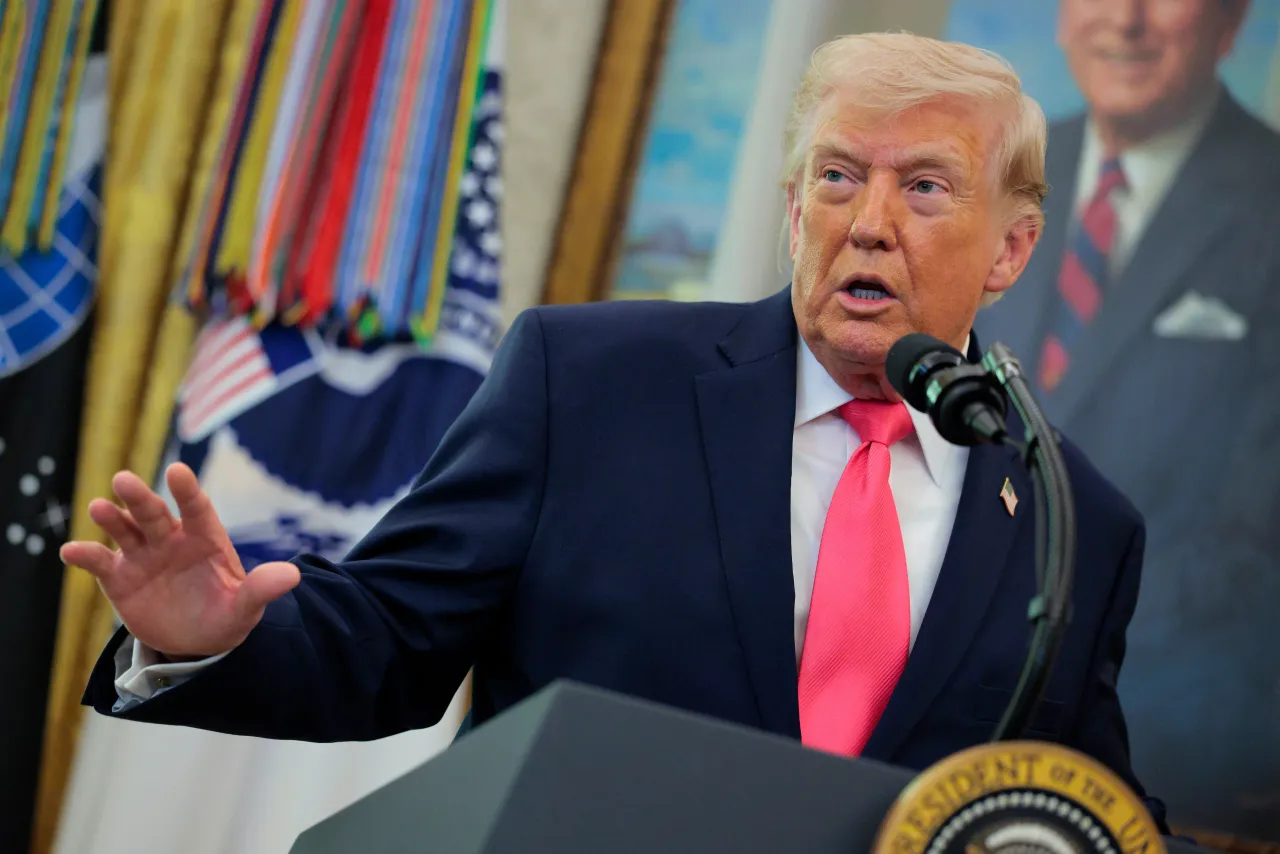


- Officials reportedly said reopening the chokepoint could extend the conflict beyond a four- to six-week timeline, with allies potentially taking the lead in restoring shipping access.
- The USS Tripoli, the 31st Marine Expeditionary Unit and elements of the 82nd Airborne entered the region, with up to 10,000 additional troops under consideration.
- U.S. gasoline prices stood at $3.99 per gallon and diesel at $5.25 per gallon, underscoring ongoing pressure from disruptions in the Middle East.
Advertisement|Remove ads.
Major oil stocks and index funds traded lower in overnight trading heading into Tuesday as crude eased after reports that U.S. President Donald Trump is prepared to end military operations against Iran, even with shipping through the Strait of Hormuz still restricted.
Trio Petroleum (TPET) fell about 5%, Battalion Oil (BATL) declined roughly 3%, EON Resources (EONR) dropped around 3%, the United States Oil Fund (USO) slipped about 2%, while Indonesia Energy (INDO) lost nearly 2%.

Crude Eases Amid Signs Of Iran War Wind-Down
Global benchmark Brent crude fell about 0.82% to $111.85 a barrel, while West Texas Intermediate declined roughly 0.62% to $102.24 after The Wall Street Journal reported, citing administration officials, that Trump is willing to wind down military operations against Iran even if the Strait of Hormuz remains largely closed.
Advertisement|Remove ads.
Officials reportedly said reopening the chokepoint could extend the conflict beyond the administration’s expected four-to-six-week timeline, with Washington instead aiming to complete strikes on Iran’s naval and missile capabilities before shifting responsibility for restoring shipping access to allies. The Strait typically carries roughly one-fifth of global oil flows, and traffic slowed sharply after Iran mined the waterway and threatened tankers.
Meanwhile, the USS Tripoli, the 31st Marine Expeditionary Unit, and elements of the 82nd Airborne Division have entered the region, with officials also apparently considering deploying up to 10,000 additional troops and a possible operation to secure Iran’s enriched uranium stockpile.
Oil War Premium Starts To Fade
Stephen Innes, managing partner at SPI Asset Management, said “the U.S. stepping back from physically reopening the artery means the market now has to price a world where the blockage lingers, but the war premium fades at the margin,” according to a report from MarketWatch.
Advertisement|Remove ads.
Meanwhile, Tim Waterer, chief market analyst at KCM Trade, said an end to hostilities would support sentiment, but risks tied to disruption in the Strait remain significant. “The short-term view is that an end to the war would be a welcome development,” Waterer said. “But if the Strait of Hormuz remains closed, this leaves global energy markets susceptible to further supply disruptions,” Bloomberg noted.
Garfield Reynolds of MLIV said “investors are seriously leaning into hopes for a path toward peace,” adding that now optimism is triumphing in the “short term at the least.” On the other hand, Dilin Wu, strategist at Pepperstone, said it was “premature” to read the latest headlines as a sign that the conflict is ending.
Fuel Prices Stay Elevated Nationwide
Patrick De Haan, petroleum analyst at GasBuddy, said the most common gasoline price in the U.S. stood at $3.99 per gallon, up $0.3 from the prior week, while the national median price was $3.79 per gallon.
Advertisement|Remove ads.
California recorded the highest average gasoline price at $5.82, followed by Hawaii at $5.41 and Washington at $5.27, while Oklahoma posted the lowest average at $3.21, ahead of Kansas at $3.25 and Nebraska at $3.27.
Diesel prices also remained elevated, with the national median reaching $5.25 per gallon, up $0.26 from the prior week, reflecting continued pressure across refined product markets as shipping disruptions in the Middle East ripple through global supply chains.
How Do Stocktwits Users Feel About Energy Stocks?
On Stocktwits, retail sentiment toward USO was ‘neutral’ amid ‘normal’ message volume, while INDO and TPET drew ‘extremely low’ message volume with sentiment ‘extremely bearish’ and ‘bearish’, respectively. BATL saw ‘extremely bullish’ sentiment amid ‘high’ message volume, whereas EONR reflected ‘bearish’ sentiment with ‘low’ message volume.
Advertisement|Remove ads.
Over the past year, BATL surged about 325%, EONR climbed roughly 99%, USO gained around 74%, and INDO rose about 39%, while TPET declined nearly 38%.
For updates and corrections, email newsroom[at]stocktwits[dot]com.
Advertisement|Remove ads.
Comments posted here will also appear on symbol pages.

Latest News
/filters:format(webp)https://news.stocktwits-cdn.com/large_capricor_jpg_9f4f8ab098.webp)
/filters:format(webp)https://news.stocktwits-cdn.com/unnamed_jpg_9dff551b50.webp) Anan Ashraf·34m ago
Anan Ashraf·34m ago/filters:format(webp)https://news.stocktwits-cdn.com/large_Getty_Images_2298278370_c1742670a6.jpg) Anan Ashraf·2h ago
Anan Ashraf·2h ago/filters:format(webp)https://news.stocktwits-cdn.com/large_Getty_Images_1975322989_4931eda944.jpg)
/filters:format(webp)https://news.stocktwits-cdn.com/1707726834303_jpg_11f20a9aa9.webp) Shashank Nayar·2h ago
Shashank Nayar·2h ago/filters:format(webp)https://st-everywhere-cms-prod.s3.us-east-1.amazonaws.com/large_Chipotle_Wikimedia_Commons_bf67dbcc70.jpg)
/filters:format(webp)https://news.stocktwits-cdn.com/Heera_1_1c30cb0170.PNG) Heera Hari·2h ago
Heera Hari·2h ago/filters:format(webp)https://news.stocktwits-cdn.com/large_Getty_Images_2225304422_jpg_9f0fb963be.webp)
/filters:format(webp)https://news.stocktwits-cdn.com/Prabhjote_DP_67623a9828.jpg) Prabhjote Gill·2h ago
Prabhjote Gill·2h ago/filters:format(webp)https://news.stocktwits-cdn.com/large_Getty_Images_2274014434_jpg_0633d89e04.webp) Shashank Nayar·3h ago
Shashank Nayar·3h ago