


Advertisement|Remove ads.
VLO Stock Heads For Best Year Since 1982 — Michael Burry Says It Has Become A ‘Huge Position’
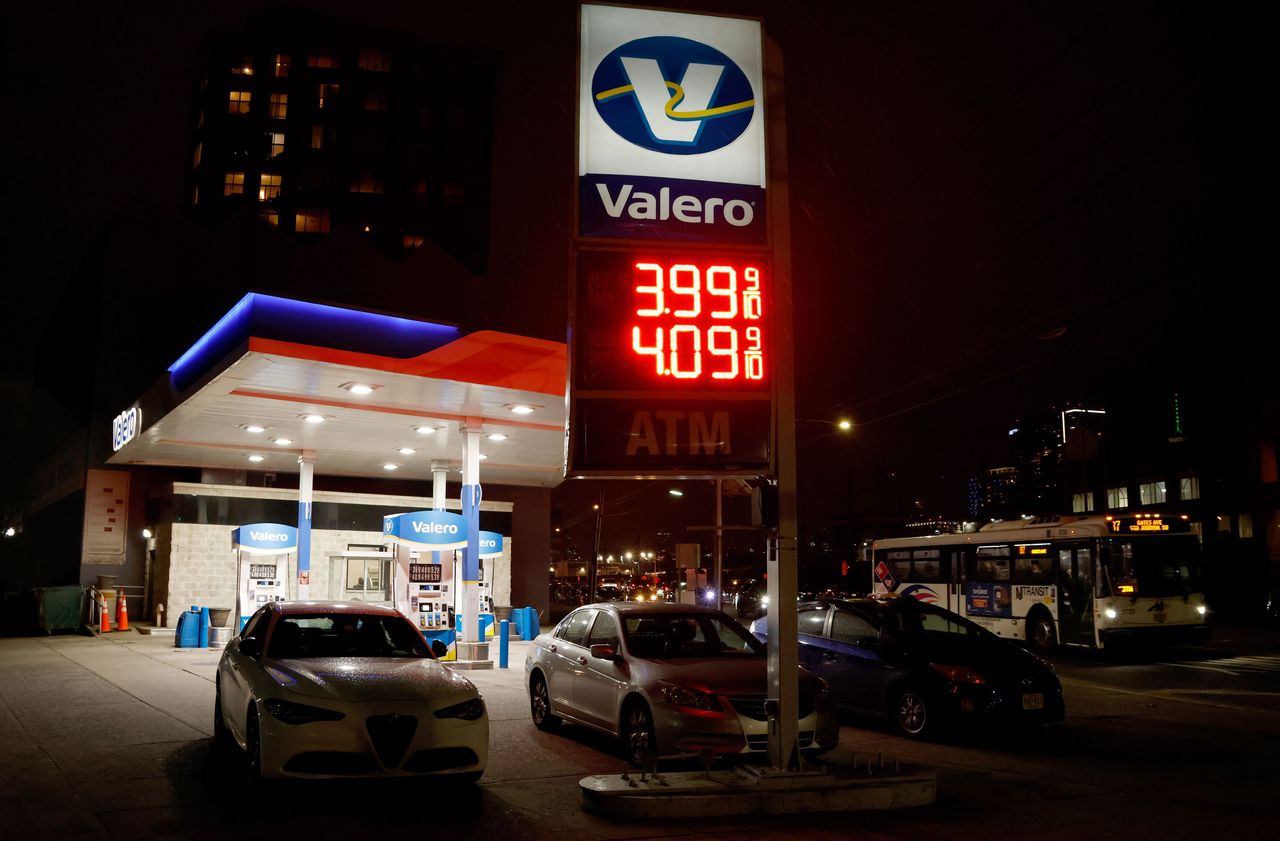


- Michael Burry said Valero has become a “huge position” after its historic rally, with VLO stock up 143% in 2026.
- He called Valero “a regulatory arbitrage,” arguing that regulation and opposition to new refineries have made global processing capacity increasingly scarce.
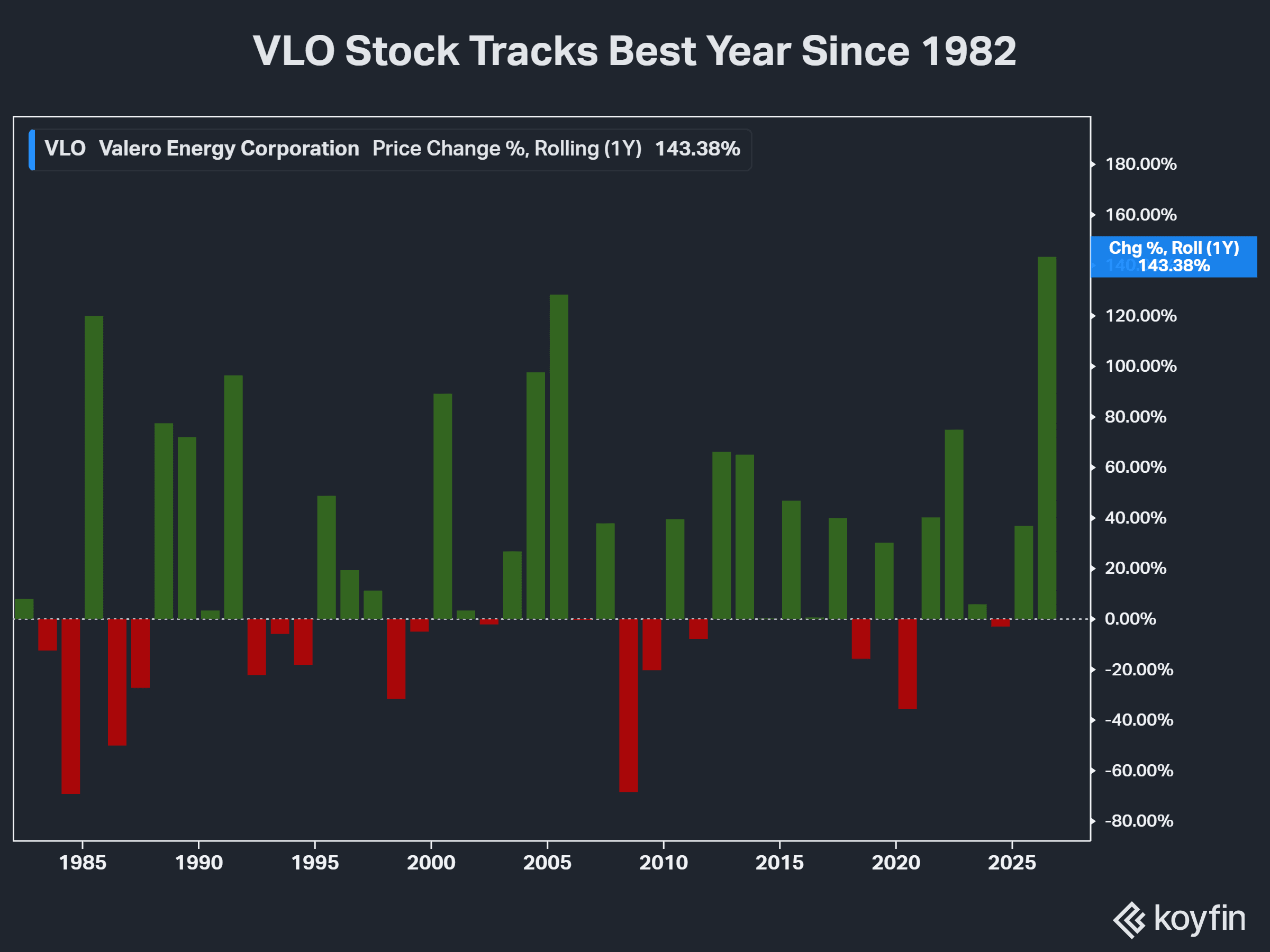
- VLO closed at a record $390.42 on Friday and is heading for its best annual performance in records dating back to 1982.
Advertisement|Remove ads.
Michael Burry said Valero Energy has become a “huge position” following its historic rally, prompting “The Big Short” investor to recover his initial investment and donate the proceeds to charity while leaving a sizable stake invested.
His comments come as fresh attacks on Saudi energy infrastructure and damage to Russian refineries have intensified a global fuel shortage. Valero closed 1.3% higher at a record $390.42 on Friday and has returned about 143% this year, putting VLO stock on track for its strongest annual performance in records dating back to 1982.
Advertisement|Remove ads.
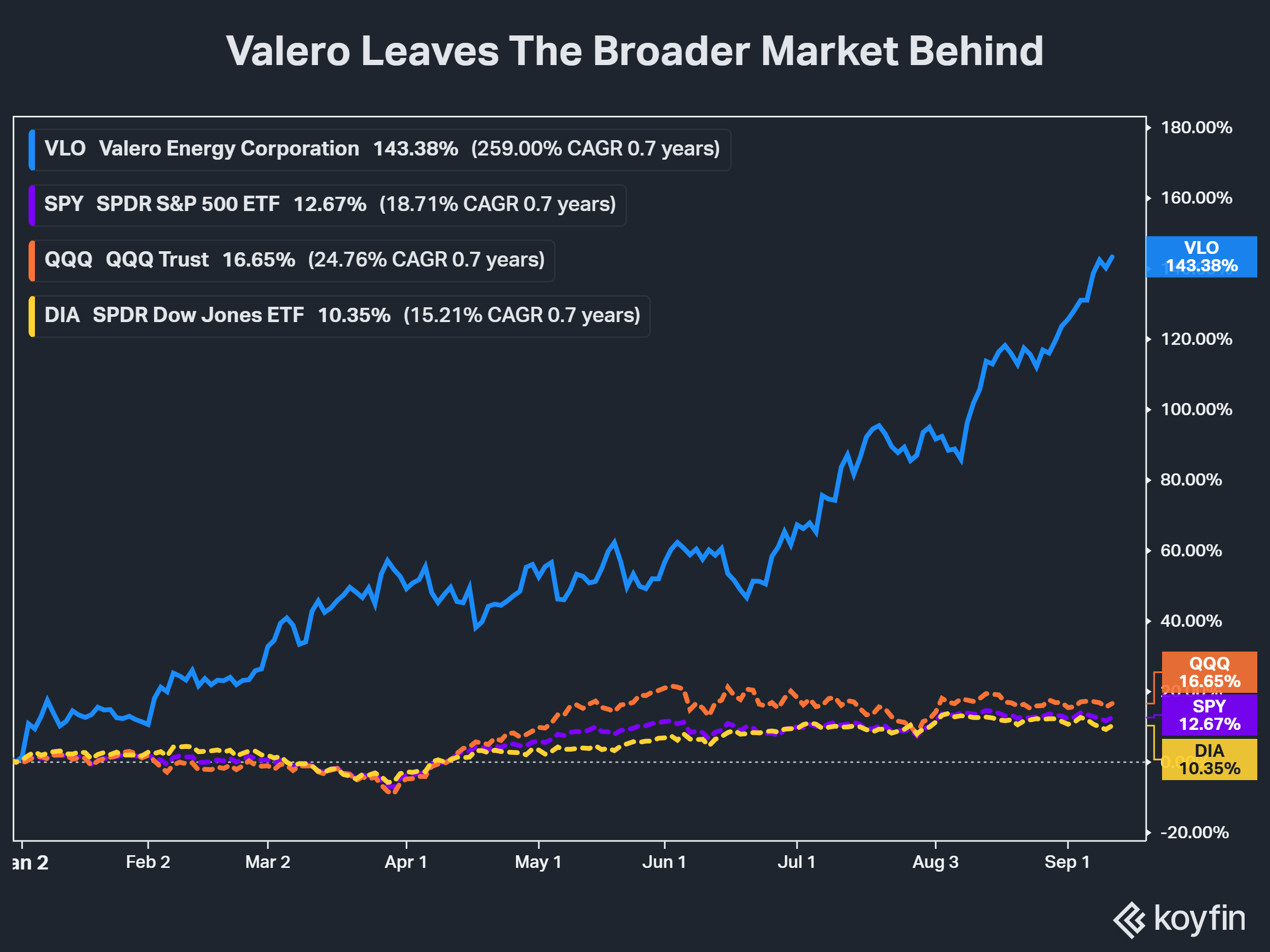
Valero’s 143% total return in 2026 compares with about 12% for the S&P 500. On Friday, the SPDR S&P 500 ETF Trust (SPY) rose 0.9%, the Invesco QQQ Trust (QQQ) added 0.9%, and the SPDR Dow Jones Industrial Average ETF Trust (DIA) climbed 1%. The United States Oil Fund (USO) fell 2.2%, while the Breakwave Tanker Shipping ETF (BWET) surged 12%.
Burry Keeps Sizable VLO Position
“VLO is a great business and it is now with the run up just a huge position for me,” Burry said in a recent subscriber chat on his “Cassandra Unchained” Substack. He said he had removed his initial investment “and then some” from the position, with the entire amount going to a donor-advised fund for charity. “The remaining VLO position continues to be sizable but is deep into house’s money,” Burry said. “I have it on a dividend reinvestment program.”
Advertisement|Remove ads.
Burry added that he had neither recommended nor traded Valero since launching his Substack newsletter.
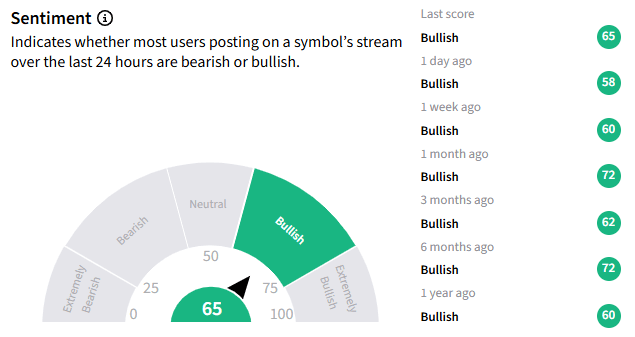
On Stocktwits, retail sentiment for VLO has been consistently ‘bullish’ over the past year amid a 500% surge in 24-hour message volumes. The ticker’s watcher base has also risen 12% in a year, signaling healthy retail interest in the stock.
Inside Burry’s Valero Bet
Burry last bought Valero during the oil-market dislocation in 2020, when West Texas Intermediate (WTI) futures briefly turned negative as COVID-19 lockdowns shut down travel, flights, and factories worldwide. His thesis focused on Valero’s Gulf Coast refineries, many of which were built to process Venezuela’s heavy, sour crude. After sanctions, underinvestment and collapsing Venezuelan production reduced those supplies, the plants operated with lighter and less-suitable feedstocks.
Advertisement|Remove ads.
Burry detailed his thesis in January after the ouster of Nicolas Maduro revived expectations that Venezuelan output could recover. “Many Gulf Coast refineries were purpose-built for Venezuelan heavy crude,” he said, adding that restored supplies could “in time, produce better margins across jet fuel, asphalt, and diesel.”
“I have owned Valero since 2020, and I am more resolved to holding it even longer,” Burry said at the time. VLO jumped 9% on Jan. 5 after U.S. President Donald Trump urged U.S. oil companies to invest in Venezuela. Burry, however, cautioned that restoring Venezuelan exports would likely take years.
California Refinery Closures Boost Valero
The capacity shortage became more visible in April when Valero ceased refining at its Benicia facility, citing unfavorable “legal, political or regulatory developments.” The closure, combined with Phillips 66’s shutdown of its Los Angeles refinery in December 2025, removed about 20% of California’s in-state refining capacity and increased its dependence on imported fuel.
Advertisement|Remove ads.
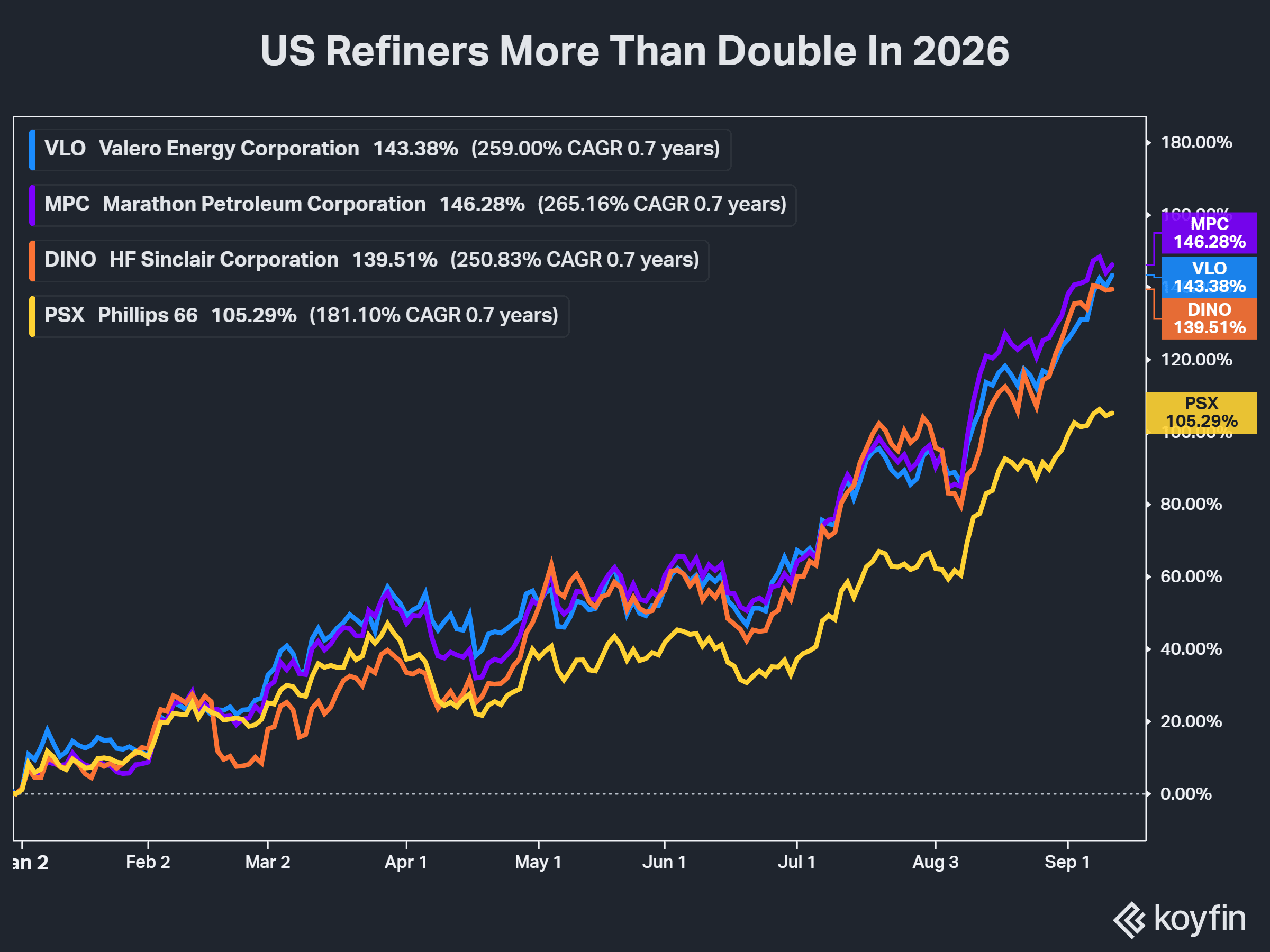
Burry also called Valero “a regulatory arbitrage of sorts,” arguing that investors were betting on refining capacity at a time when the world is “very short” of it. He blamed politics, regulation and “NIMBYism” for restricting new construction, pointing to California’s high gasoline prices after refiners “left or didn’t expand under California’s punitive political climate.”
Valero Earnings Surge On Fuel Crunch
The trade accelerated during the spring and summer as the Iran conflict and Ukrainian attacks on Russian refineries removed significant volumes of refined products from the global market. By July, U.S. refineries had been running at or above 95% utilization for nearly two months, raising the risk of equipment failures and delayed maintenance.
Advertisement|Remove ads.
Valero’s July earnings showed the benefits. The company posted record second-quarter earnings of $12.54 per share, topping expectations of $10.12. Refining operating income more than tripled to $4.4 billion, margins nearly doubled to $23.62 per barrel and throughput reached about three million barrels per day. Valero returned $2.6 billion to shareholders during the quarter, compared with $695 million a year earlier.
US Refineries Run Near Capacity
The squeeze worsened this month. U.S. diesel prices rose above $6 per gallon for the first time, distillate inventories fell about 13% below their five-year average and diesel refining margins hit record levels.
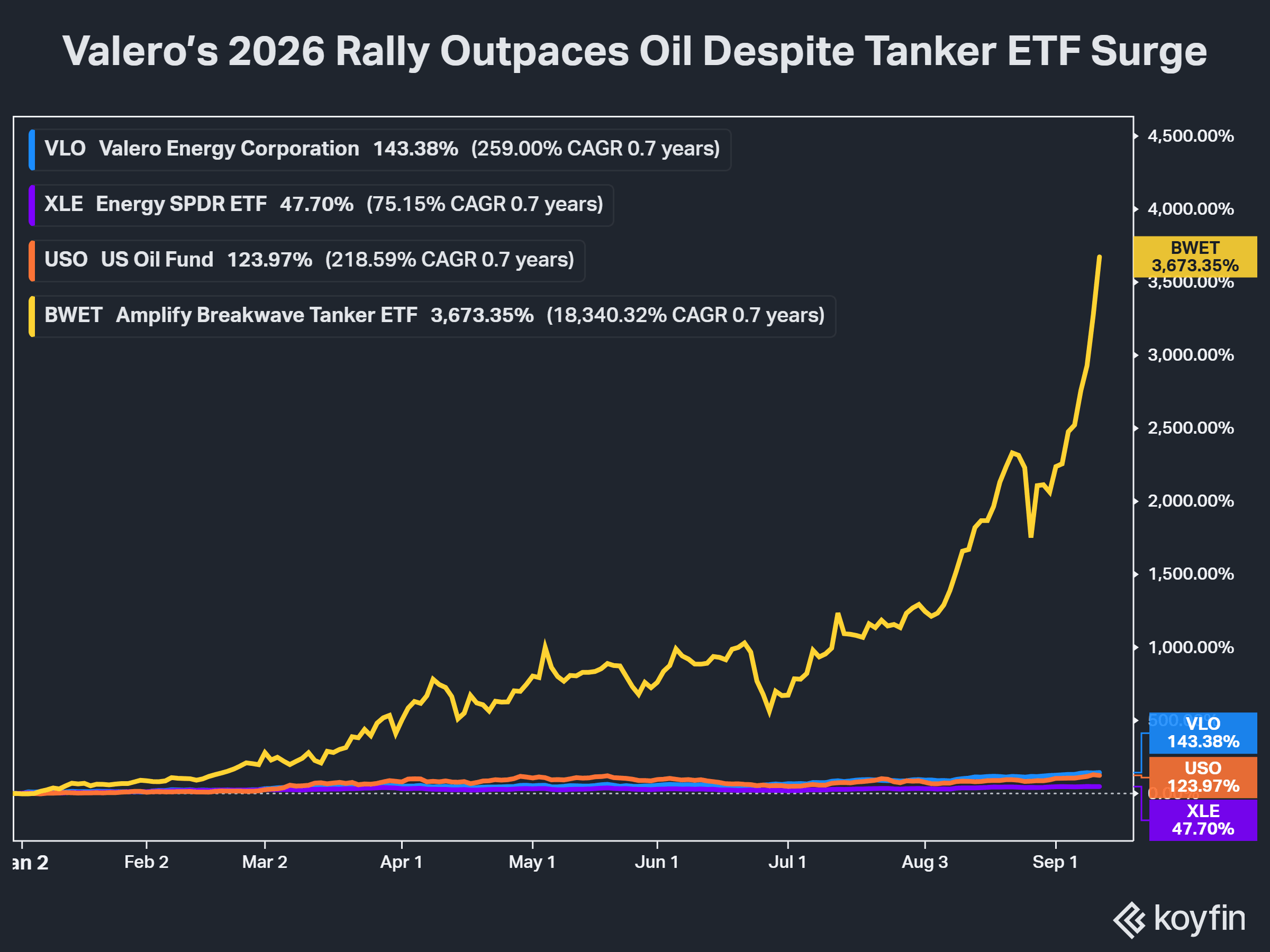
Advertisement|Remove ads.
U.S. refineries were operating at 98% utilization when the White House began discussing whether to use the Defense Production Act to expand capacity. Industry executives favored using federal support to expand and debottleneck existing plants instead of building a new refinery, a process that would require substantially more capital and take years, Reuters reported.
The latest disruption came over the weekend, when attacks forced the shutdown of Saudi Arabia’s East-West pipeline, a route capable of carrying about four million barrels per day around the Strait of Hormuz.
For updates and corrections, email newsroom[at]stocktwits[dot]com.
Advertisement|Remove ads.
Comments posted here will also appear on symbol pages.

Latest News
/filters:format(webp)https://news.stocktwits-cdn.com/large_Getty_Images_2271718066_jpg_b22f3fd56c.webp)
/filters:format(webp)https://news.stocktwits-cdn.com/unnamed_jpg_9dff551b50.webp) Anan Ashraf·23m ago
Anan Ashraf·23m ago/filters:format(webp)https://news.stocktwits-cdn.com/large_Getty_Images_2215755847_59164c97ad.jpg)
/filters:format(webp)https://news.stocktwits-cdn.com/Anushka_Basu_make_me_smile_in_the_picture_b92832aa_af59_4141_aacc_4180d2241ba8_1_2_png_1086e0ed8c.webp) Anushka Basu·25m ago
Anushka Basu·25m ago/filters:format(webp)https://news.stocktwits-cdn.com/large_Getty_Images_2186006369_jpg_79a3167860.webp)
/filters:format(webp)https://news.stocktwits-cdn.com/1707726834303_jpg_11f20a9aa9.webp) Shashank Nayar·30m ago
Shashank Nayar·30m ago/filters:format(webp)https://news.stocktwits-cdn.com/Getty_Images_2227552516_jpg_55b091826e.webp)
/filters:format(webp)https://news.stocktwits-cdn.com/Harshita_3cfe02022c.jpg) Harshita Tyagi·52m ago
Harshita Tyagi·52m ago/filters:format(webp)https://news.stocktwits-cdn.com/large_Paramount_Skydance_f6bf88fbe3.jpg)
/filters:format(webp)https://news.stocktwits-cdn.com/Whats_App_Image_2026_05_11_at_09_45_43_1_jpeg_a08c0cf251.webp) Aveek Bhowmik·59m ago
Aveek Bhowmik·59m ago/filters:format(webp)https://news.stocktwits-cdn.com/large_bmnr_OG_jpg_83d4f3cc27.webp) Anushka Basu·2h ago
Anushka Basu·2h ago