


Advertisement|Remove ads.
Yardeni Research Expects AI Investment Boom To Continue Despite Constraints – Says Recession Remains Unlikely



- The firm said a slower pace of AI investment could prolong the boom by preventing excess capacity from being built too quickly.
- Its view that a recession is unlikely rests on resilient consumer spending, continued AI infra investment and federal deficit spending.
- It compared the recent selloff to those in 2018 and 2022, when feared recessions did not materialize.
Advertisement|Remove ads.
Economist Ed Yardeni’s firm Yardeni Research said Monday that it expects the artificial intelligence (AI) investment boom to continue despite mounting constraints, while maintaining its view that the recent stock market selloff presents another buying opportunity rather than signaling an impending recession.
In its note, the firm said it expects financial, political and physical constraints to "slow rather than derail the investment boom," as long as demand for computing power continues to increase. The three pillars of economic growth remain intact, making a recession unlikely, it added.
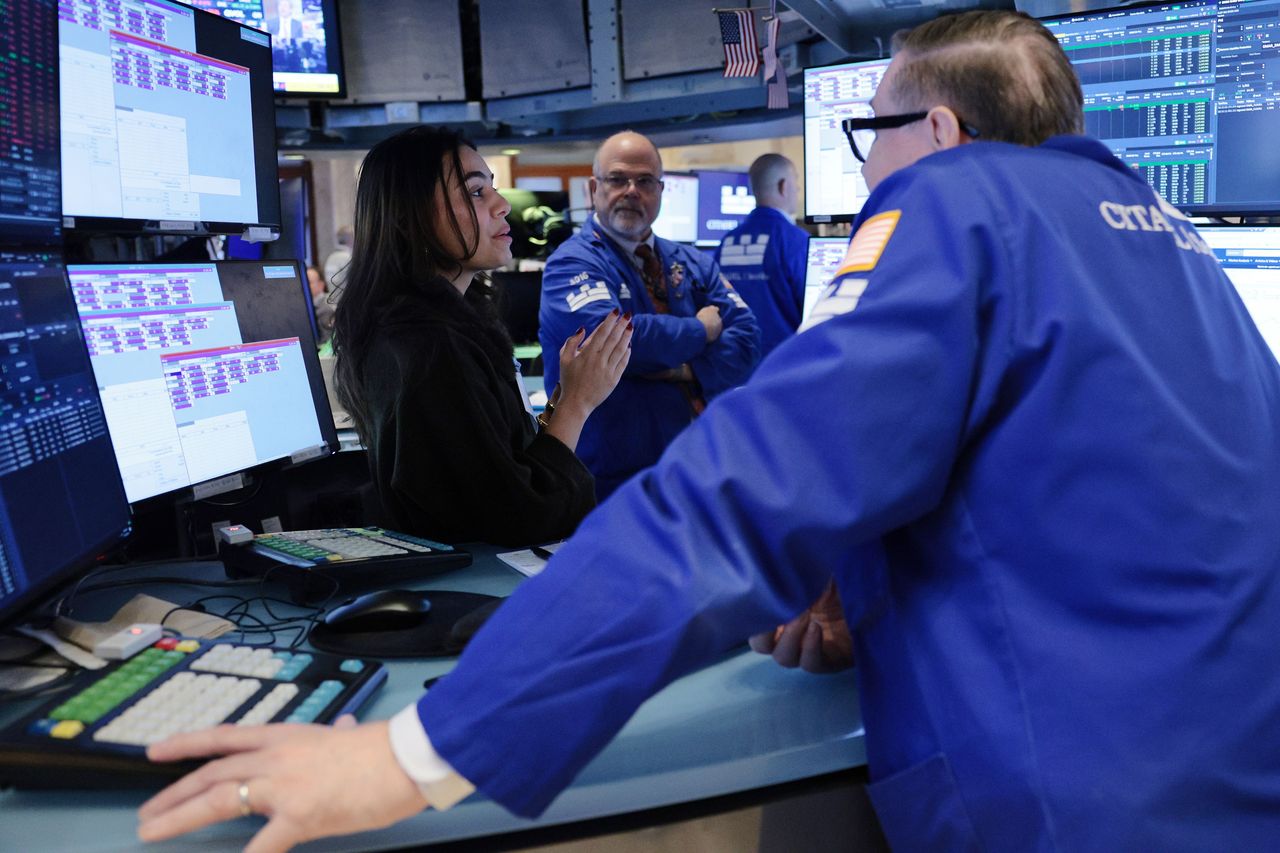
AI Investment Boom To Continue
According to the research firm, the AI infrastructure buildout has become a major driver of US economic growth, fueling enormous investments in data centers, semiconductors, computing equipment, and software.
Advertisement|Remove ads.
However, “rising financing costs, growing opposition to data centers, tighter export restrictions, and infrastructure bottlenecks threaten to slow the pace of investment,” it said, adding that the constraints will slow rather than derail the investment boom, “which is probably a good thing”.
Yardeni Research said a slower pace of AI investment could prolong the boom by preventing excessive capacity from being built too quickly. The firm also noted that the positive impact of surging U.S. demand for semiconductors on GDP has been partially offset by imports, as many of those chips are manufactured overseas.
Yardeni Sees Selloff As Correction, Not Bear Market
The comments follow a sharp selloff in technology stocks, with the S&P 500 falling over 8% last week and the Nasdaq-100 index plunging over 10%. The PHLX Semiconductor Index dropped over 17%.
Advertisement|Remove ads.
On Stocktwits, retail sentiment around SPDR S&P 500 ETF Trust (SPY), which tracks the S&P 500 index, and the iShares Semiconductor ETF (SOXX), which tracks U.S. listed semiconductor stocks, was ‘bearish’. Meanwhile, sentiment was ‘bullish’ for the Invesco QQQ Trust (QQQ), which tracks the Nasdaq-100 index.
Yardeni Research noted that analysts continued raising earnings estimates despite the decline, with consensus S&P 500 earnings per share (EPS) forecasts reaching $427.60 for 2027 and $498.44 for 2028.
Meanwhile, the index's forward price-to-earnings ratio fell to 16.4 on Friday, its lowest level since the 2022 bear market. The firm compared the recent valuation contraction with selloffs in 2018 and 2022, when investors anticipated deteriorating economic conditions but the feared recessions did not materialize.
Advertisement|Remove ads.
It expects the latest decline to remain a correction within a secular bull market and present "another buying opportunity."
Three Pillars Underpin No-Recession View.
Yardeni Research said its expectation that a recession is unlikely rests on three pillars: resilient consumer spending, continued AI infrastructure investment, and federal deficit spending.
The firm noted that real consumer spending increased at an annualized rate of 2.8% in both the second and third quarters, while the federal budget deficit widened to $2 trillion in fiscal 2026.
Advertisement|Remove ads.
It also expects continued demand for computing power to support AI investment, even as constraints slow its pace.
Stock Futures Rebound After Last Week’s Selloff
At the time of this writing, stock futures rose sharply as a shortened week on Wall Street began after all three major averages ended Friday in correction territory. Technology stocks were in sharp focus, with the sector moving higher following last week’s sell-off.
The Dow Jones Industrial Average futures gained 913 points, or 1.9%. S&P 500 futures added 2.7%, and Nasdaq-100 futures rose 3.5%.
Advertisement|Remove ads.
See Also: CRWV, IREN, NBIS Rally After Sell-Off — New US Curbs Threaten Southeast Asia Neocloud Business
For updates and corrections, email newsroom[at]stocktwits[dot]com.
Comments posted here will also appear on symbol pages.

Latest News

 Harshita Tyagi·9m ago
 Prabhjote Gill·22m ago

 Arnab Paul·28m ago

 Anushka Basu·2h ago

 Shivani Kumaresan·2h ago

 Yuvraj Malik·2h ago