


Advertisement|Remove ads.
Shark Tank's Kevin O’Leary Dumps All Crypto Except Bitcoin, Ethereum Ahead Of CLARITY Act ‘Turning Point’: Report
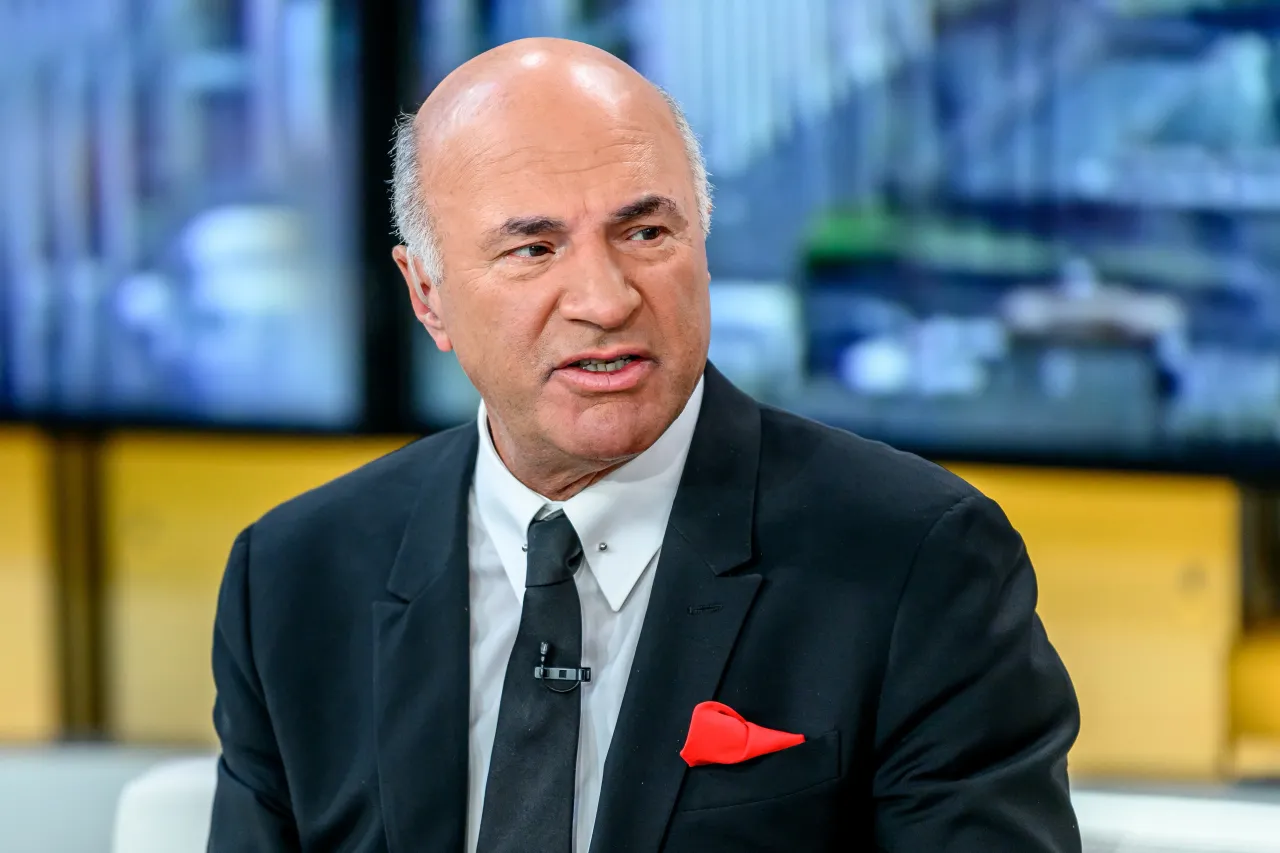


- The Canadian businessman cited internal analysis showing BTC and ETH capture most historical returns.
- Kevin O’Leary also noted that stablecoins are gaining traction for compliant cross-border payments.
- He pointed out that mining economics are pushing capital toward energy-efficient infrastructure.
Advertisement|Remove ads.
Canadian businessman Kevin O’Leary reportedly said he has sold all the cryptocurrencies in his portfolio except Bitcoin (BTC) and Ethereum (ETH), citing that U.S. regulatory clarity will concentrate institutional capital into the two largest tokens.
In an interview with Yellow, O’Leary said the U.S. CLARITY Act will mark the next phase of crypto adoption by opening the door to institutional allocation, but only for assets that meet compliance and liquidity thresholds. “The CLARITY Act is the turning point. That’s when the meaningful capital comes in,” he said.
Bitcoin’s price recovered on Tuesday night to $87,300 after a heavy sell-off over the weekend, up 1.7% in the last 24 hours. On Stocktwits, retail sentiment around the cryptocurrency trended in ‘bearish’ territory over the past day. It’s currently trading more than 30% below its record high of over $126,000, seen in October.
Advertisement|Remove ads.
Meanwhile, Ethereum’s price edged 0.6% in the last 24 hours to $2,950. Retail sentiment on the platform around the leading altcoin fell to ‘extremely bearish’ from ‘bearish’ territory over the past day and chatter dipped to ‘low’ from ‘normal’ levels.
Why Bitcoin And Ethereum Dominate
Momentum behind the Digital Asset Market CLARITY Act has grown after the bill passed the House with bipartisan support in July and gained tentative backing from the White House. Lawmakers on the Senate Banking and Senate Agriculture committees are now aligning their work around the proposal, increasing the likelihood of final passage next year.
O’Leary said internal analysis showed more than 97% of historical crypto returns could be replicated with a 50-50 allocation to BTC and ETH. He stated that compliance rules leave little incentive for institutions to hold smaller tokens once allocations begin.
Advertisement|Remove ads.
Stablecoins Gain Ground In Payments
While BTC and ETH may absorb future investment flows, O’Leary said stablecoins are already reshaping payments. He cited the GENIUS Act and similar frameworks enabling compliant cross-border transfers at lower cost and faster settlement.
Companies like PayPal (PYPL) and Fiserv (FI) have launched dollar-backed stablecoins this year. A consortium of large U.S. banks, including Bank of America (BAC) and Citigroup (C), also announced plans for a jointly issued stablecoin to compete with Tether’s USDT (USDT) and Circle’s USD Coin (USDC). The global stablecoin market has expanded by more than $100 billion this year, according to figures on DefiLlama.
O’Leary also highlighted mining and energy infrastructure, pointing to Bitzero as an example of where institutional capital is concentrating. He said his investment was driven by the company’s ability to secure long-term electricity contracts below $0.06 per kilowatt-hour, which he called the minimum level needed for sustainable Bitcoin mining.
Advertisement|Remove ads.
For updates and corrections, email newsroom[at]stocktwits[dot]com.
Comments posted here will also appear on symbol pages.

Latest News
/filters:format(webp)https://news.stocktwits-cdn.com/large_Getty_Images_2188532140_jpg_1eb152a875.webp)
/filters:format(webp)https://news.stocktwits-cdn.com/Anushka_Basu_make_me_smile_in_the_picture_b92832aa_af59_4141_aacc_4180d2241ba8_1_2_png_1086e0ed8c.webp) Anushka Basu·2h ago
Anushka Basu·2h ago/filters:format(webp)https://news.stocktwits-cdn.com/large_Getty_Images_2290360640_1ec7422bc6.jpg) Anushka Basu·4h ago
Anushka Basu·4h ago/filters:format(webp)https://news.stocktwits-cdn.com/large_Getty_Images_2184298752_597d0bfcd2.jpg) Anushka Basu·6h ago
Anushka Basu·6h ago/filters:format(webp)https://st-everywhere-cms-prod.s3.us-east-1.amazonaws.com/large_charles_schwab_resized_79fd4282b7.jpg) Anushka Basu·8h ago
Anushka Basu·8h ago/filters:format(webp)https://news.stocktwits-cdn.com/large_Getty_Images_1236413131_82e1a6f16e.jpg) Anushka Basu·9h ago
Anushka Basu·9h ago/filters:format(webp)https://news.stocktwits-cdn.com/large_Getty_Images_2255514431_jpg_95e96b4025.webp)
/filters:format(webp)https://st-everywhere-cms-prod.s3.us-east-1.amazonaws.com/i_OS_App_Icon_1_8054f2a2fe.png) Stocktwits News Desk·9h ago
Stocktwits News Desk·9h ago