


Advertisement|Remove ads.
ETN, GEV, NEE, PWR, VRT Stocks Stand To Gain After US Flags Power Grid As Defense Priority
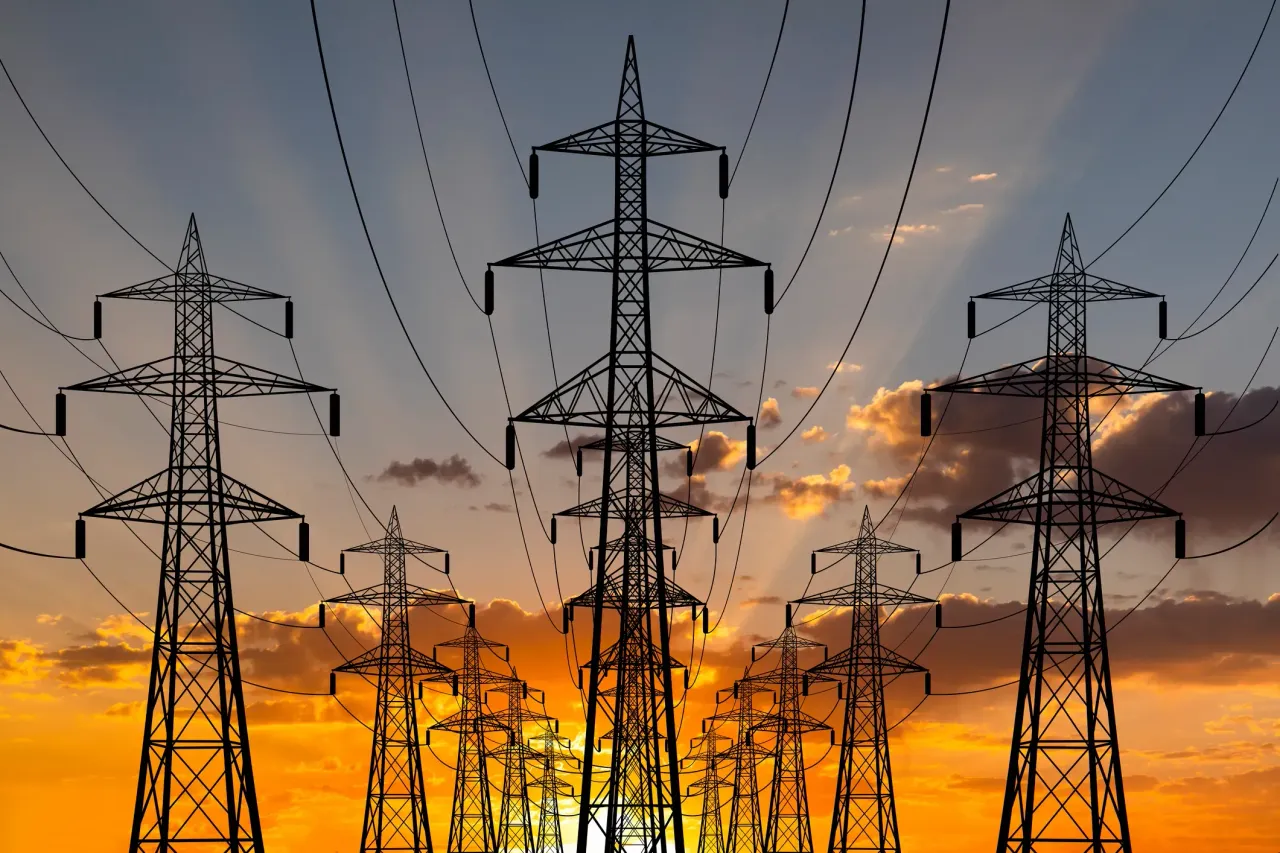


- Grid manufacturers, including Eaton and Hubbell, may benefit, while Quanta Services could gain from transmission expansion projects.
- US admisnitartion has said renewables alone are insufficient, boosting demand for conventional power companies, including Constellation Energy and Vistra.
- The policy allows the Energy Department to speed up procurement, including direct purchases, guarantees, and approvals.
Advertisement|Remove ads.
Industrial and utilities stocks are poised for a boost after the U.S. government elevated the importance of its energy systems, formally placing electric grid infrastructure and power generation at the center of national defense strategy.
On April 20, President Donald Trump’s White House issued an order under the Defense Production Act, identifying grid networks, baseload energy, and large-scale power systems as critical security assets, facilitating federal intervention to boost development and ease regulatory hurdles.
Industrial And Utility Winners
Companies tied to grid manufacturing and construction are positioned to benefit from the policy shift. Eaton (ETN) and Hubbell (HUBB) could see increased demand for transformers and electrical components, while Quanta Services (PWR) may gain from large-scale transmission buildouts.
Advertisement|Remove ads.
Meanwhile, GE Vernova (GEV) stands to benefit from ramped-up sourcing of grid equipment. The administration emphasized that renewable energy alone cannot meet defense and industrial requirements. As a result, firms such as Constellation Energy (CEG) and Vistra (VST), which operate nuclear and conventional power assets, could experience heightened demand for continuous energy supply.
NextEra Energy (NEE) also remains positioned to expand large-scale power generation projects supported by federal backing.
The administration framed outdated grid systems, transformer shortages, and insufficient electricity supply as strategic vulnerabilities and warned that delays in expanding infrastructure could undermine both economic resilience and military preparedness, particularly as energy demand rises from industrial growth and advanced computing.
Advertisement|Remove ads.
The policy authorizes the Department of Energy to adopt procurement tools typically reserved for defense operations. This includes direct purchasing, financial guarantees and expedited project approvals. Authorities can also act as a fallback buyer for major energy developments, ensuring projects move forward despite market uncertainties.
AI And Data Center Demand
Rapid growth in artificial intelligence infrastructure has added pressure on electricity networks. Vertiv Holdings (VRT), which provides cooling and power solutions for data centers, may gain as efficiency and reliability become priorities tied to national security.
Public concern intensified after electricity prices surged roughly 20% in parts of the Northeast in mid-2025. Critics quickly linked the jump to the expansion of AI infrastructure, including large-scale facilities that support cloud computing and machine learning.
Advertisement|Remove ads.
However, analysts say that such claims overlook key facts, noting that some data centers generate most of their own power and place limited strain on public grids. In a March note, SemiAnalysis compared the PJM Interconnection region, which serves 13 Eastern states, with Texas’s ERCOT grid.
While both regions are experiencing rapid growth in AI-related infrastructure, their pricing trajectories diverge sharply. PJM customers are expected to face average bill increases of about 15% in 2026 compared to earlier years, whereas electricity prices in Texas have remained relatively steady.
Analysts identified PJM’s capacity auction system as a key driver of rising costs. Despite pricing concerns, AI infrastructure continues to scale rapidly. Companies such as Amazon.com (AMZN) and Alphabet (GOOGL) are investing heavily in data centers across both regions.
Advertisement|Remove ads.
So far this year, ETN, GEV, PWR, HUBB, VST, and NEE stocks have gained between 2% and 251%, while CEG stock has declined by over 11%.
For updates and corrections, email newsroom[at]stocktwits[dot]com.
Advertisement|Remove ads.
Comments posted here will also appear on symbol pages.

Latest News
/filters:format(webp)https://news.stocktwits-cdn.com/large_arthur_hayes_2026_OG_jpg_9f3524f8b1.webp)
/filters:format(webp)https://news.stocktwits-cdn.com/Anushka_Basu_make_me_smile_in_the_picture_b92832aa_af59_4141_aacc_4180d2241ba8_1_2_png_1086e0ed8c.webp) Anushka Basu·27m ago
Anushka Basu·27m ago/filters:format(webp)https://news.stocktwits-cdn.com/large_Getty_Images_2280392602_jpg_36718c4342.webp)
/filters:format(webp)https://news.stocktwits-cdn.com/Heera_1_1c30cb0170.PNG) Heera Hari·29m ago
Heera Hari·29m ago/filters:format(webp)https://news.stocktwits-cdn.com/large_oracle_logo_jpg_47f75657e7.webp)
/filters:format(webp)https://news.stocktwits-cdn.com/Harshita_3cfe02022c.jpg) Harshita Tyagi·29m ago
Harshita Tyagi·29m ago/filters:format(webp)https://news.stocktwits-cdn.com/large_Getty_Images_2285958555_jpg_3b020b5c3e.webp)
/filters:format(webp)https://news.stocktwits-cdn.com/Prabhjote_DP_67623a9828.jpg) Prabhjote Gill·43m ago
Prabhjote Gill·43m ago/filters:format(webp)https://st-everywhere-cms-prod.s3.us-east-1.amazonaws.com/large_Microsoft_logo_788317f118.jpg) Heera Hari·1h ago
Heera Hari·1h ago/filters:format(webp)https://news.stocktwits-cdn.com/large_ast_spacemobile_b748e9159f.jpg)
/filters:format(webp)https://news.stocktwits-cdn.com/vivekkrishnanphotography_58_jpg_0e45f66a62.webp) Arnab Paul·1h ago
Arnab Paul·1h ago