


Advertisement|Remove ads.
Michael Burry Says Nvidia CEO Jensen Huang ‘Squirmed And Obfuscated’ On Dwarkesh’s Podcast: ‘Every NVDA Bull Needs To Watch This…’
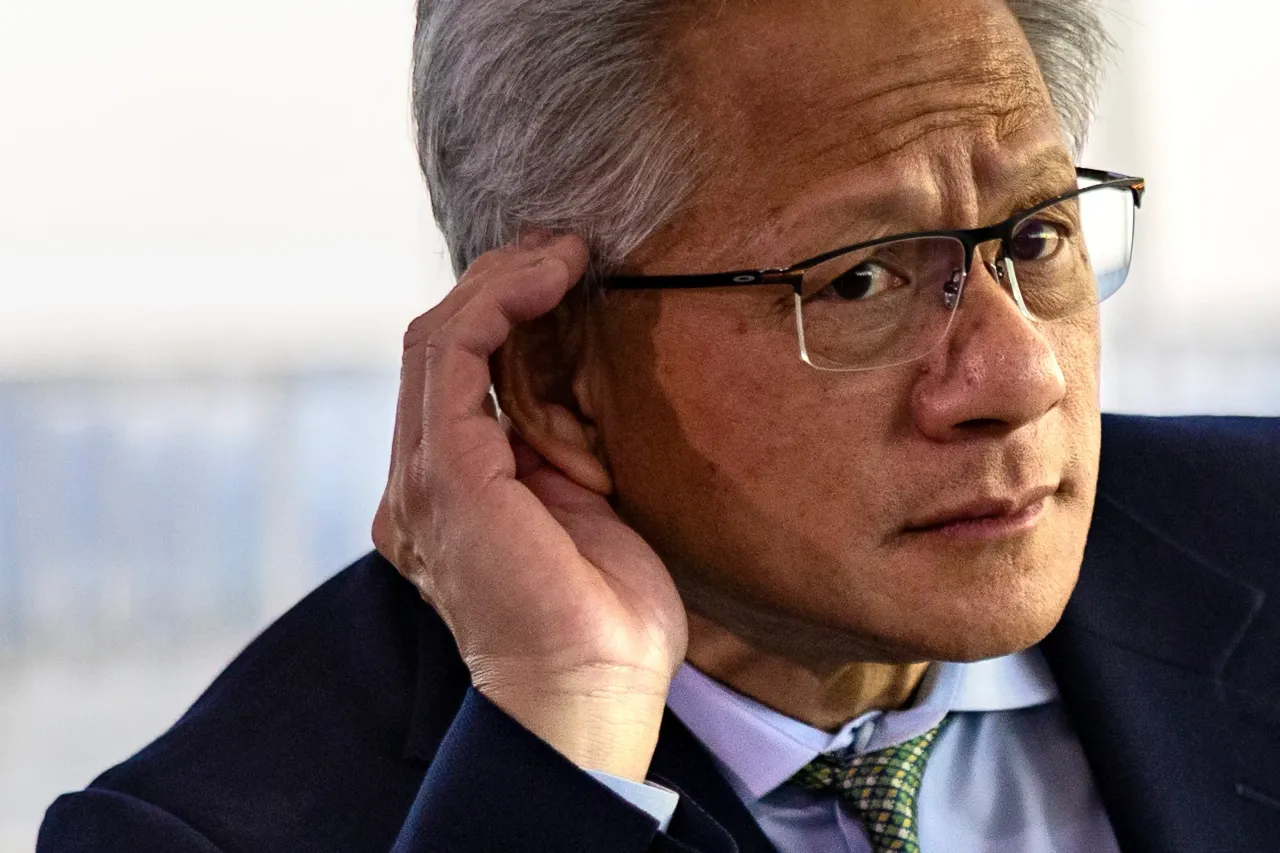


- Dwarkesh Patel released a nearly two-hour interview with Huang, in which the two discussed Nvidia’s AI software and hardware, chip export controls for China, and the challenges of scaling the supply chain.
- Burry said Huang appeared to dodge tough questions about how Nvidia plans to maintain its lead with vague answers.
- Burry has had a short position on the AI chipmaker since November 2025 and has repeatedly flagged risks to its red-hot AI-driven valuation.
Advertisement|Remove ads.
“The Big Short” investor Michael Burry feels that Nvidia CEO Jensen Huang “squirmed and obfuscated” during his appearance on the Dwarkesh Podcast, while commending the host for pressing the AI chip leader with tough, pointed questions.
“Dwarkesh nailed it. Jensen squirmed and obfuscated. This was shocking to me. Every $NVDA bull needs to watch this with an unbiased eye,” Burry said in an X post late Thursday.
He took another jab in a Substack post, saying that “Jensen sounded like he does not deal with these tough questions during his day job. He is a top-notch marketer, but here it seems he markets himself out of worrying or acknowledging any tough issues or questions.”
Advertisement|Remove ads.
In the interview published on Tuesday, Dwarkesh Patel and Huang spent a significant portion of their one-hour and forty-three-minute discussion debating the future of Nvidia’s CUDA moat and specialized AI hardware, the geopolitical implications of chip export controls to China, and the challenges of scaling the physical AI supply chain.
While Burry did not highlight the parts where he believes Huang was dodging the issue, Patel aggressively questioned Huang on Nvidia’s long-term dominance, particularly regarding the threat of commoditization and the rise of specialized TPUs (Tensor Processing Units).
Dwarkesh Puts Up Tough Questions To Huang
Patel pointed out that as software becomes easier to write via AI, Nvidia’s proprietary software layer (CUDA) might lose its value, leaving Nvidia as just a "middleman" for hardware manufactured by others.
Advertisement|Remove ads.
In response, Huang framed Nvidia’s role as the essential transformer of "electrons to tokens" and argued that the "artistry" involved in this process is too complex to be commoditized. He appeared dismissive of the idea that specialized chips could replace GPUs, despite Patel noting that major models like Claude and Gemini are already trained on TPUs.
Huang appeared defensive during the discussion on China and export controls. Patel pushed Huang on the national security risks of selling advanced chips to the country, to which Huang pushed back sharply, calling Patel’s arguments "childish" and "extreme."
He argued that denying China access to chips would simply force them to develop their own ecosystem, eventually leading to a "loser mindset" in which the U.S. would concede the world’s second-largest market.
Advertisement|Remove ads.
Huang’s insistence that "energy can make up for chip efficiency" and his refusal to acknowledge a potential cost to shipping compute to China led to a circular, tense exchange where Huang relied on "American leadership" rhetoric rather than directly addressing Patel’s specific concerns about AI-enabled cyber warfare.
Burry As Nvidia Bear
Burry, known for predicting and betting against the 2008 financial crash, is short on Nvidia, a position he first disclosed in November. Burry has repeatedly flagged the surge in spending on AI mirrors past speculative booms, where massive capital floods into a transformative technology ahead of real, durable demand, leading to overcapacity and eventual pullbacks.
In Nvidia’s case, he believes that hyperscalers have been front-loading GPU demand, inflating Nvidia’s growth and valuation and leaving the stock exposed to a sharp correction as spending normalizes or expectations fall.
Advertisement|Remove ads.
On Wednesday, he reshared his X post from October 2025, in which he argued that Nvidia appeared to be sustaining its growth and market dominance by funding and promoting "Neocloud" providers to drive demand for its own GPUs. By using investments and strategic partnerships to ensure these companies buy exclusively from them, Nvidia effectively controls the supply chain and creates a "Beat and Raise" cycle through circular revenue, he said.
NVDA shares declined 0.3% on Thursday, snapping an 11-day winning streak. On Stocktwits, the retail sentiment for the ticker remained ‘bullish.’
For updates and corrections, email newsroom[at]stocktwits[dot]com.
Advertisement|Remove ads.
Comments posted here will also appear on symbol pages.

Latest News
/filters:format(webp)https://news.stocktwits-cdn.com/large_Getty_Images_2213094018_jpg_01cba78057.webp)
/filters:format(webp)https://st-everywhere-cms-prod.s3.us-east-1.amazonaws.com/Rounak_Author_Image_7607005b05.png) Rounak Jain·20m ago
Rounak Jain·20m ago/filters:format(webp)https://news.stocktwits-cdn.com/large_Getty_Images_2217856934_jpg_29efdc61ed.webp)
/filters:format(webp)https://news.stocktwits-cdn.com/vivekkrishnanphotography_58_jpg_0e45f66a62.webp) Arnab Paul·45m ago
Arnab Paul·45m ago/filters:format(webp)https://news.stocktwits-cdn.com/large_Getty_Images_1825441644_jpg_f19c14c177.webp)
/filters:format(webp)https://news.stocktwits-cdn.com/IMG_6979_jpg_a2a1032fdc.webp) Ahmed Farhath·53m ago
Ahmed Farhath·53m ago/filters:format(webp)https://news.stocktwits-cdn.com/large_Getty_Images_2213358269_jpg_b83ac8b279.webp)
/filters:format(webp)https://news.stocktwits-cdn.com/Chinmay_Rautmare_Photo_jpeg_96dd37efd0.webp) Chinmay Rautmare·1h ago
Chinmay Rautmare·1h ago/filters:format(webp)https://news.stocktwits-cdn.com/large_Getty_Images_1346798619_jpg_7f89b0c19b.webp)
/filters:format(webp)https://news.stocktwits-cdn.com/Anushka_Basu_make_me_smile_in_the_picture_b92832aa_af59_4141_aacc_4180d2241ba8_1_2_png_1086e0ed8c.webp) Anushka Basu·1h ago
Anushka Basu·1h ago/filters:format(webp)https://news.stocktwits-cdn.com/Getty_Images_2235778544_jpg_2b7ceca102.webp) Rounak Jain·1h ago
Rounak Jain·1h ago