


Advertisement|Remove ads.
NIO Stock Extends 3-Day Rout: CEO Leans On Firefly’s iPhone-Like Appeal To Stand Out In China EV War
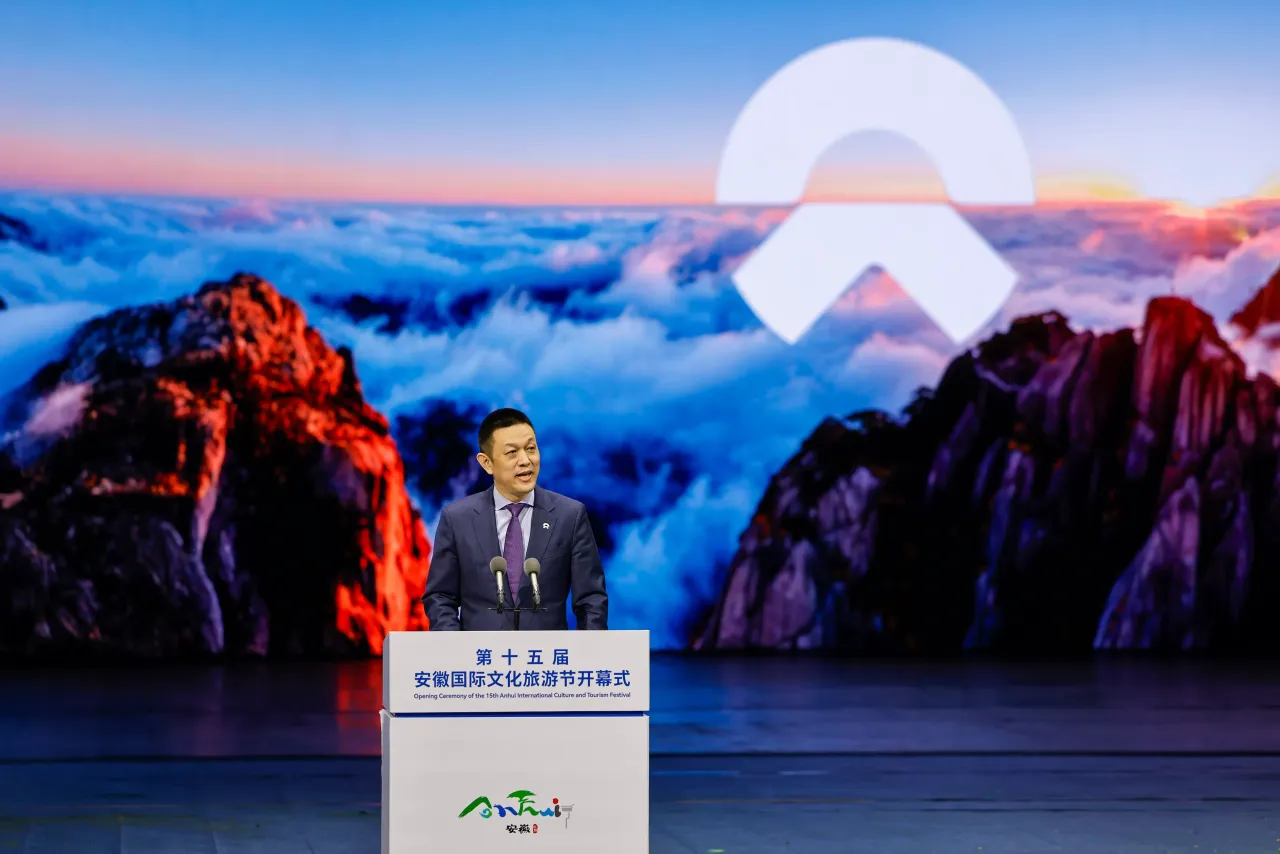


- Li said Firefly is designed to appeal to a wide range of buyers, from younger urban buyers to affluent consumers seeking compact, premium EVs.
- The branding push comes as rivals, including BYD, XPeng, Li Auto, Leapmotor, and Xiaomi, accelerate new EV launches and sub-brands.
- Firefly’s refreshed model starts at 119,800 yuan in China, or 79,800 yuan under Nio’s Battery-as-a-Service plan.
Advertisement|Remove ads.
U.S.-listed shares of Nio, Inc. (NIO) extended their losing streak for a third straight session on Monday as investors weighed intensifying competition in China’s brutal EV market, even as CEO William Li leaned harder into the company’s long-term branding by comparing Firefly’s cultural appeal to the iPhone.
Nio’s U.S.-listed stock declined 4% on Monday to end at $5.88.
Nio CEO Compares Firefly To Apple’s iPhone
Speaking during the Xuanyuan Automotive Blue Book Forum in Guangzhou over the weekend, Li said Firefly is evolving into a fashion and lifestyle-oriented brand rather than remaining purely a transportation product, according to EV.
Advertisement|Remove ads.
Li said the compact EV lineup was designed to appeal across demographics and income brackets, positioning Firefly as a product that could resonate with both younger urban consumers and affluent buyers seeking practical city vehicles. He also compared Firefly’s longer-term cultural ambitions to the way the iPhone evolved from a consumer electronics device into a broader identity-driven brand ecosystem.
“A young graduate can afford it, but a wealthy executive can also drive it to take their children to school,” Li said. The branding push comes as China’s compact EV segment becomes increasingly saturated, with automakers aggressively competing on pricing, software features, design and smart-driving tech amid slowing demand growth.
Rivals including BYD, XPeng, Li Auto, Leapmotor and Xiaomi have all accelerated model launches and sub-brand expansion efforts over the past year.
Advertisement|Remove ads.
Firefly Targets Premium Urban EV Buyers
Nio has increasingly relied on multiple vehicle brands to broaden its reach across different customer segments as competition intensifies across China’s EV industry.
Firefly is positioned as Nio’s compact urban EV brand aimed at buyers seeking premium styling and smart features without the higher price tags associated with Nio’s flagship vehicles. Last month, Nio showcased a Firefly customization concept during Milan Design Week through Senior Vice President of Design Kris Tomasson, marking the automaker’s first appearance at the globally recognized design event.
The company also refreshed Firefly’s debut model earlier this year while maintaining its starting price at 119,800 yuan ($17,600). Under Nio’s Battery-as-a-Service model, buyers can lower the upfront vehicle price to 79,800 yuan by subscribing to a monthly battery plan.
Advertisement|Remove ads.
The updated model introduced new color options, additional driver-assistance features and a software-based motor power upgrade that does not require hardware modifications. Firefly also recently began rolling out version 1.5.0 of its Aster OS software platform in China, adding support for Nio’s next-generation battery-swap infrastructure.
Li additionally said the company currently has no plans to expand Firefly into multiple models because the brand already controls 70% of China’s premium compact EV segment.
Nio Prepares New EV Launches
Alongside Firefly, Nio continues expanding its broader product lineup through its main Nio brand and its mass-market Onvo division.
Advertisement|Remove ads.
The Onvo L80 SUV officially launched on May 15 and starts at 242,800 yuan with an 85-kWh battery pack, while higher-end trims include LiDAR sensors and Nio’s in-house Shenji NX9031 smart-driving chip.
Nio is also preparing refreshed versions of the Onvo L60 and L90 models as part of its broader second-quarter product offensive. Meanwhile, the company’s flagship ES9 SUV is expected to begin deliveries later this month. Positioned above the ES8 and aimed at executive buyers, the ES9 incorporates several technologies first introduced on the ET9 sedan, including steer-by-wire, rear-wheel steering and the company’s SkyRide active suspension system.
How Do Retail Traders Feel About NIO?
On Stocktwits, retail sentiment for Nio was ‘bullish’ amid ‘high’ message volume.
Advertisement|Remove ads.

One user said, “Seems to be little interest in the ONVO L80 launch. A little surprising since the L90 launch summer of 2025 moved the stock a lot.”
Another user said, “buying NIO today is like buying Tesla in 2010”
Advertisement|Remove ads.
Nio’s U.S.-listed stock has risen 43% over the past year.
For updates and corrections, email newsroom[at]stocktwits[dot]com.
Advertisement|Remove ads.
Read Next: GOVX Stock Became A Hot Biodefense Trade Amid Ebola, Hantavirus Concerns
Comments posted here will also appear on symbol pages.

Latest News
/filters:format(webp)https://news.stocktwits-cdn.com/large_rocketlab_jpg_fcfa5bb73e.webp)
/filters:format(webp)https://news.stocktwits-cdn.com/IMG_8805_JPG_6768aaedc3.webp) Deepti Sri·1m ago
Deepti Sri·1m ago/filters:format(webp)https://news.stocktwits-cdn.com/large_Getty_Images_1694437094_56a69176d2.jpg)
/filters:format(webp)https://news.stocktwits-cdn.com/Aashika_Suresh_Profile_Picture_jpg_2acd6f446c.webp) Aashika Suresh·37m ago
Aashika Suresh·37m ago/filters:format(webp)https://news.stocktwits-cdn.com/large_Getty_Images_2295800057_fd745de575.jpg)
/filters:format(webp)https://news.stocktwits-cdn.com/shivani_photo_jpg_dd6e01afa4.webp) Shivani Kumaresan·2h ago
Shivani Kumaresan·2h ago/filters:format(webp)https://news.stocktwits-cdn.com/large_Oil_drill_06147e8349.webp) Aashika Suresh·2h ago
Aashika Suresh·2h ago/filters:format(webp)https://news.stocktwits-cdn.com/large_pharma_stock_jpg_490939e580.webp) Deepti Sri·2h ago
Deepti Sri·2h ago/filters:format(webp)https://news.stocktwits-cdn.com/large_Getty_Images_2203983775_jpg_74bdd5dd43.webp) Aashika Suresh·2h ago
Aashika Suresh·2h ago