


Advertisement|Remove ads.
SpaceX, Anthropic IPOs Shut Out Retail Investors, Says Coinbase CEO — Brian Armstrong Resumes Buying Back COIN Shares
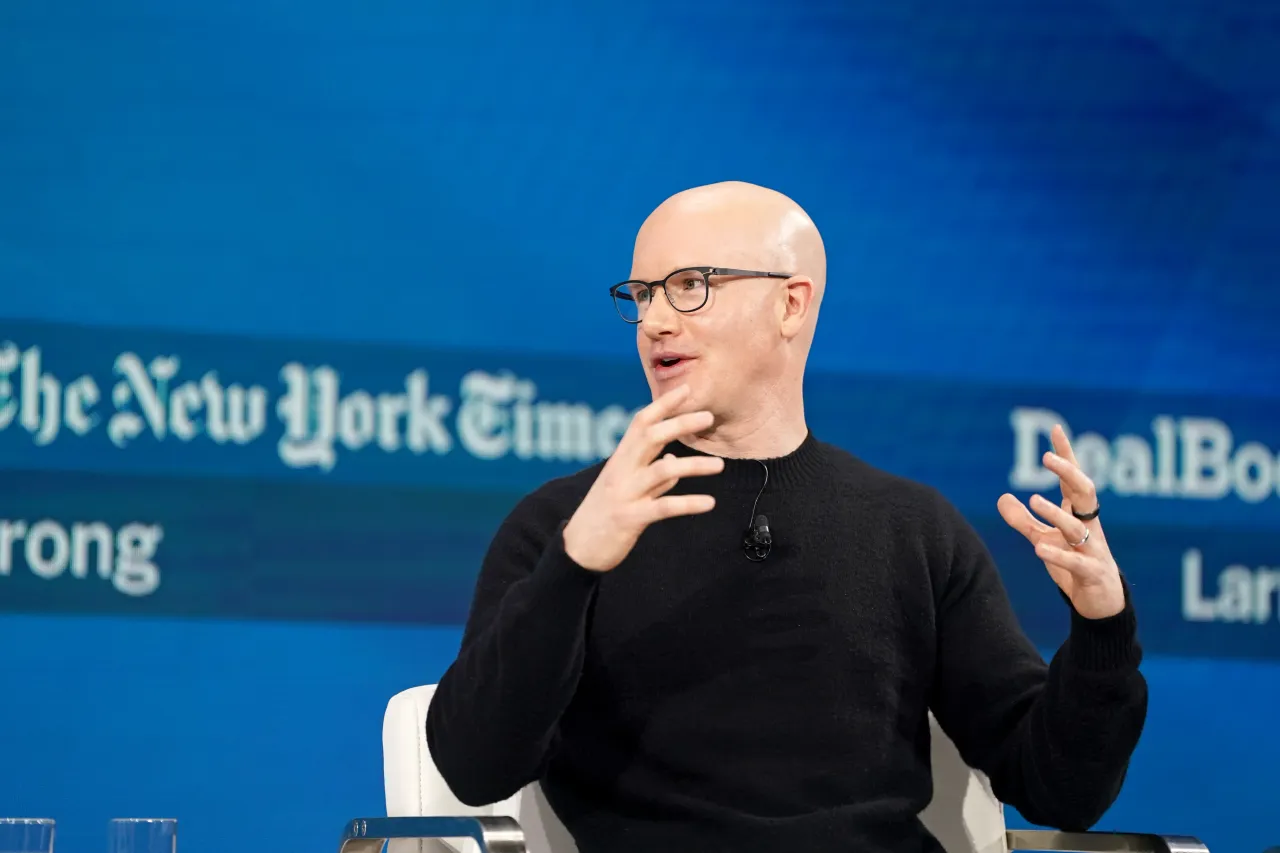


- Brian Armstrong said that retail investors should be able to qualify for private-market investments.
- Currently, brokers prohibit 'flipping,' where investors sell their shares within two to four weeks, restricting them from future IPOs.
- Armstrong also revealed that Coinbase has about $2 billion left under its $4 billion buyback plan as of Sept. 30.
Advertisement|Remove ads.
Wall Street's biggest IPOs were creating fortunes for only investors, but ordinary retail traders were getting a smaller piece of the pie, according to Coinbase (COIN) CEO Brian Armstrong. Late on Tuesday, he called for changes to private market investment rules following the blockbuster listings of SpaceX (SPCX) and Anthropic (ANT), asking that retail investors be gauged on a “financial literacy test instead of a financial means test.” Meanwhile, his own firm has been back again in the spotlight after it started repurchasing its own shares this quarter.
On Tuesday, Armstrong said in a post on X that "The 3 largest IPOs in history (SPCX, ANT, SKHY) all happened in 2026. Great for the companies and the small number of investors who got in when they were private," adding that while it was “great for average investors who can only buy at IPO prices,” ordinary people should be able to qualify by passing "a financial literacy test, instead of a financial means test."

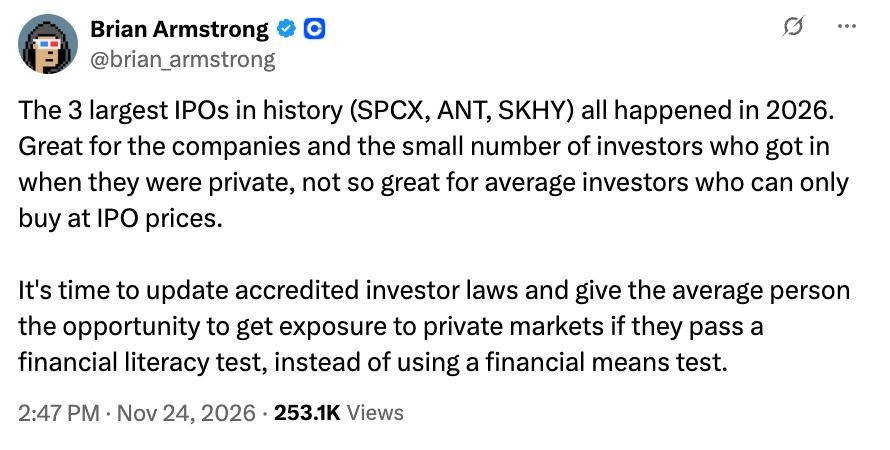
Why Retail Investors Are Left Out Of Major IPOs
Banks sell mostly to large funds in these IPOs. The funds are expected to hold the stock, help set the price, and buy large amounts. Retail orders are generally small and are perceived as having a better chance of quick sales. This is why brokers prohibit “flipping,” where investors sell their shares within two to four weeks, restricting them from future IPOs.
Advertisement|Remove ads.
The financial means test Armstrong is talking about is the one currently used by the SEC, which allows an individual to invest in private companies only if they make more than $200,000 per year or have a net worth of more than $1 million. Or a financial literacy test could let people qualify based on understanding the risks, not just their wealth.
While Armstrong wants to make early-stage investment opportunities more accessible to everyday investors, he also highlighted how Coinbase is positioning itself amid the changing financial landscape.
Buybacks Are Back
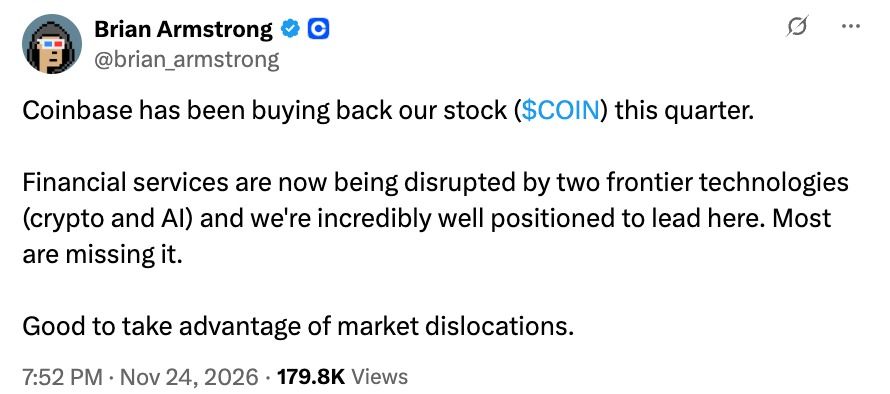
Armstrong shared that “Coinbase has been buying back our stock ($COIN) this quarter.” “Crypto and AI are disrupting financial services, and Coinbase is incredibly well positioned to lead here,” he said. "Most are overlooking it," he added.
Advertisement|Remove ads.
“Good to take advantage of dislocations in the market,” he said. In a follow-up post, he added the company was spending capital “within our disclosed authorization.”
The company’s buybacks had nearly stopped in the third quarter, when it bought back some 38,000 shares for $5.3 million, according to its quarterly filing. That was down about 95% from 814,000 shares, worth $121.3 million, in the second quarter, according to its earlier filing. The company had about $2 billion left to spend under its $4 billion share-repurchase plan as of Sept. 30.
Buying Came Early
Much of this year's buying came early. Coinbase bought back around 7.1 million shares for about $1.19 billion in the first nine months of 2026. About 6.3 million of those shares were bought in the first quarter alone.
Advertisement|Remove ads.
COIN stock was down by 0.54% during overnight trading hours. On Stocktwits, retail sentiment around COIN remained ‘bearish,’ while chatter around it stayed at ‘normal’ levels over the past day.
Other crypto companies have been buying back shares, too. Ethereum (ETH) treasury firm SharpLink (SBET) said on Monday it bought back $10 million of its stock, according to the SEC filing.
Read more: HOOD, COIN Get Wedbush Outperform Ratings: Here’s What The Firm Sees In Fintech’s Next Growth Phase
Advertisement|Remove ads.
For updates and corrections, email newsroom[at]stocktwits[dot]com.

Latest News
 Anushka Basu·9m ago

 Shivani Kumaresan·15m ago

 Aashika Suresh·22m ago
 Yuvraj Malik·50m ago
 Aashika Suresh·1h ago

 Deepti Sri·1h ago
Comments posted here will also appear on symbol pages.