


Advertisement|Remove ads.
SpaceX Reportedly Slashes Some Nvidia Chip Rents — AI Researcher Sees Musk’s Edge In A GPU Glut
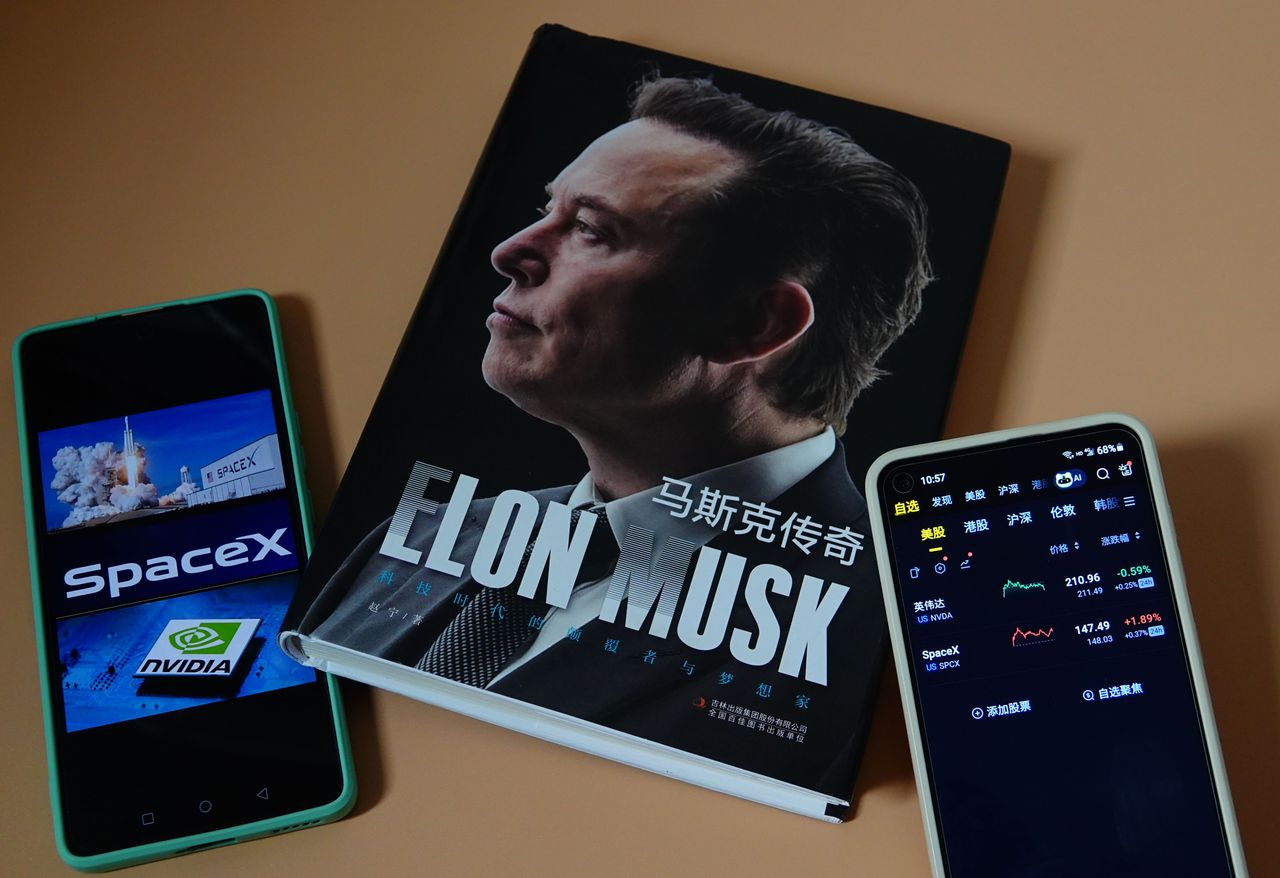


- SpaceX reportedly cut short-term rents for small Nvidia Blackwell clusters by 20% to 35%, bringing rates to $10-$12 per chip per hour.
- AI researcher Ben Goertzel said Starlink earnings and IPO cash give SpaceX room to wait out a GPU glut.
- SemiAnalysis said $12 per chip per hour still fits its GB300 revenue model and expects SpaceX’s 2027 expansion to stay on track.
Advertisement|Remove ads.
SpaceX has reportedly cut rental rates for some Nvidia chips by as much as 35%. If chip supply outpaces demand, AI researcher Ben Goertzel sees two reasons Elon Musk’s company can afford to wait it out: cash from its IPO and earnings from Starlink.
Last month, Musk told investors, “We could rent out our compute several times over if we said yes to everyone.” Now SpaceX (SPCX) is quoting $10 to $12 an hour per Nvidia (NVDA) Blackwell chip for small, short-term rentals, down from $15 to $15.50, a cut of 20% to 35%, according to a SemiAnalysis note cited by Futu News.

Goertzel Sees Starlink And IPO Cash Giving SpaceX An Edge
Meanwhile, SingularityNET founder Ben Goertzel said that a chip owner can be right about AI demand and still run out of money waiting for customers. “Debt is still debt, depreciation is still depreciation, and a data center financed at 7% still has to earn more than 7%,” he said.
Advertisement|Remove ads.
Timing matters because, in Goertzel’s view, much of the hardware bought today could be obsolete in about five years. “This is the process I described last week, where the useful question is less whether AI is a bubble than who can afford to be a little early: firms funding the buildout from cash flow can wait out a glut, while the debt-funded ones may not get the chance.”
“SpaceX probably lands on the right side of the split too: it raised $75 billion in its June IPO, has the Starlink business underneath it, owns xAI and has been building out its own compute,” Goertzel said.
SpaceX’s IPO ultimately raised $85.7 billion after underwriters bought additional shares. Last week, Apollo and Goldman Sachs priced about $44 billion in financing for Nvidia’s next-gen Vera Rubin chips and equipment that SpaceX plans to lease.
Advertisement|Remove ads.
Goertzel: A Dot-Com Replay Could Put AI Assets Up For Sale
For companies that borrowed heavily, Goertzel sees a possible replay of the dot-com bust: “The more leveraged corners of the AI industry may go through something closer to what the dot-com infrastructure players went through in 2000-2002, with distressed sales and the stronger players buying up their assets cheaply.”
He sees the biggest cloud operators as the likely buyers. “Who comes out of that kind of consolidation well? The hyperscalers with huge operating cash flows, obviously,” Goertzel said.
Among the AI developers, Goertzel flagged Anthropic for raising over $80 billion in its IPO and another $26 billion in a placement just as financing was getting tighter. “OpenAI is less clear to me,” he said. Much of the debt behind OpenAI’s expansion sits with partners such as Oracle, CoreWeave and SoftBank. The warning sign for the wider market, he said, would be financing trouble spreading to the bonds of the cloud giants themselves.
Advertisement|Remove ads.
SpaceX Reportedly Seeks A New H200 Renter
SpaceX is reportedly looking for a new customer for about 50,000 Nvidia H200 chips just as Anthropic (ANT) plans to let its lease on the chips expire.
SpaceX is apparently asking $5 per chip per hour for rentals starting in early 2027, about 23% below the $6.53 rate Ornn recorded on Monday. Even at the discount, the chips could bring in $2.2 billion a year if all 50,000 were rented around the clock.
The H200 lease is one part of a much larger relationship. Anthropic’s agreements with SpaceX cover up to $120.5 billion in spending through 2029. Their initial commitments end in January and March 2027, after which either company can cancel the relevant agreement with 90 days’ notice.
Advertisement|Remove ads.
New Street Shrugs Off Lower Rents
SpaceX cut rates just weeks after SemiAnalysis had tracked rising rents. Still, the high end of its new range still matches what SemiAnalysis assumes for Nvidia’s GB300 chips. At $12 per chip per hour, the firm estimates annual revenue of about $50 million per megawatt of computing capacity.
It expects U.S. limits on remote chip access to put further pressure on short-term rents in 2027, but still sees attractive returns on Blackwell systems and higher rents for the next-gen Vera Rubin chips. It expects SpaceX’s expansion to stay on track.
“We do not believe this is a price collapse,” New Street Research said, according to Futu News. In the firm’s view, SpaceX was giving smaller customers a rate closer to what bulk buyers such as Anthropic and Google already paid.
Advertisement|Remove ads.
New Street estimates that one fully rented gigawatt of Blackwell chips could generate $50 billion a year on an investment of about $8 billion. Even at $5 per chip per hour for older H200s, it puts annual revenue at $30 billion per gigawatt on a $6.5 billion investment. This clears the firm’s $25 billion annual revenue benchmark for SpaceX.
However, some rental quotes have moved the other way. Nebius raised its on-demand B300 rate 20% to $9.50 per chip per hour on Oct.1, New Street noted. Some Hopper renewal quotes reported on Nov.17 were as much as twice the rates on earlier multiyear contracts.
New Street expects SpaceX to nearly double its spending on AI processors in 2027. It sees room for rents to fall as new chips come online and restrictions in Southeast Asia shift capacity back to the U.S., but still projects long-term gross margins of 40% to 50% for SpaceX’s AI cloud business.
Advertisement|Remove ads.
How Do Retail Traders Feel About SPCX And NVDA?
On Stocktwits, retail sentiment was ‘bullish’ for both SPCX and NVDA on Wednesday, with ‘normal’ message volume for SPCX and ‘high’ volume for NVDA.
While SPCX is 6% below its June IPO price, NVDA is down nearly 20% so far this year.
For updates and corrections, email newsroom[at]stocktwits[dot]com.
Advertisement|Remove ads.

Latest News

 Deepti Sri·22m ago

 Shivani Kumaresan·51m ago

 Aashika Suresh·1h ago

 Yuvraj Malik·1h ago
 Deepti Sri·1h ago
 Shivani Kumaresan·2h ago
Comments posted here will also appear on symbol pages.