


Advertisement|Remove ads.
Cathie Wood’s Flagship Ark Fund Just Logged Its Worst Quarter In Over A Year — One Mega-Cap Stock Is Largely To Blame
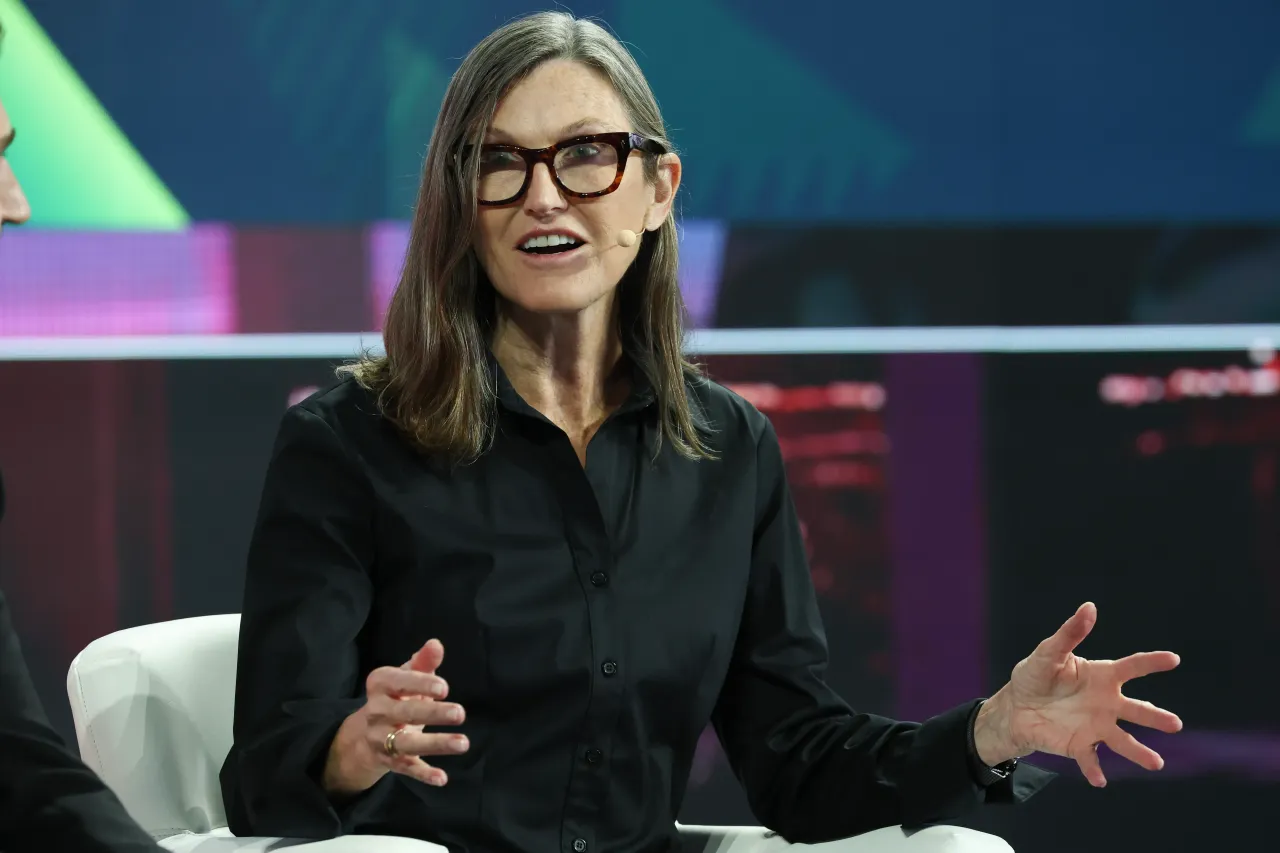


- ARKK fell 12% in the latest quarter, its worst performance since early 2025.
- Ark maintains a $2,600 Tesla price forecast for 2029, saying the estimate does not yet include upside from the Optimus humanoid robot.
- Cathie Wood said autonomous mobility could scale into a $10 trillion opportunity.
Advertisement|Remove ads.
Cathie Wood’s ARK Innovation ETF (ARKK) logged its worst quarter since early 2025, as declines in Tesla weighed heavily on its portfolio even as the fund’s CEO reiterated her long-term conviction in robotaxis and humanoid robots.
The ARKK ETF fell 12% in the latest quarter, marking its worst performance since the January 2025 quarter, underperforming the benchmark S&P 500 and Nasdaq indexes. Tesla accounts for 10.58% of the portfolio — the largest by weighting — as of the end of March, leaving the fund exposed to swings in the stock during a volatile stretch for the EV maker.

ARKK invests in companies spanning AI, autonomous mobility, digital assets, cloud platforms and precision medicine. Over the past year, ARKK has largely tracked Tesla, with the fund rising about 42% compared with a 43% gain in TSLA, underscoring the stock’s outsized influence on the ETF’s returns.
Advertisement|Remove ads.
Tesla Expands Beyond EVs Into Robotaxis, AI And Robotics
TSLA stock’s trajectory since early 2025 helps explain much of the pressure on ARKK, as investor focus shifted away from vehicle deliveries toward autonomy and AI. The year began with concerns about slowing delivery growth amid intensifying competition, particularly from China’s BYD, which overtook Tesla as the world’s largest electric-vehicle seller by volume.
Tesla cut prices in China, relied more on incentives in Europe, and faced tighter eligibility for U.S. federal EV tax credits across parts of its lineup. Since then, attention has shifted more toward autonomy, with Tesla launching its first robotaxi pilot in Austin, using about 10 Model Y vehicles operating within a restricted service area and with a passenger-seat safety monitor on board.
By January, the company began operating a limited number of robotaxis without safety monitors, though most of the roughly 500 vehicles now running across Austin and the Bay Area remain supervised. Currently, Tesla’s Full Self-Driving (FSD) system has logged over 8.9 billion miles of driver-assisted driving, though the company hasn’t disclosed cumulative miles without a human driver. In comparison, Alphabet’s robotaxi unit Waymo has logged over 200 million fully autonomous miles as of February.
Advertisement|Remove ads.
Tesla also produced its first Cybercab robotaxi at Giga Texas in February, with output expected to begin gradually from April. Meanwhile, the long-delayed next-gen Roadster is now expected to be unveiled later this month after repeated timeline shifts since its original announcement in 2017.
At the same time, the company continued to expand its energy-storage business and advance its Optimus humanoid robot and AI training infrastructure to support FSD, underscoring Musk’s view that autonomy and robotics could eventually account for the majority of Tesla’s business.
Wood Sees Autonomy As Tesla’s Biggest Revenue Driver
Wood said autonomy remains key to Ark’s long-term investment case for Tesla. “Autonomous mobility, we think, will be the biggest revenue generator. It’ll scale the most quickly, to the USD 10 trillion mark,” Wood told Morningstar in February.
Advertisement|Remove ads.
She said Tesla could reach autonomy across a significant portion of major U.S. cities sooner than many investors expect. “By the end of this year, depending on the regulatory environment, Tesla will be autonomous in 25% to 50% of all of the U.S. major cities,” she said. “Technology is here. Regulation has to catch up.”
Wood Keeps $2,600 Tesla Forecast For 2029
Despite recent volatility, Ark continues to project a whopping long-term upside for Tesla. “Our 2029 forecast is $2,600,” Wood said, implying a market cap of $9.75 trillion. She added that the estimate does not include potential contributions from Tesla’s Optimus humanoid robot program.
“We’re beginning to understand that while we were too aggressive on autonomous mobility, robotaxis, we may be too conservative on the humanoid robot opportunity,” Wood added.
Advertisement|Remove ads.
She also pointed to Tesla’s global driving data advantage as a key reason the firm remains confident in its autonomy strategy. “Tesla knows the world’s roads from a data point of view, we think, better than any other auto manufacturer or technology company out there,” Wood said.
How Do Retail Traders Feel About ARKK And TSLA?
Retail sentiment toward ARKK has remained largely in the ‘bullish’ zone on Stocktwits over the past quarter, while sentiment toward TSLA shifted between ‘bearish’ and ‘extremely bearish’ during the same period.
Message volumes jumped for both stocks, climbing more than 300% for TSLA and 80% for ARKK over the quarter.
Advertisement|Remove ads.
For updates and corrections, email newsroom[at]stocktwits[dot]com.
Comments posted here will also appear on symbol pages.

Latest News
/filters:format(webp)https://news.stocktwits-cdn.com/large_Getty_Images_2261740761_jpg_17808aac0f.webp)
/filters:format(webp)https://news.stocktwits-cdn.com/Aashika_Suresh_Profile_Picture_jpg_2acd6f446c.webp) Aashika Suresh·21m ago
Aashika Suresh·21m ago/filters:format(webp)https://news.stocktwits-cdn.com/large_Getty_Images_2244673123_9da00e5574.jpg)
/filters:format(webp)https://news.stocktwits-cdn.com/shivani_photo_jpg_dd6e01afa4.webp) Shivani Kumaresan·26m ago
Shivani Kumaresan·26m ago/filters:format(webp)https://news.stocktwits-cdn.com/large_Getty_Images_2290481120_280ff97d03.jpg) Shivani Kumaresan·1h ago
Shivani Kumaresan·1h ago/filters:format(webp)https://news.stocktwits-cdn.com/large_tesla_stock_jpg_9d4cbf6a46.webp)
/filters:format(webp)https://news.stocktwits-cdn.com/IMG_8805_JPG_6768aaedc3.webp) Deepti Sri·1h ago
Deepti Sri·1h ago/filters:format(webp)https://news.stocktwits-cdn.com/large_oil_stocks_jpg_6935abe231.webp) Aashika Suresh·2h ago
Aashika Suresh·2h ago/filters:format(webp)https://news.stocktwits-cdn.com/large_Getty_Images_2245341683_0cb2bc89f5.jpg)
/filters:format(webp)https://news.stocktwits-cdn.com/1707726834303_jpg_11f20a9aa9.webp) Shashank Nayar·4h ago
Shashank Nayar·4h ago