


Advertisement|Remove ads.
Crude Oil To Rally More Or Roll Over? What Investors Need To Know As Trump's 60-Day Iran War Deadline Expires Tomorrow
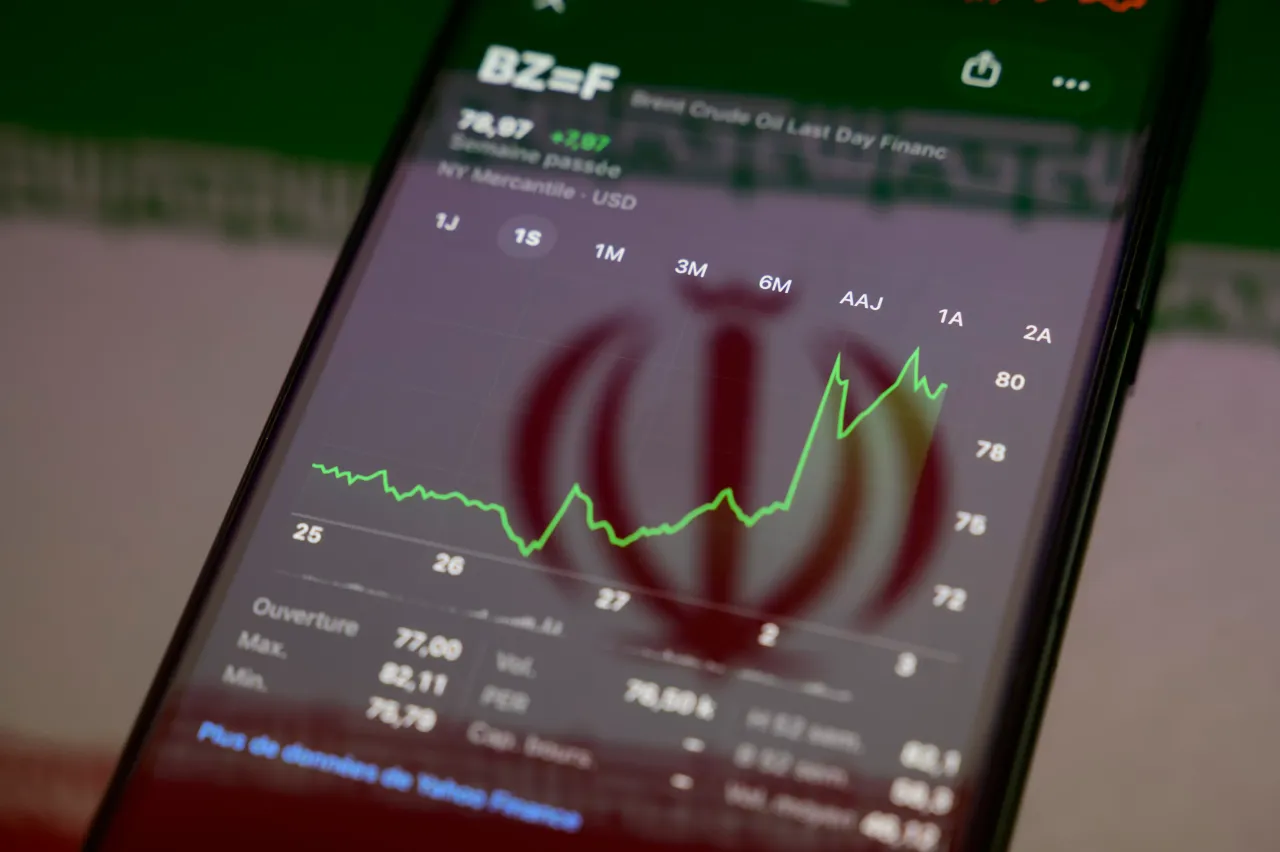


- The War Powers Resolution is a federal law that limits the power of any President of the U.S. by requiring that any international military hostilities, or war, be authorized by Congress for 60 days.
- WTI Crude and Brent crude futures have surged about 50% since the start of the conflict.
- ING Research on Tuesday raised its oil price forecasts, saying that its base case sees ICE Brent averaging $104 per barrel in the second quarter, up from $96 previously.
Advertisement|Remove ads.
Crude oil prices have shot through the roof since the start of U.S.-Israel coordinated strikes on Iran amid a choked Strait of Hormuz that has disrupted global supplies.
Although U.S. President Donald Trump has announced a ceasefire extension and also said that the Iran war could end “very soon,” the critical waterway remains blocked without clarity on when negotiations will resume. However, Trump now faces a May 1 deadline under the War Powers Resolution, which could be a pivotal moment for geopolitics and, in turn, oil prices.
What Is The War Powers Act?
The 1970s-era War Powers Resolution or the War Powers Act is a federal law that checks the power of any President of the United States by limiting international military hostilities, or war in specific terms, to 60 days without explicit Congressional authorization.
Advertisement|Remove ads.
Although the strikes on Iran began on February 28, Trump did not formally notify Congress until March 2, triggering the 60-day period, which will expire on Friday.
Many Democratic lawmakers have said that Trump had launched the war against Iran without legal authority, as he had not sought congressional authorization first. Meanwhile, Trump has denied this and also argued that the federal law is unconstitutional.
The president has also said that he's avoiding calling the conflict in the Middle East a “war” to bypass the concerns around the fact that Congress has not sanctioned this. "I won't use the word 'war' because they say, if you use the word war, that's maybe not a good thing to do," the president reportedly said. "They don't like the word 'war,' because you're supposed to get approval, so I'll use the word 'military operation,' which is really what it is."
Advertisement|Remove ads.
What's Happening With Oil Prices?
WTI Crude and Brent crude futures have surged about 50% since the start of the conflict. The United States Oil Fund (USO), which tracks the price of WTI crude oil, has rallied more than 70% since February 28.
At the time of writing, Brent crude futures expiring in June were trading about 1.71% higher, crossing the $113 a barrel mark, nearing monthly highs. Meanwhile, WTI crude futures expiring in May climbed 1.88% to $101.81 a barrel. Before the war began, they were trading in the range of $70 to $73 a barrel.
Analysts Raise Oil Forecasts As Supply Risks Persist
ING Research on Tuesday raised its oil price forecasts, saying that its base case sees ICE Brent averaging $104 per barrel in the second quarter, up from $96 previously, “as peace talks between the US and Iran stall, and with no immediate signs of a resumption in flows through the Strait of Hormuz.”
Advertisement|Remove ads.
Warren Patterson, Head of Commodities Strategy at the firm, said that it was based on the assumption that even if oil flows through the Strait of Hormuz start resuming in May and June, they will likely remain below pre-war levels for most of the year.
“The upside risks to this assumption are a near full closure of the Strait of Hormuz persisting through May, which would likely see Brent finding a floor above $100/bbl for the remainder of the year,” Patterson added.
Over the weekend, Goldman Sachs also raised its oil price outlook, saying Brent crude would average $90 per barrel in the fourth quarter of 2026 and West Texas Intermediate would average $83 per barrel, according to Investing.com.
Advertisement|Remove ads.
“The economic risks are larger than our crude base case alone suggests because of the net upside risks to oil prices, unusually high refined product prices, product shortages risks, and the unprecedented scale of the shock,” the bank’s analysts said in a note.
OPEC Shake-Up Brings In More Uncertainty
Meanwhile, the United Arab Emirates announced its exit from the Organization of the Petroleum Exporting Countries (OPEC and OPEC+) effective from May 1, which could also put additional pressure on oil prices.
USO, XLE, SCO: What’s Retail Saying?
On Stocktwits, retail sentiment around USO was in the ‘bearish’ territory at the time of writing, while sentiment around the Energy Select Sector SPDR Fund (XLE) was also in the bearish territory.
Advertisement|Remove ads.
The ProShares UltraShort Bloomberg Crude Oil (SCO), which is an exchange-traded fund that bets on falling oil prices, was also trending in the ‘bearish’ territory at the time of writing.
One user said they were shorting oil “trade through end of week.”
Advertisement|Remove ads.
The USO has more than doubled since the start of this year and the XLE has gained more than 26%. Meanwhile, the SCO has declined more than 64% in the same time.
For updates and corrections, email newsroom[at]stocktwits[dot]com.
Comments posted here will also appear on symbol pages.

Latest News
/filters:format(webp)https://news.stocktwits-cdn.com/large_Getty_Images_2183604828_0179169ddb.jpg)
/filters:format(webp)https://news.stocktwits-cdn.com/Anushka_Basu_make_me_smile_in_the_picture_b92832aa_af59_4141_aacc_4180d2241ba8_1_2_png_1086e0ed8c.webp) Anushka Basu·7h ago
Anushka Basu·7h ago/filters:format(webp)https://news.stocktwits-cdn.com/large_Getty_Images_1244247217_jpg_900a48e334.webp) Anushka Basu·8h ago
Anushka Basu·8h ago/filters:format(webp)https://news.stocktwits-cdn.com/large_Getty_Images_2187781361_2f00b8c65a.jpg) Anushka Basu·10h ago
Anushka Basu·10h ago/filters:format(webp)https://news.stocktwits-cdn.com/large_arthur_hayes_2026_OG_jpg_9f3524f8b1.webp) Anushka Basu·11h ago
Anushka Basu·11h ago/filters:format(webp)https://news.stocktwits-cdn.com/large_Tom_Lee_BMNR_64157a5786.webp) Anushka Basu·13h ago
Anushka Basu·13h ago/filters:format(webp)https://news.stocktwits-cdn.com/large_Getty_Images_2194650023_jpg_2af2244b5a.webp)
/filters:format(webp)https://st-everywhere-cms-prod.s3.us-east-1.amazonaws.com/i_OS_App_Icon_1_8054f2a2fe.png) Stocktwits News Desk·13h ago
Stocktwits News Desk·13h ago