


Advertisement|Remove ads.
Iran War Isn’t Driving US Stock Markets, Interest Rates Are, Says Jim Cramer


- Last week, Powell said during an interview at Harvard University that the Fed was not yet facing the crunch of the Iran war’s oil supply shock as it was too soon to know its impact.
- This is what helped stabilize stocks, Cramer said, despite escalations in the war in the Middle East.
- Cramer, however, also noted that the U.S. stock markets still had significant risks to confront, including inflation pressures, geopolitical uncertainty, and weaker outlooks from companies.
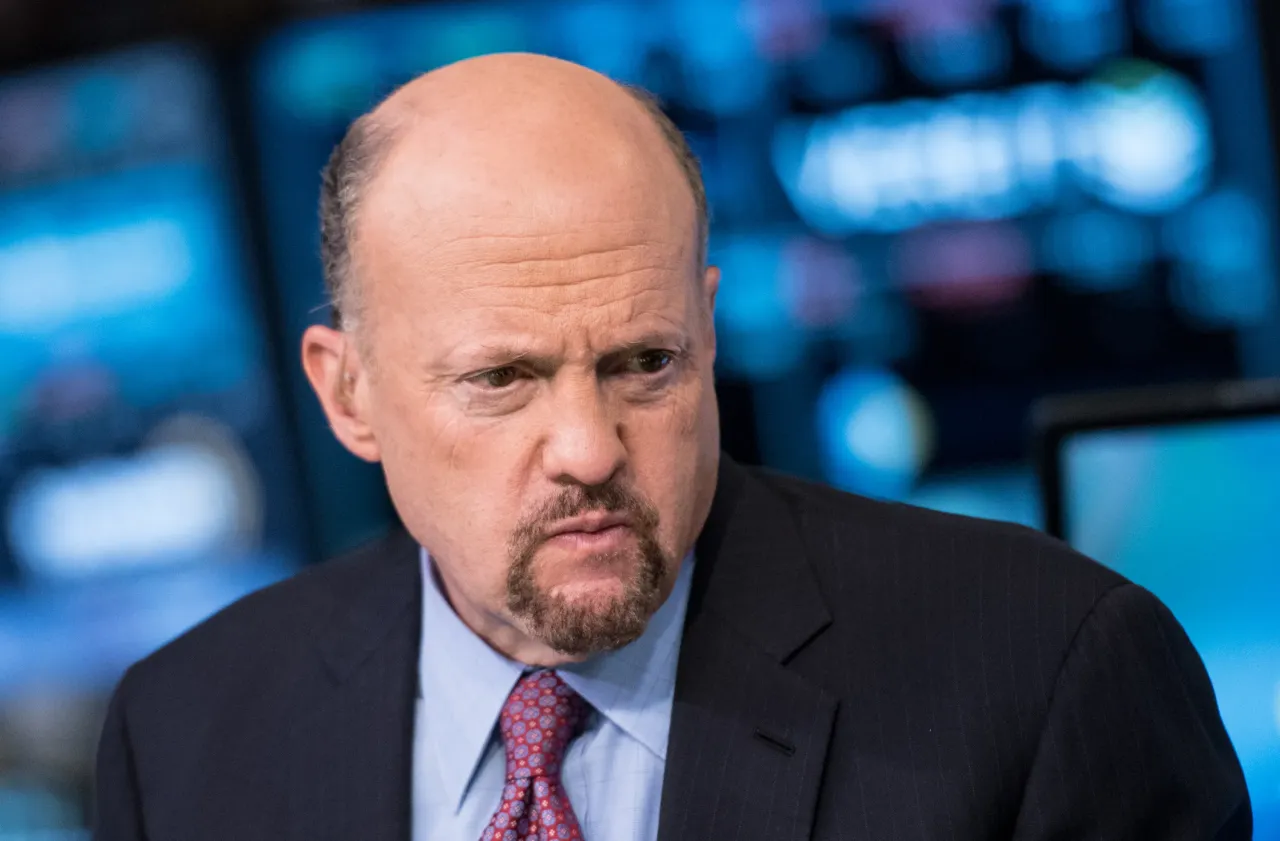
The real driver of the U.S. stock market is not geopolitics and the war in Iran, but interest rates, said CNBC’s Jim Cramer.
The ‘Mad Money’ host said on Monday that investors should not start calling a market bottom just yet, while reiterating that the S&P 500’s latest bottom in March wasn’t to do with the stocks either, but to do with interest rates.
Cramer said that the reaction was in response to Federal Reserve Chair Jerome Powell indicating that the apex bank would likely hold off on raising interest rates.
Meanwhile, U.S. stocks closed in the green on Monday despite President Donald Trump’s latest remarks hinting at potentially escalating the war in Iran.
Powell’s Remarks
Last week, Powell said during an interview at Harvard University that the Fed was not yet facing the crunch of the Iran war’s oil supply shock as it was too soon to know its impact. The Fed chair also said that the central bank would take into consideration the broader context before making a monetary policy decision, hinting that the Fed would hold off on raising interest rates.
“That’s how important Powell’s comments were,” Cramer said on Monday, highlighting its impact on stocks, oil, and bonds.
This is what helped stabilize stocks, Cramer said, despite escalations in the war in the Middle East. “If rates were set to go up,” he said, “we would have begun a bear market of pretty substantial proportions.”
The Real Test
Cramer, however, also noted that the U.S. stock markets still had significant risks to confront, including inflation pressures, geopolitical uncertainty, and weaker outlooks from companies.
The real test, he said, would depend on the earnings report from companies expected in the coming weeks. Many big companies, including JPMorgan Chase, Citigroup, Netflix, and PepsiCo. are expected to report quarterly results next week.
Meanwhile, U.S. stocks closed marginally higher on Monday. The SPDR S&P 500 ETF (SPY), which tracks the S&P 500 index, closed 0.47% higher, the Invesco QQQ Trust ETF (QQQ) was up 0.6% at close, and the SPDR Dow Jones Industrial Average ETF Trust (DIA) was up 0.37%.
Oil also climbed higher. The United States Oil Fund ETF (USO) closed up 0.74%.
Retail sentiment on Stocktwits around the S&P 500 ETF was in the ‘extremely bearish’ territory.
For updates and corrections, email newsroom[at]stocktwits[dot]com.

Latest News
/filters:format(webp)https://news.stocktwits-cdn.com/large_new_york_stock_exchange_jpg_e1f85c0d8c.webp)
/filters:format(webp)https://st-everywhere-cms-prod.s3.us-east-1.amazonaws.com/Rounak_Author_Image_7607005b05.png) Rounak Jain·15m ago
Rounak Jain·15m ago/filters:format(webp)https://news.stocktwits-cdn.com/large_capitol_market_OG_jpg_8111684a8f.webp)
/filters:format(webp)https://st-everywhere-cms-prod.s3.us-east-1.amazonaws.com/Prabhjote_DP_67623a9828.jpg) Prabhjote Gill·21m ago
Prabhjote Gill·21m ago/filters:format(webp)https://news.stocktwits-cdn.com/large_Getty_Images_2263602596_jpg_6eb5e30d9e.webp)
/filters:format(webp)https://news.stocktwits-cdn.com/IMG_6979_jpg_a2a1032fdc.webp) Ahmed Farhath·47m ago
Ahmed Farhath·47m ago/filters:format(webp)https://news.stocktwits-cdn.com/large_nyse_OG_2_jpg_0e4e1c68f2.webp) Prabhjote Gill·51m ago
Prabhjote Gill·51m ago/filters:format(webp)https://news.stocktwits-cdn.com/large_Getty_Images_2243840626_jpg_6a78fa8844.webp)
/filters:format(webp)https://news.stocktwits-cdn.com/vivekkrishnanphotography_58_jpg_0e45f66a62.webp) Arnab Paul·59m ago
Arnab Paul·59m ago/filters:format(webp)https://news.stocktwits-cdn.com/large_Getty_Images_2198547045_jpg_e6c30993de.webp)
/filters:format(webp)https://news.stocktwits-cdn.com/Chinmay_Rautmare_Photo_jpeg_96dd37efd0.webp) Chinmay Rautmare·1h ago
Chinmay Rautmare·1h ago