


Advertisement|Remove ads.
Palo Alto CEO Calls AI-Led Software Selloff ‘Paranoid' — Sees Big Buying Window In Cybersecurity And Infra Stocks
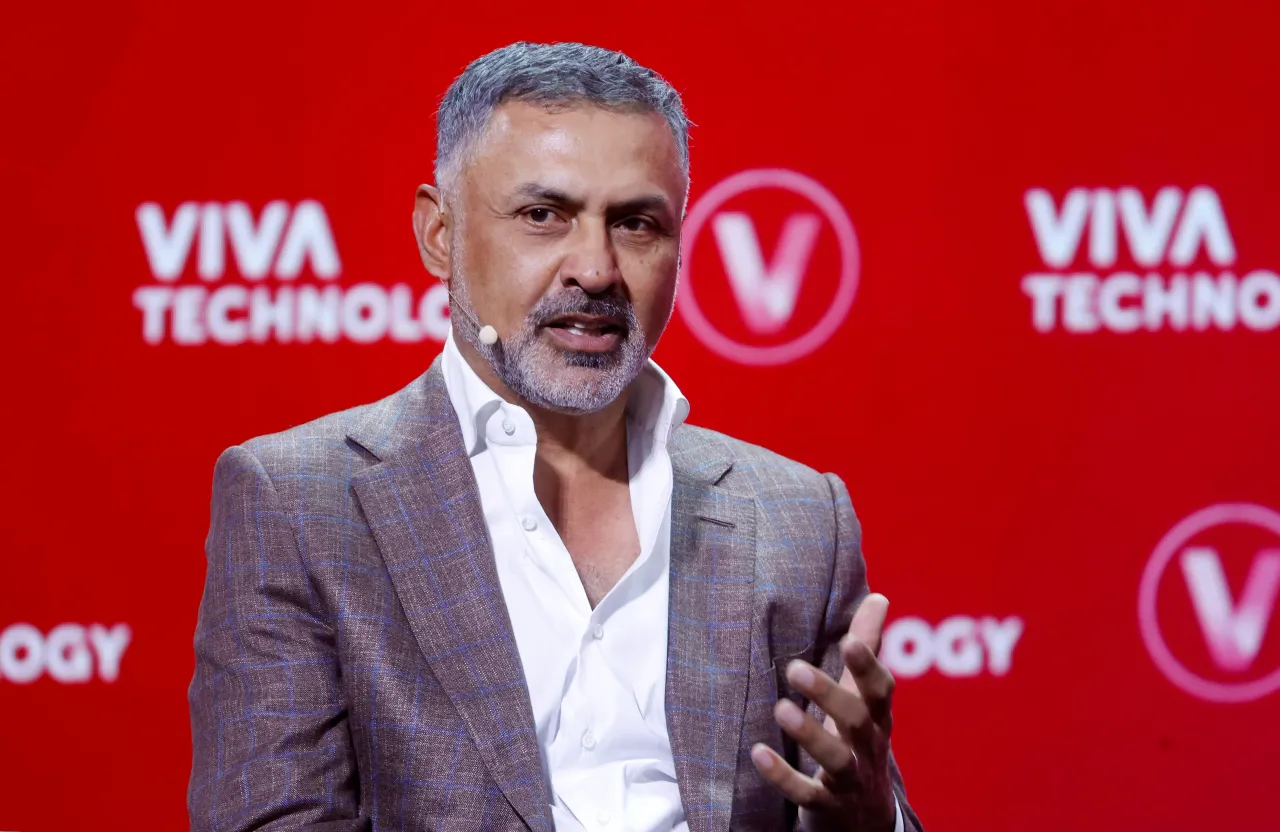


- Arora indicated that infrastructure software and cybersecurity businesses are bright spots amid a sharp selloff in software stocks.
- Palo Alto is among the leaders in enterprise cybersecurity and broadly competes with CrowdStrike, Zscaler, and SentinelOne.
- Arora said that certain software companies would be successful in retooling their solutions for AI and in maintaining or even improving their market position.
Advertisement|Remove ads.
Palo Alto Networks Inc. CEO Nikesh Arora thinks the market has yet to clearly differentiate between software companies based on how AI will impact them, arguing that segments like analytical and creative software firms face the most disruption, while infrastructure software and cybersecurity players stand to benefit.
SaaS stocks across categories such as design, enterprise productivity, coding, and cybersecurity have been hammered this year, as new AI tools from Anthropic, OpenAI, and Google reshape the competitive landscape.
Market moves suggest investors see parts of the software sector as vulnerable to AI disruption, though some analysts argue these companies can endure by reconfiguring their offerings for the AI era. The iShares Expanded Tech-Software Sector ETF (IGV) is down 21% year to date, compared to the 4.2% gains in the benchmark-tracking SPDR S&P 500 ETF Trust (SPY).
Advertisement|Remove ads.
“I would have expected the market to start discerning between SaaS that is impacted by AI, SaaS that needs to evolve, and SaaS that benefits from AI. Analytical SaaS, Creative SaaS is in category 1, System or Record, Human workflow and Engagement and Productivity are in category 2 and Infrastructure SaaS and Cybersecurity are in 3,” Arora wrote in an X post during early hours on Friday.
“This constant paranoid reaction of the market will continue to create buying opportunities for the discerning.”
Adobe and Figma are down 32% and 54% year-to-date, respectively. Atlassian Corp, Workday, Intuit and Zscaler are among the top five losers on the Nasdaq-100. Microsoft is down 14% and is the second-worst performer in the Magnificent Seven Group.
Advertisement|Remove ads.
Arora said that certain software companies would be successful in retooling their solutions with AI, and in maintaining or even improving their market position.
“The process will get better the current players will have to either refactor their products and will most likely see some functionality commoditize due to inherent free native LLM capability,’ he wrote in a follow-up X post.
Defending Palo Alto’s moat, Arora argued that the company has deep knowledge of cybersecurity threats and its clients’ vulnerabilities, and that general-purpose AI models would not be able to match it.
Advertisement|Remove ads.
“We live on the edge cases, each edge case is a potential breach, models live in the median. Just the way you wouldn't just stick a model into a car and expect it to self drive and know each edge case, you can't use it with its false positives and untrained edge cases for cybersecurity,” he wrote.
AI LLMs have a 30% false-positive rate, and firms need sophisticated, customer-focused solutions, he said.
Palo Alto, which broadly competes with CrowdStrike, Zscaler and SentinelOne, reported 15% revenue growth last year. Growth has consistently declined over the last several years.
Advertisement|Remove ads.
PANW shares are down 6% year to date, compared to the 2.8% drop in the Amplify Cybersecurity ETF (HACK). On Stockwits, retail sentiment for PANW has been declining since last week and was ‘bearish’ on Friday.
For updates and corrections, email newsroom[at]stocktwits[dot]com.
Advertisement|Remove ads.
Comments posted here will also appear on symbol pages.

Latest News
/filters:format(webp)https://news.stocktwits-cdn.com/large_Getty_Images_2188532140_jpg_1eb152a875.webp)
/filters:format(webp)https://news.stocktwits-cdn.com/Anushka_Basu_make_me_smile_in_the_picture_b92832aa_af59_4141_aacc_4180d2241ba8_1_2_png_1086e0ed8c.webp) Anushka Basu·12h ago
Anushka Basu·12h ago/filters:format(webp)https://news.stocktwits-cdn.com/large_Getty_Images_2290360640_1ec7422bc6.jpg) Anushka Basu·13h ago
Anushka Basu·13h ago/filters:format(webp)https://news.stocktwits-cdn.com/large_Getty_Images_2184298752_597d0bfcd2.jpg) Anushka Basu·15h ago
Anushka Basu·15h ago/filters:format(webp)https://st-everywhere-cms-prod.s3.us-east-1.amazonaws.com/large_charles_schwab_resized_79fd4282b7.jpg) Anushka Basu·17h ago
Anushka Basu·17h ago/filters:format(webp)https://news.stocktwits-cdn.com/large_Getty_Images_1236413131_82e1a6f16e.jpg) Anushka Basu·18h ago
Anushka Basu·18h ago/filters:format(webp)https://news.stocktwits-cdn.com/large_Getty_Images_2255514431_jpg_95e96b4025.webp)
/filters:format(webp)https://st-everywhere-cms-prod.s3.us-east-1.amazonaws.com/i_OS_App_Icon_1_8054f2a2fe.png) Stocktwits News Desk·19h ago
Stocktwits News Desk·19h ago