


Advertisement|Remove ads.
US Economic Fundamentals Remain ‘Solid’ Despite Middle East War, Fed’s Daly Reportedly Says
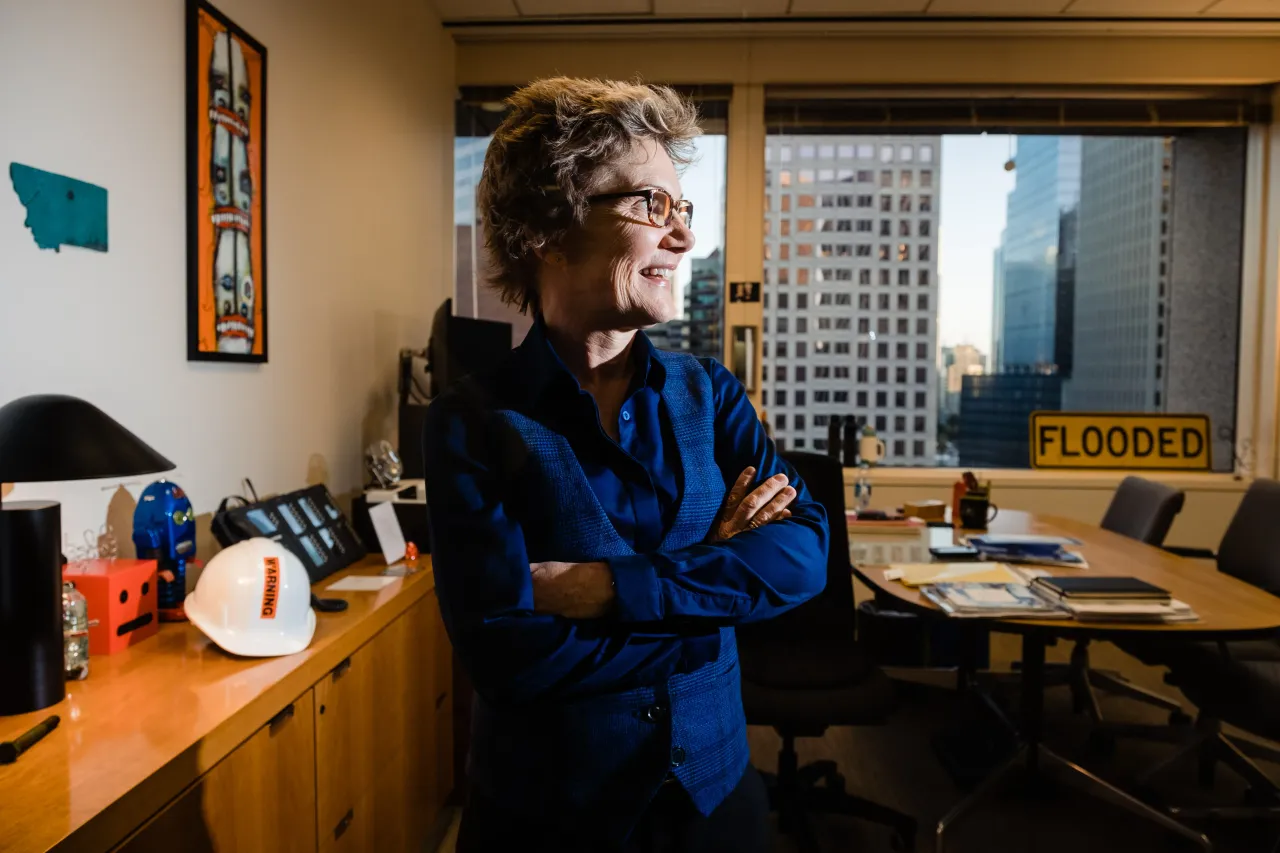


- Daly reportedly said that consumers are still spending, businesses are still investing, and the labor market is settling.
- The Fed President also added that answers to questions like the war’s impact and its effect on oil as well as inflation would depend on how long the conflict lasted.
- Meanwhile, minutes from the Fed’s March meeting revealed that many policymakers saw a case for possible interest rate hikes if inflation stayed above the 2% target.
Advertisement|Remove ads.
San Francisco Federal Reserve President Mary Daly reportedly said on Wednesday that the U.S. economy’s fundamentals were looking strong amid growing consumer spending, business investments, and stabilizing labor market despite the war in the Middle East.
According to a report from Reuters, Daly said at the St. George Area Chamber of Commerce in Utah that while the impact of the war is yet to be seen, the U.S. economy is “really in a good place” so far.
"What we've seen is consumers are still spending, businesses are still investing," Daly reportedly said.
Advertisement|Remove ads.
"There's a concern that maybe this will push inflation up: that's our job, we'll focus on that. And there's a concern that maybe the labor market isn't as solid, but we're not seeing that, we're seeing it kind of settle at a good place," the Fed President added.
Iran War Impact
The war in Iran is at a critical phase after about 40 days of attacks, with a two-week ceasefire being negotiated.
"The question is what's going to happen with the war? How long will prices of oil and gas stay elevated and what will ...the knock-on effects be in terms of other goods and services?" Daly reportedly said to Reuters, adding that answers to these questions would depend on how long the conflict would last.
Advertisement|Remove ads.
"Importantly, we do know that the underlying fundamentals of the economy remain solid and those are things that are important to how we see inflation progressing over time and how we see the labor market progressing," Daly said.
What About Interest Rates?
Meanwhile, minutes from the Federal Reserve’s March meeting released on Wednesday revealed that a growing number of policymakers saw a case for possible interest rate hikes if inflation remains above the 2% target, particularly amid inflationary pressures linked to the U.S.-Israel war with Iran.
While the Fed held rates at 3.50%–3.75% in its latest policy update, many participants continued to expect rate cuts, noting that a prolonged conflict in the Middle East could weaken growth, soften labor market conditions, and reduce purchasing power due to higher oil prices.
Advertisement|Remove ads.
Meanwhile, at the time of writing, the SPDR S&P 500 ETF (SPY), which tracks the S&P 500 index, gained 2.28%, the Invesco QQQ Trust ETF (QQQ) surged 2.6%, and the SPDR Dow Jones Industrial Average ETF Trust (DIA) rose 2.52% amid anticipation for a ceasefire.
The United States Oil Fund ETF (USO) declined about 10%, while the ProShares Ultra Bloomberg Crude Oil ETF (UCO) was down about 2%.
For updates and corrections, email newsroom[at]stocktwits[dot]com.
Advertisement|Remove ads.
Comments posted here will also appear on symbol pages.

Latest News
/filters:format(webp)https://news.stocktwits-cdn.com/gettyimages_1161631184_594x594_0063399eed.jpg)
/filters:format(webp)https://news.stocktwits-cdn.com/1707726834303_jpg_11f20a9aa9.webp) Shashank Nayar·54m ago
Shashank Nayar·54m ago/filters:format(webp)https://news.stocktwits-cdn.com/large_Getty_Images_2200924488_4b2d171fd3.jpg)
/filters:format(webp)https://news.stocktwits-cdn.com/unnamed_jpg_9dff551b50.webp) Anan Ashraf·1h ago
Anan Ashraf·1h ago/filters:format(webp)https://news.stocktwits-cdn.com/large_Getty_Images_2297777279_225c04fb05.jpg) Shashank Nayar·1h ago
Shashank Nayar·1h ago/filters:format(webp)https://news.stocktwits-cdn.com/large_Getty_Images_2295831097_b515d94e2b.jpg) Shashank Nayar·2h ago
Shashank Nayar·2h ago/filters:format(webp)https://news.stocktwits-cdn.com/large_rocket_lab_peter_beck_jpg_4d8fc790a1.webp) Anan Ashraf·3h ago
Anan Ashraf·3h ago/filters:format(webp)https://news.stocktwits-cdn.com/large_Federal_Reserve_a31f9e5606.jpg) Shashank Nayar·3h ago
Shashank Nayar·3h ago